






Silver Knife Boxes
Silver knife boxes are formal fitted containers designed to display and protect cutlery, offering a refined method of storing dining implements.
Silver Knife Boxes
The domestic table settings of these eras required specialised storage, resulting in slope-front boxes and bow-front mahogany cases equipped with internal slots. While some pieces retain their original cutlery sets, others have seen later conversion for stationery use.
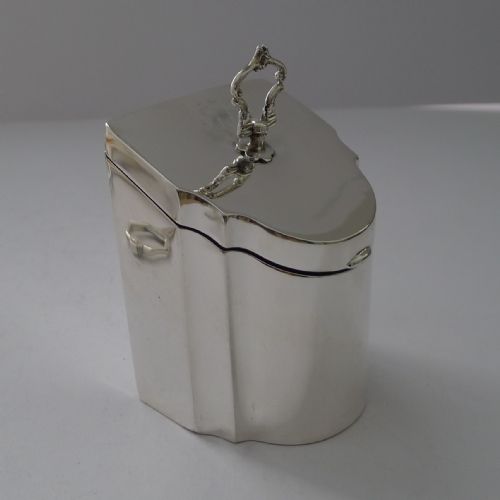
Buyers encountering this category will find walnut and satinwood constructions alongside silver-mounted tea caddies adopting knife box silhouettes. The selection mirrors formal dining customs where cutlery protection matched the value of the silver and steel within.
How they were made
Cabinet makers utilised dense hardwoods including mahogany, walnut, and satinwood to construct the structural bodies, frequently shaping them into bow-front profiles. These wooden carcasses received solid silver mounts, escutcheons, and handles fixed by skilled metalsmiths.
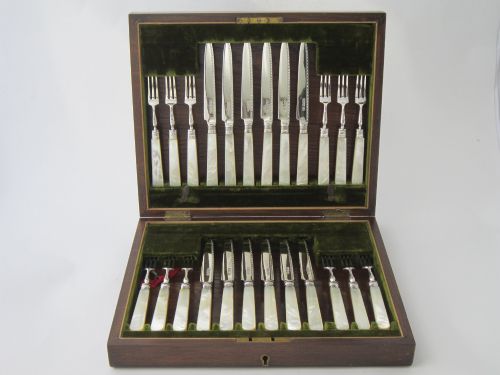
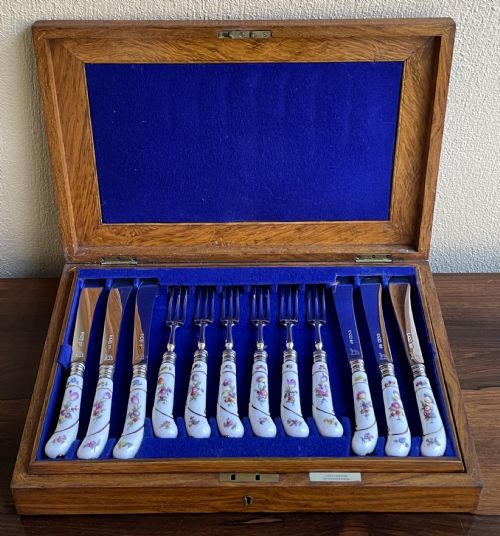
Internal fittings often incorporated velvet, silk, and shaped wooden blocks to cradle individual blades and handles safely. Utensils housed within these boxes combined sterling silver or silver plate with steel, mother of pearl, and cut glass components.
Silver Knife Boxes Retail Price Guide 2026
Typical asking prices for silver knife boxes among the pieces listed under this phrase on Sellingantiques today, from the lower quarter to the upper quarter. They describe what is for sale here now, not the wider market.
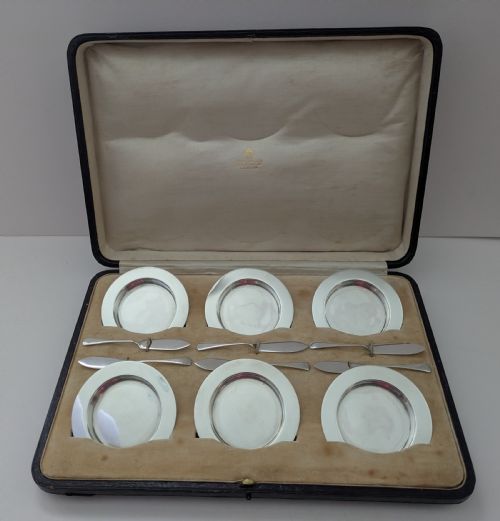
Listings span George V, Edwardian, and Victorian eras, incorporating materials like mother of pearl, velvet, and sterling silver.
What varies in quality
Quality rests upon the selection of cabinet timbers, where figured mahogany and satinwood display superior grain patterns and depth of patina. The crispness of the silver mounts and the integrity of the original fitted interiors further distinguish finer examples.
Proportions dictate the elegance of the piece, particularly in bow-front forms that maintain narrow profiles. Surviving interior linings of silk or velvet, coupled with functional locking mechanisms and original keys, separate standard utility boxes from exceptional survivals.
Carrington·Asprey & Co.·Waring & Gillows
The Silver Knife Boxes Glossary
- Bow front
- A cabinet front that curves outward in a convex arc, commonly seen in eighteenth-century cutlery cases to create a graceful silhouette.
- Escutcheon
- A flat plate surrounding a keyhole, typically rendered in sterling silver on these boxes to protect the surrounding wood from wear.
- Caddy form
- A smaller vessel shaped to mimic the sloping lid and profile of a traditional knife box, frequently utilised for tea storage.
- Patina
- The surface sheen and mellowing developed by antique wood and metal over decades of handling and polishing.
- Fitted interior
- An internal arrangement of shaped compartments and slots designed to secure specific cutlery items without movement.
Silver Knife Boxes: Frequently Asked Questions
What were silver knife boxes used for?
These boxes served to store and display dining knives and forks in wealthy dining rooms, keeping steel blades protected from tarnishing atmosphere.
Servants brought the filled box to the dining table or sideboard before the meal commenced, presenting the cutlery in an orderly fashion.
How do I date a mahogany knife box?
Dating relies upon timber selection, carcass construction methods, and the style of any silver mounts applied to the exterior.
Eighteenth-century examples often feature narrow bow-front proportions and rich satinwood or mahogany grain, while later nineteenth-century interpretations adopt different internal layouts.
Can I use these boxes for modern cutlery?
Many surviving boxes retain internal wooden slots designed for period blade dimensions, which may not accommodate contemporary flatware sizes.
It is advisable to check internal compartment measurements before attempting to house modern service sets inside historical cases.
What is the difference between a knife box and a canteen?
Knife boxes traditionally feature upright or sloping desktop forms designed specifically for dining knives, sometimes with serpentine or bow fronts.
Canteens generally refer to flat-topped table chests or cabinets built with multiple sliding trays to hold full multi-piece cutlery services.