



Silver Jewellery Pot
These silver jewellery pot pieces are small, finely worked containers designed for vanity and dressing tables, offering a secure home for rings and pins.
Silver Jewellery Pot
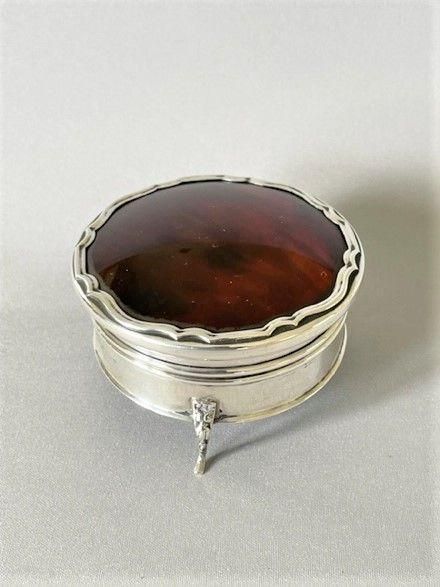
A silver jewellery pot encompasses various vanity containers, trinket boxes, and lidded jars spanning the Victorian, Edwardian, and George V periods. These small containers served as dressing table essentials for holding precious trinkets, pins, and cosmetics.
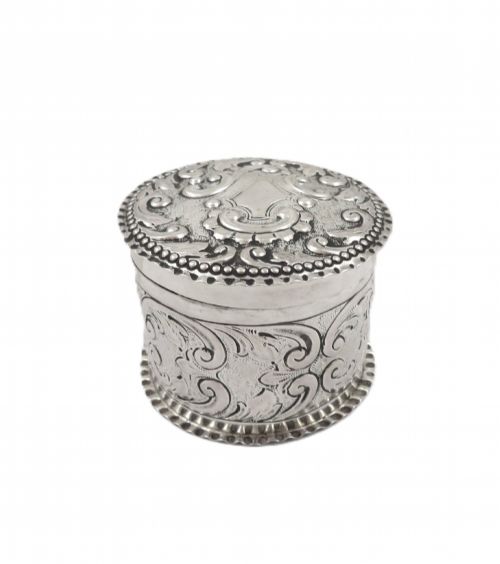
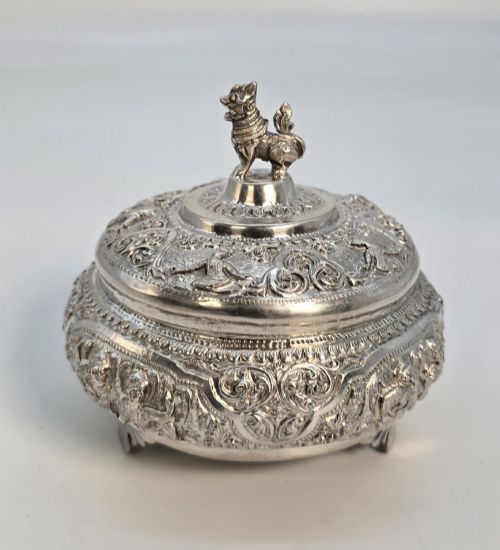
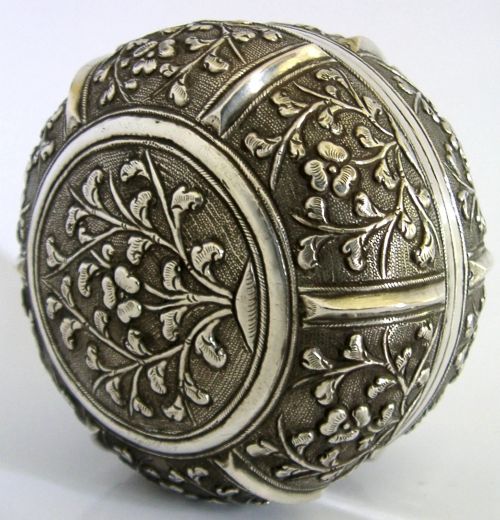
Examples on this page draw from multiple stylistic traditions, including Arts and Crafts spot-hammered designs, Art Nouveau repoussé work, and Anglo-Indian or Asian export pieces. The form ranges from round and oval shapes to heart-shaped boxes and cut glass jars with sterling silver lids.
Materials and construction
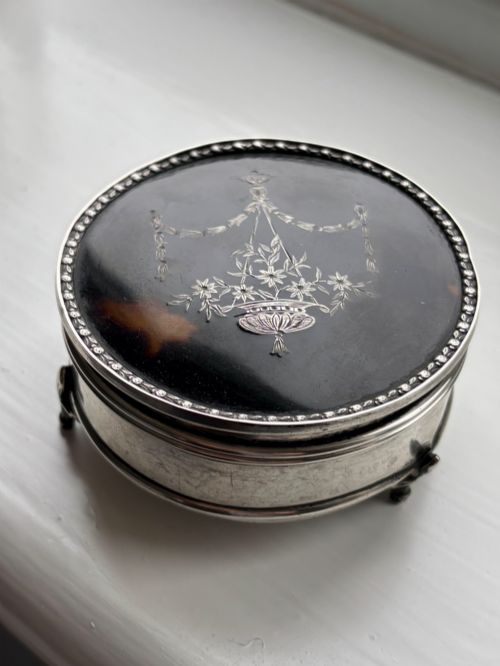
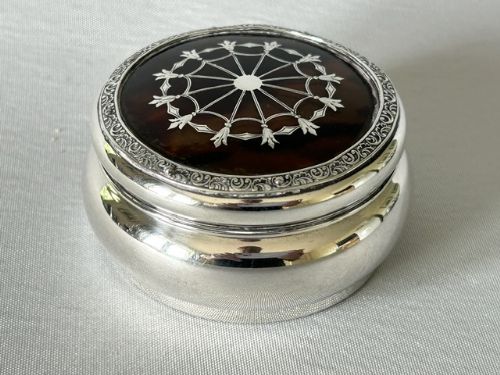
Silversmiths utilised sterling silver and silver plate for the structural lids and mounts, frequently combining the metal with organic materials such as tortoiseshell and faux tortoiseshell. Pique work and repoussé decoration appear across the surfaces to create textural and visual contrast.
Transparent bodies utilise cut glass and cut crystal, often paired with hallmarked silver tops. Arts and Crafts examples display characteristic spot-hammered surfaces wrought by hand in regional assay offices.
Silver Jewellery Pot Retail Price Guide 2026
Typical asking prices for silver jewellery pot among the pieces listed under this phrase on Sellingantiques today, from the lower quarter to the upper quarter. They describe what is for sale here now, not the wider market.
Listings feature items from the Victorian, Edwardian, and George V eras, incorporating sterling silver, cut glass, and tortoiseshell.
Factors determining quality
Quality rests in the crispness of the repoussé work, the regularity of spot-hammering, and the precision of the fit between the silver mount and the glass or tortoiseshell body. Maker marks and clear hallmarks from established assay offices provide a strong indicator of origin and standard.
The integration of delicate decorative techniques, such as piqué work inlay on tortoiseshell or intricate paste glass settings, elevates the execution. Weight and gauge of the sterling silver also distinguish standard production items from finer retail pieces.
Ollivant and Botsford·Goldsmiths and Silversmiths Company·Asprey and Co·Nathan and Hayes·Henry Williamson Ltd·Henry Matthews·William Comyns·Blanckensee and Sons·Thomas Bradbury and Sons
The Silver Jewellery Pot Glossary
- Repoussé
- Metalworking technique where the silver is hammered from the reverse side to form a raised design in relief on the front. This method creates tactile floral and abstract patterns common in Art Nouveau pieces.
- Piqué work
- The art of inlaying tiny pins of gold or silver into tortoiseshell or ivory to form geometric or floral motifs. It requires immense patience and steady hands.
- Assay office
- An official body that tests the purity of precious metals and stamps items with hallmarks. Towns like Birmingham and Chester held prominent offices during the periods represented here.
- Pot pourri
- A mixture of dried plant material used to scent a room, often contained within lidded silver jars pierced with ventilation holes. Many vanity boxes served double duty for this purpose.
Silver Jewellery Pot: Frequently Asked Questions
What is a silver jewellery pot used for?
These vessels were originally kept on dressing tables to store rings, brooches, pins, and small cosmetics.
Today they function well on modern surfaces to hold everyday trinkets while adding period character to a room.
How do I date a silver jewellery pot?
Dating relies heavily on the stamped hallmarks, which indicate the assay office, standard mark, and specific date letter for the year of manufacture.
Stylistic cues like Art Nouveau curves or Arts and Crafts hand-hammering also point toward specific decades around the turn of the twentieth century.
Are tortoiseshell lids fragile?
Tortoiseshell and faux tortoiseshell require gentle handling and protection from extreme temperature fluctuations to prevent warping or cracking.
Keeping them out of direct sunlight preserves the rich amber and brown tones of the organic material.
What is the difference between glass and crystal pots?
Cut crystal contains lead oxide, which gives the material greater weight, brilliance, and light dispersion compared to standard cut glass.
Both materials were heavily utilised for vanity jars to let the contents remain visible while the silver lid added decoration.