


Silver Hinged Lid
When you search silver hinged lid, you are looking at items where the metal closure is the defining engineering element, ranging from inkwells and scent bottles to tankards and biscuit boxes.
Silver Hinged Lid
A silver hinged lid transforms domestic vessels and containers by providing a secure, attached mechanical closure that protects contents like tobacco, spirits, ink or perfume. These objects span several centuries of British manufacture, stretching from Georgian utility pieces through Victorian decorative vessels to Edwardian and Art Deco dressing table boxes.
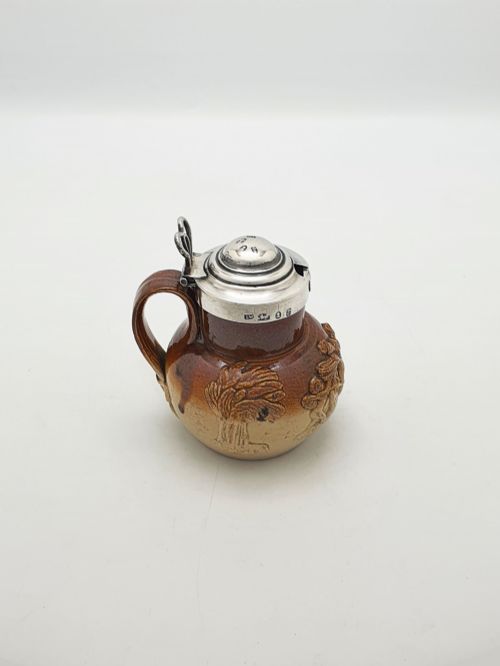
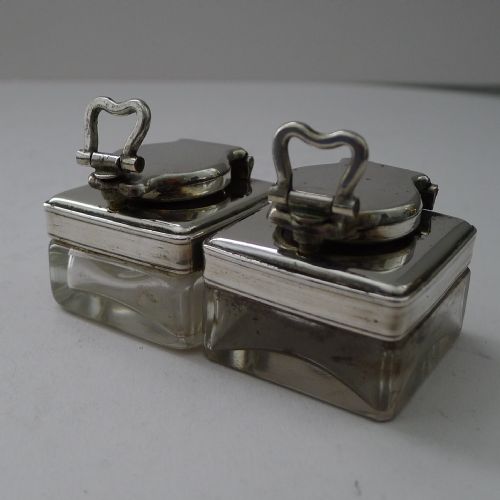
The primary forms appearing in this collection include desktop inkwells, travel scent bottles, drinking tankards, claret jugs and gentleman's hip flasks alongside vanity boxes for jewellery, trinkets and powder. Most pieces integrate the silver lid directly onto glass, stoneware or ceramic bodies, while others consist entirely of solid silver or silver plate.
Makers utilised various alloys and metals, pairing sterling silver and Old Sheffield Plate with cut glass, horn, tortoiseshell and Scottish staghorn. The mechanical integrity of the pivot and the snug fit of the cap determine how successfully these lids have survived decades of daily use.
How they were made
Metalsmiths constructed these covers using sterling silver, silver plate and Old Sheffield Plate, often soldering delicate hinges to collars mounted onto glass or ceramic bodies. Many boxes and flasks feature engine-turned patterns, chased floral scrolls or repoussé work executed by hand or assisted by machine.
Glass bodies for inkwells, perfume bottles and claret jugs were typically mould-blown or cut with deep geometric patterns before being fitted with metal mounts. Internal elements such as cedar wood linings, gilt interiors or bayonet fittings ensured that containers for liquids and dry goods remained functional.
Listings feature items spanning the 18th century, Georgian era, Victorian period, and 1910 through the 1920s.
What varies in quality
The standard of a silver hinged lid piece depends heavily on the precision of the hinge mechanism and how tightly the cover aligns with the rim when closed. Heavier gauge silver and thick Old Sheffield Plate resist denting and maintain structural tension in the pivot far better than thin, fragile stampings.
Artistic execution dictates value at the upper end, separating plain commercial containers from those adorned with crisp hand-chased repoussé work, intricate engine-turning or signed maker marks from prominent silversmiths. The integration of high-grade materials like flawless cut glass, tortoiseshell or horn further elevates the piece.
Robert Hennell I·Hukin & Heath·Elkington & Co·Mappin & Webb·Thomas Bradbury·Sampson Mordan·Adie Brothers
The Silver Hinged Lid Glossary
- Old Sheffield Plate
- A method of fusing a thin sheet of silver to a thicker copper base before rolling them into sheets for manufacturing. This technique produces durable items with a warm lustre characteristic of the eighteenth and nineteenth centuries.
- Engine-Turning
- A mechanical decoration technique that cuts geometric, striped or starburst patterns into metal surfaces using a lathe. It provides a textured finish that masks minor fingerprints and wear.
- Repoussé
- A metalworking technique where the silversmith hammers the design from the reverse side to form raised floral or scroll reliefs. This decorative method is common on Victorian toilet boxes and perfume bottles.
- Whiskey Noggin
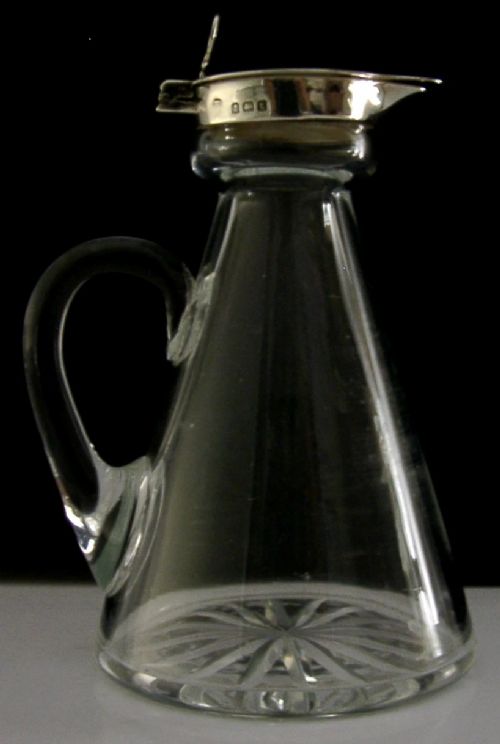
- A small drinking vessel or mini decanter designed for individual portions of spirits, usually fitted with a silver collar, hinged lid and sometimes an accompanying silver label. These barware items date frequently to the early twentieth century.
- Capstan Inkwell
- A desk accessory shaped like a nautical capstan with a wide circular base tapering towards a smaller top fitted with a hinged lid. The broad foot provides stability against tipping during use.
Silver Hinged Lid: Frequently Asked Questions
How do I date a silver hinged lid?
Dating relies primarily on hallmarks stamped into the metal, which indicate the assay office, date letter and maker's mark. Stylistic clues such as Victorian floral repoussé or Art Deco geometric engine-turning also help narrow the decade.
Unmarked pieces or Old Sheffield Plate items require evaluation through construction methods, form and secondary materials like glass or horn.
Are silver hinged lids waterproof?
While flasks and scent bottles with bayonet-style hinged lids or internal collars were designed to hold liquids securely, decades of wear can compromise the seal. Inkwells and claret jugs generally rely on gravity and precise fitting rather than modern rubber gaskets.
Testing vintage vessels with liquids is discouraged to prevent staining internal porous linings like cedar wood or damaging fragile antique glass.
What is Old Sheffield Plate?
Old Sheffield Plate is an early composite material created by fusing silver to a copper core through heat and pressure. This predates modern electroplating and leaves a subtle copper seam visible at unmounted edges.
Pieces manufactured this way carry a distinct historical weight and warmth appreciated by collectors of Georgian and early Victorian tableware.
How should I clean silver lids?
Cleaning requires a soft microfiber cloth and a gentle silver polish formulated to avoid abrasive damage to engraved or chased details. Care must be taken around glass bodies, tortoiseshell panels and wooden linings to prevent moisture ingress.
Storing pieces in dry environments away from direct sunlight helps preserve both the silver lustre and organic elements like horn or leather.