

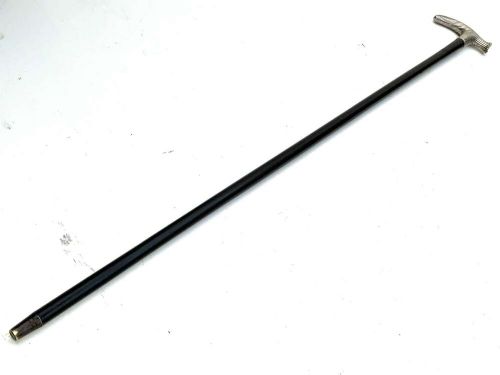
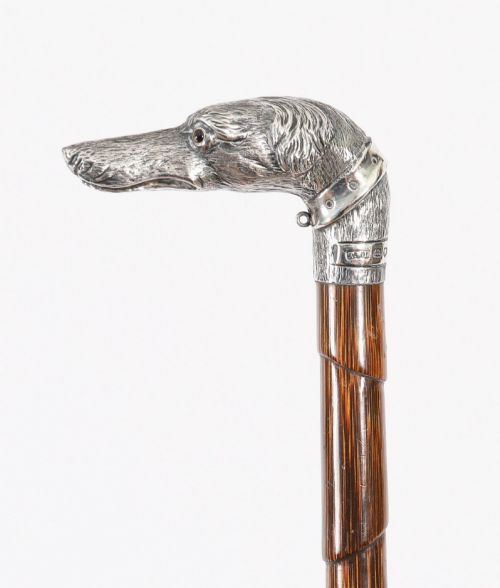
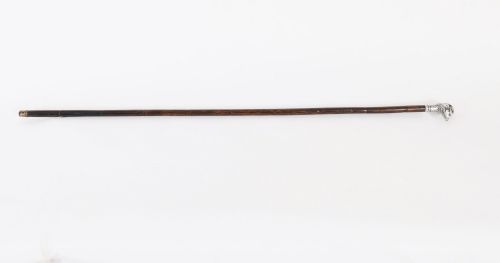
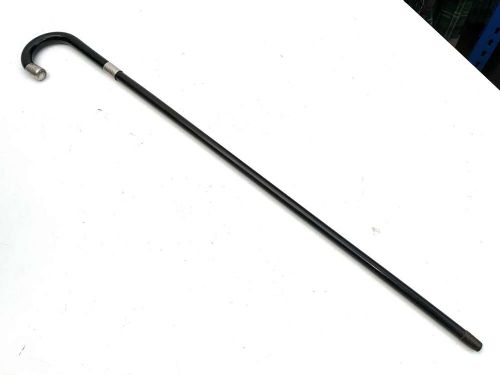
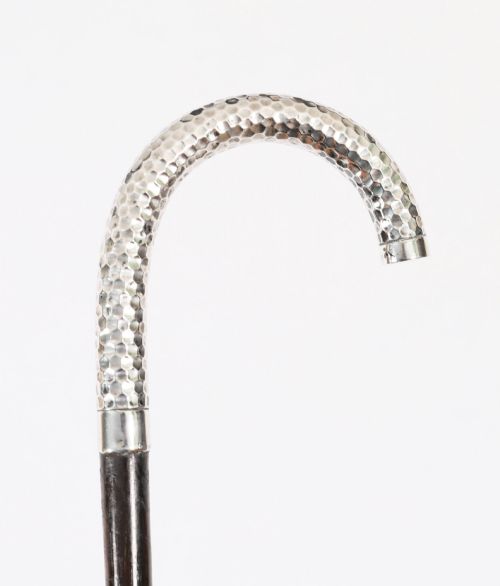
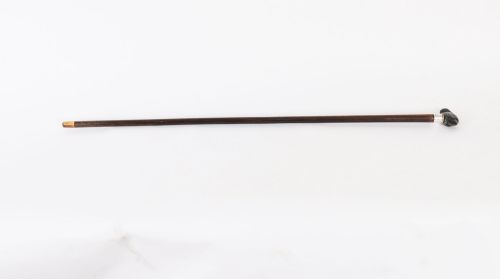
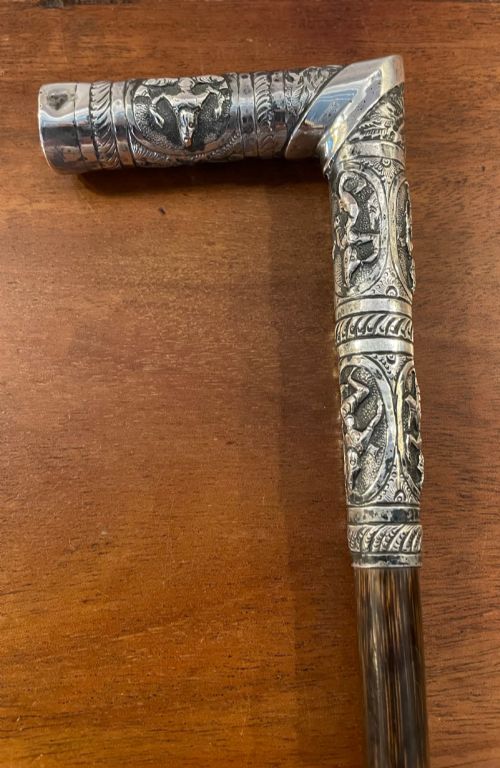
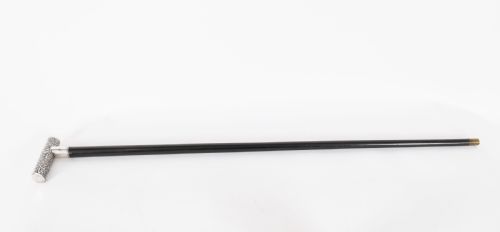
Silver Handled Stick
A silver handled stick carries the weight of 19th-century elegance, offering a functional support that doubles as a striking social accessory.
Silver Handled Stick
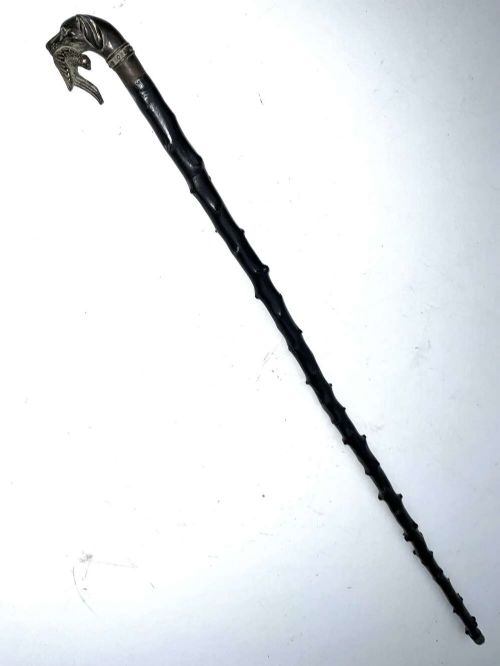
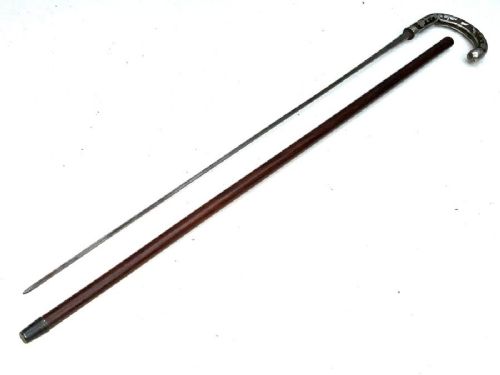
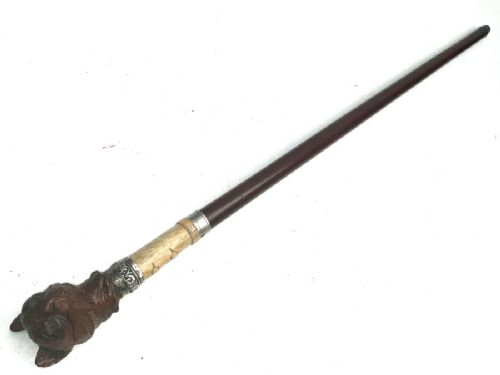
A silver handled stick encompasses a range of walking canes, parasol handles, and sword sticks produced primarily across the 19th and early 20th centuries. These items include both simple mounted shafts and elaborate novelty pieces shaped as animals or sporting equipment.
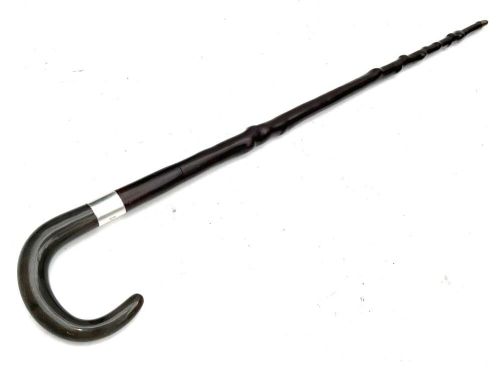
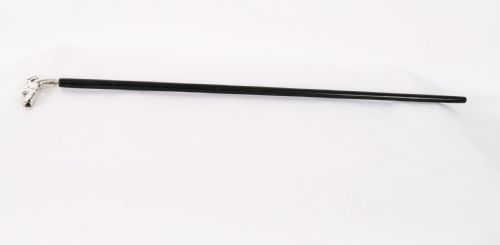
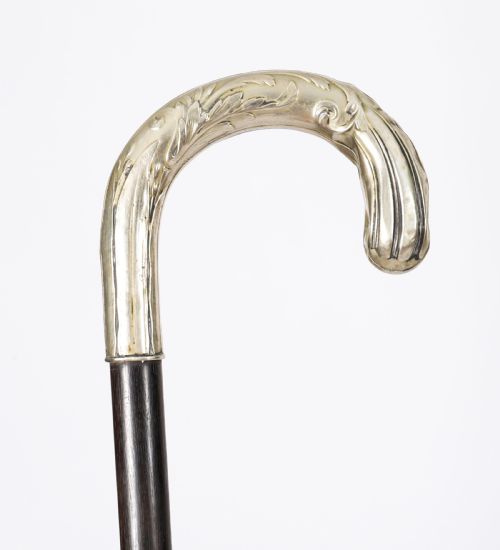
The most common examples on this page date from the Victorian and Edwardian eras, spanning periods such as 1900 and the Art Deco movement. Buyers frequently encounter shafts fashioned from wood, bamboo, malacca, and ebonised timber paired with detailed metalwork.
Origins vary from British workshops to French ateliers and Asian export centres, reflecting international demand for gentlemanly and ladies' accessories. Collectors find standard crook handles alongside functional gadget pieces containing hidden blades, corkscrews, or snuff boxes.
Materials and construction methods
Craftsmen paired precious metal handles with rigid natural shafts, utilising silver, silver plate, and brass for the grips. These were secured to woods such as palm, chestnut, rosewood, and ebonised hardwood using metal collars and internal pins.
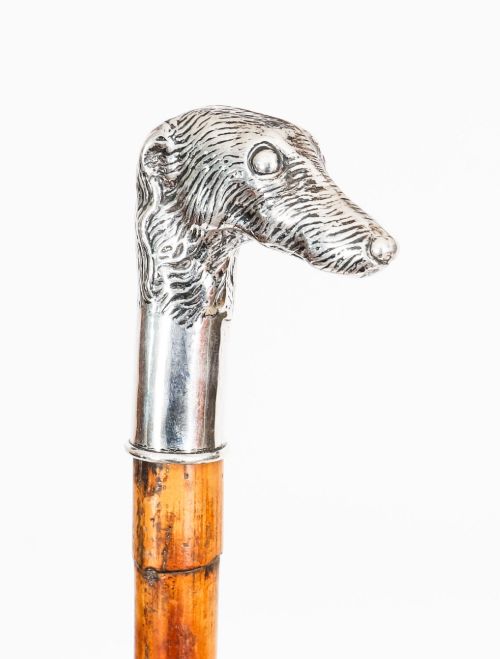
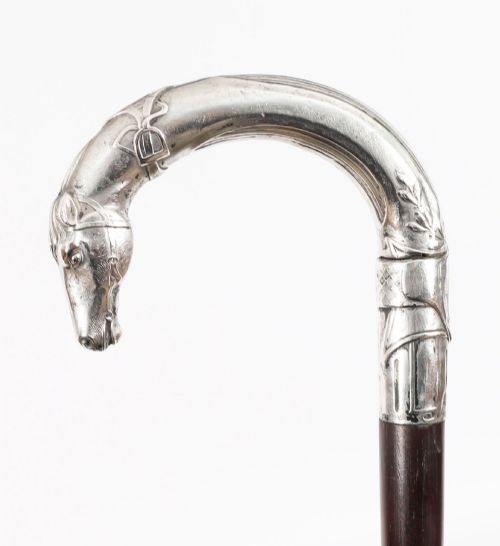
Handles often involved repoussé work, casting, and embossing to create animal heads, floral motifs like prunus blossom, or geometric Art Deco designs. Metal blades fitted into wooden sword sticks required precise tempering and blacksmithing techniques.
Silver Handled Stick Retail Price Guide 2026
Typical asking prices for silver handled stick among the pieces listed under this phrase on Sellingantiques today, from the lower quarter to the upper quarter. They describe what is for sale here now, not the wider market.
Listings feature woods such as malacca, bamboo, rosewood, and ebonised oak paired with silver, brass, and horn.
Assessing quality and craftsmanship
Quality rests upon the sculptural detail of the metal handle and the integrity of the underlying shaft. Finely chased animal heads or complex repoussé patterns demonstrate superior metalworking skill compared to plain stamped mounts.
The choice of materials dictates the status of the piece, with dense hardwoods, horn, and solid silver marking out finer items against plated mounts and common timber.
BRIGG·Wilkinson·Asprey
The Silver Handled Stick Glossary
- Repoussé
- Metalworking technique where a design is hammered into relief from the reverse side. This method allowed artisans to create intricate surface patterns on silver handles.
- Malacca
- A sturdy tropical cane sourced from Southeast Asia, prized for its mottled brown bark and flexibility. It served as a preferred material for high-end walking sticks.
- Ebonised
- Wood treated with a dark stain or finish to resemble ebony. This technique gave common timbers a formal, polished appearance.
- Sword stick
- A walking cane containing a concealed blade within the wooden shaft. These items often featured locking mechanisms and silver collars.
- Knop
- A rounded knob or ornamental handle at the top of a stick. It provides a comfortable grip for the user's hand.
Silver Handled Stick: Frequently Asked Questions
What periods do these sticks date from?
The pieces span the 19th century through to the early 20th century, including Victorian, Edwardian, and Art Deco eras.
Most items originate from between 1870 and 1930, reflecting the peak of walking cane popularity.
How were concealed blades used?
Sword sticks housed steel blades, such as Toledo or Wilkinson variants, securely within the wooden shaft for personal defence.
A release mechanism or screw thread at the silver collar allowed the user to draw the blade when required.
What materials make up the shafts?
Shafts utilise various woods and natural materials, including malacca, bamboo, palm wood, chestnut, and ebonised oak.
Some examples also incorporate horn or sturdy root ball handles paired with metal mounts.
Are novelty handles common?
Makers produced numerous novelty designs featuring carved animal heads like greyhounds, ducks, rabbits, and horses.
Other variations include sporting motifs such as golf clubs and hidden functional compartments like snuff boxes.