


Silver Handle Sword
These silver handle sword pieces combine discreet walking support with concealed steel blades.
Silver Handle Sword
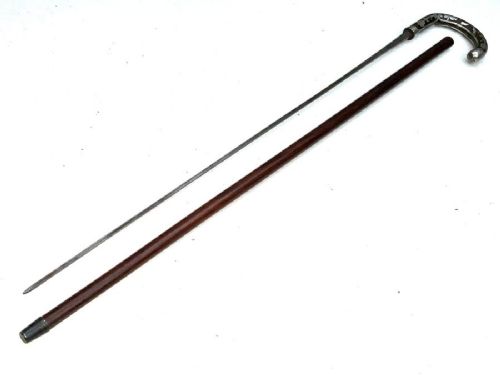
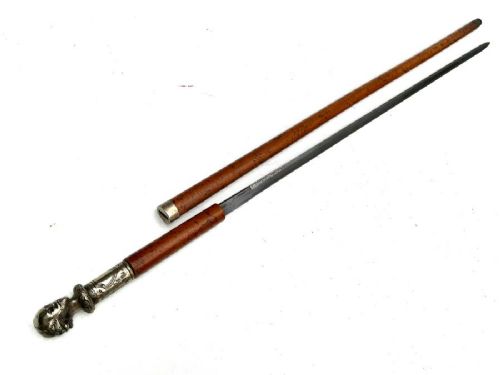
A silver handle sword functions as a gentleman's walking stick or cane housing a concealed steel blade. Most examples on this page pair silver mounts, collars, or full handles with shafts of malacca, palmwood, or bamboo.
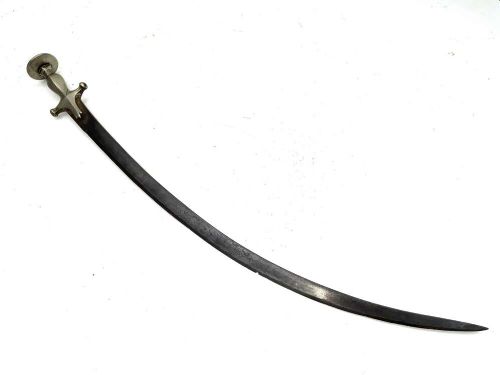
The historical origins span Victorian and Edwardian Britain alongside continental European and Indian workshops. Makers ranged from renowned firms like Brigg to specialised military suppliers.
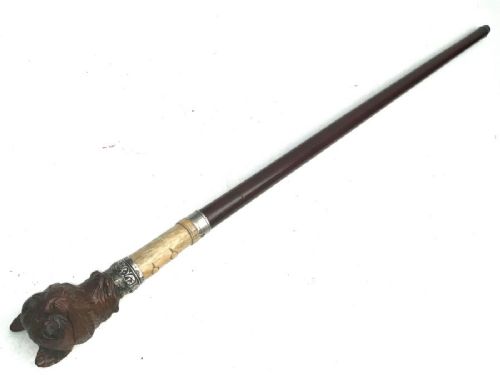
Object forms include straight shafts, crook handles, and novel grips shaped as horses' heads or root balls. Each piece merges everyday gentleman's attire with personal defence.
How they were made
Shafts rely on natural materials such as malacca cane, bamboo, palmwood, rosewood, and chestnut, paired with steel blades sometimes sourced from Toledo or Wilkinson. Handles incorporate silver, horn, bone, wood, and brass.
Silver components frequently feature repousse work, engraving, or plain mounts carrying London or Birmingham hallmarks. Collars secure the connection between the handle and the wooden shaft housing.
Shaft materials recorded include malacca cane, bamboo, palmwood, rosewood, chestnut, blackthorn, and partridge wood.
What varies in quality
The distinction between standard items and superior examples lies in the execution of the silver handle and the origin of the steel blade. Plain collars contrast with intricately chased repousse silver or sculptural animal heads.
Blade provenance significantly influences the piece, with named makers such as Wilkinson or Toledo adding notable craftsmanship to the internal mechanism and steel quality.
Brigg·Wilkinson
The Silver Handle Sword Glossary
- Malacca
- A sturdy rattan cane featuring characteristic brown skin and nodes, commonly used for walking stick shafts. It provides both flexibility and resilience.
- Repousse
- A metalworking technique where silver is hammered from the reverse side to form raised decorative reliefs. This ornamentation appears frequently on handle knobs and collars.
- Toledo blade
- A steel blade originating from the Spanish city renowned for weapon manufacturing. These blades denote high-grade metallurgical production.
- Collar
- A metal band fitted around the top of the walking stick shaft beneath the handle. It reinforces the join and often bears hallmarks or maker marks.
- Knop
- A rounded ornamental handle or top affixed to a cane. These range from simple smooth silver spheres to elaborate figural designs.
Silver Handle Sword: Frequently Asked Questions
How do you release the blade?
Most concealed blades release via a threaded screw mechanism or a spring catch hidden beneath the silver handle or collar.
Twisting or pulling the handle breaks the friction fit, allowing the steel blade to slide smoothly out of the wooden shaft.
Were these used for duelling?
These items served primarily as civilian walking aids and fashion accessories for gentlemen navigating nineteenth and early twentieth century streets.
The concealed blade provided personal protection rather than serving as a formal duelling weapon.
How should I display one?
Displaying these pieces safely involves wall brackets or vertical cane stands that secure the shaft while keeping the handle visible.
Ensure the display environment remains dry to protect the internal wooden channel and the steel blade from moisture.
Can you date them from hallmarks?
British silver mounts and collars frequently feature assay office marks, date letters, and maker stamps that establish the exact year of manufacture.
Unmarked or continental pieces require style analysis of the handle shape and wood type to determine the period.