

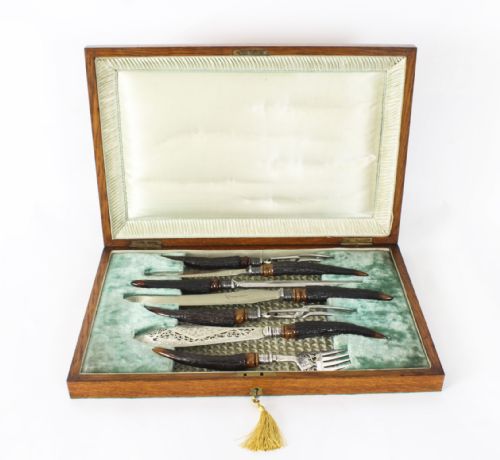


Silver Handle Cutlery
Silver handle cutlery brings together functional table implements and tactile organic grips from the nineteenth and early twentieth centuries.
Silver Handle Cutlery
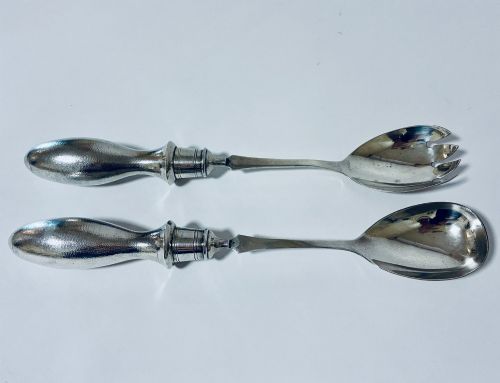
Silver handle cutlery encompasses specialised serving utensils, fruit knives, butter knives and fish servers originating primarily from the Victorian and Edwardian eras. These pieces combine precious or plated metal bowls and blades with organic or decorative grips designed for specific dining rituals.
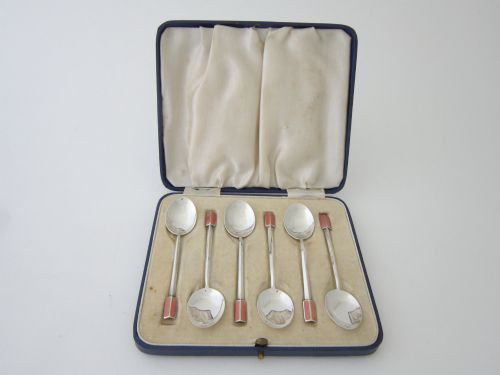
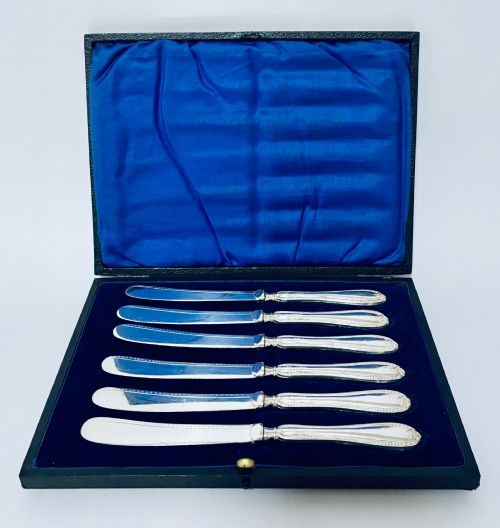
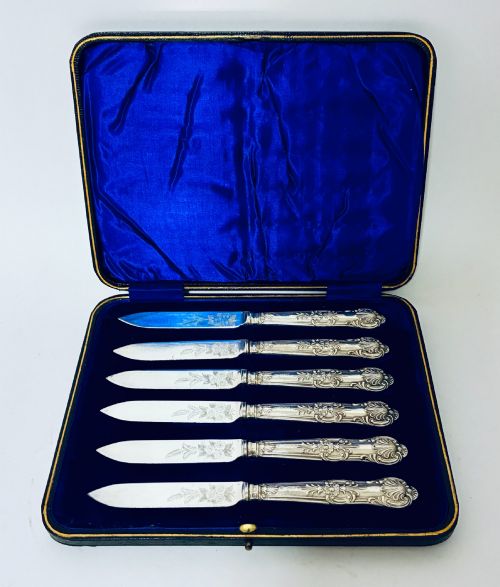
The version most commonly encountered on this page is the individual butter knife or fruit knife, often found in sets of six, alongside cased fish servers and bread forks. These domestic implements reflect the formal dining habits of the nineteenth and early twentieth centuries.
Originating largely from British workshops and broader European centres, these utensils range from simple campaign sets to elaborate boxed dessert services. The selection spans periods from the mid nineteenth century through to the Art Deco years of the 1930s.
Materials and construction
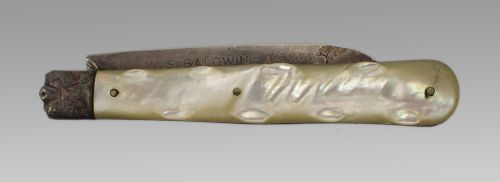
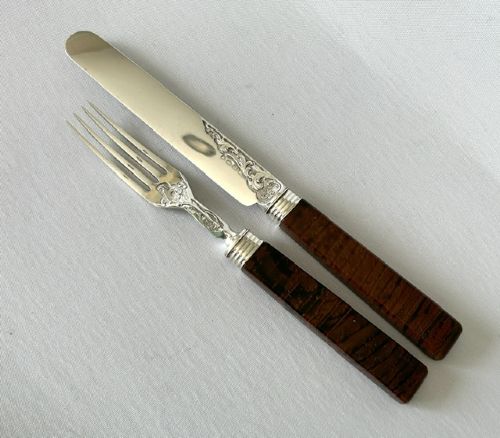
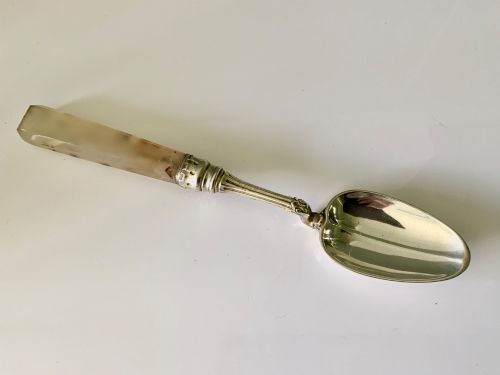
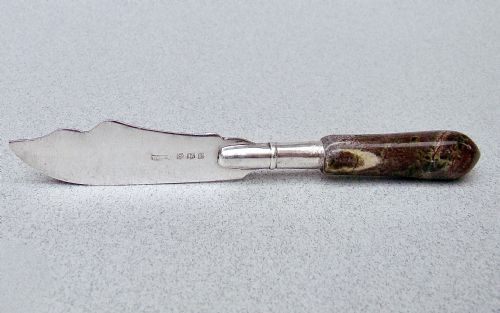
Makers paired sterling silver or silver plate with natural materials such as mother-of-pearl, horn, antler and agate for the handles. Blades and bowls utilised steel, gilt silver or standard silver, fixed securely to the grips using traditional pinning or cement methods.
Surface decoration frequently involved intricate hand engraving, chasing and enamel work applied to the metal components. Handles were shaped, carved and polished to highlight the natural grain and iridescence of shell, stone and horn.
Silver Handle Cutlery Retail Price Guide 2026
Typical asking prices for silver handle cutlery among the pieces listed under this phrase on Sellingantiques today, from the lower quarter to the upper quarter. They describe what is for sale here now, not the wider market.
Several pieces feature hunting dog engravings on horn handles, proving that Victorians loved their sporting hounds even at the dinner table.
Assessing quality and execution
Superior examples display crisp, deep chasing and clear hallmarks that confirm the maker and date of manufacture. The junction where the handle meets the metal blade or prong requires solid construction without looseness or visible adhesive.
The selection of natural handle materials dictates much of the visual appeal, with unblemished mother-of-pearl, well-matched agate and finely carved horn elevating the piece. Comprehensive original cases and complete matching sets further distinguish finer service items from individual surviving utensils.
Vale & St John·William Devenport·Amy Sandheim·Carrington·Jowika
The Silver Handle Cutlery Glossary
- Sterling silver
- A standard alloy consisting of ninety-two point five percent silver and seven point five percent other metals, usually copper. This standard is denoted by specific hallmarking stamps on British items.
- Mother-of-pearl
- The iridescent inner layer of pearl oyster and freshwater mussel shells. It was carved into thin scales to form smooth, shimmering knife and fork handles.
- Stilton scoop
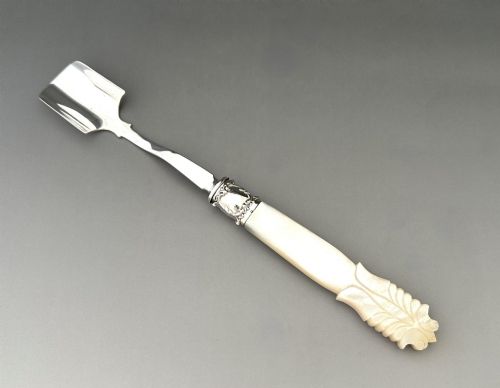
- A long, half-cylinder blade utensil designed specifically for tunnelling into mature cheeses without damaging the rind. They frequently feature decorative silver bowls paired with turned handles.
- Bifurcate spoon
- A spoon featuring a divided or two-pronged tip designed for serving specific fruits or preserves. This hybrid utensil combines the scooping action of a spoon with the piercing ability of a fork.
- Gilt silver
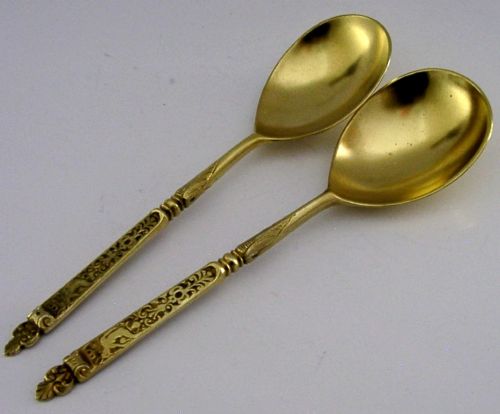
- Silver that has been coated with a thin layer of gold through a chemical or electrochemical process, often termed vermeil. This treatment provides a rich golden finish to the interior of bowls and tines.
Silver Handle Cutlery: Frequently Asked Questions
How do I clean silver handle cutlery?
Clean the metal components gently using a specialist silver polish and a soft cloth, avoiding harsh abrasives that might scratch the surface. Take care to keep moisture away from the joins where handles meet blades, particularly with organic materials like mother-of-pearl and horn.
Hand wash these items promptly after use rather than placing them in a dishwasher. Submerging natural grips in hot water can cause warping, splitting or loosening over time.
Can I use these pieces for daily dining?
These utensils can certainly be utilised for everyday meals, though older steel blades and softer organic handles require mindful handling. Many people reserve them for specific courses such as fish, cheese, fruit or dessert.
Due to their age and construction methods, hand washing is essential for their preservation. Storing them in fitted cases or lined drawers prevents unnecessary surface scratching.
How do I identify Victorian pieces?
Victorian examples often feature registration marks, monarch duty heads or specific town hallmarks stamped directly onto the silver components. Stylistic clues include heavy floral engraving, Aesthetic Movement motifs and elaborate chased scrollwork.
Materials such as mother-of-pearl, carved antler and silver gilt are particularly characteristic of nineteenth-century manufacturing trends. Comparing the hallmark date letters against published reference tables provides the exact year of origin.
Why are some sets cased?
Complete sets were retailed in fitted wooden boxes lined with velvet or silk to protect the delicate handles and polished metal from damage. These presentation boxes indicate that the cutlery was intended as a gift or for formal dining.
Keeping items in their original cases helps maintain their completeness and historical context. The interior fitments were custom-built to secure each knife, fork or spoon in place.