

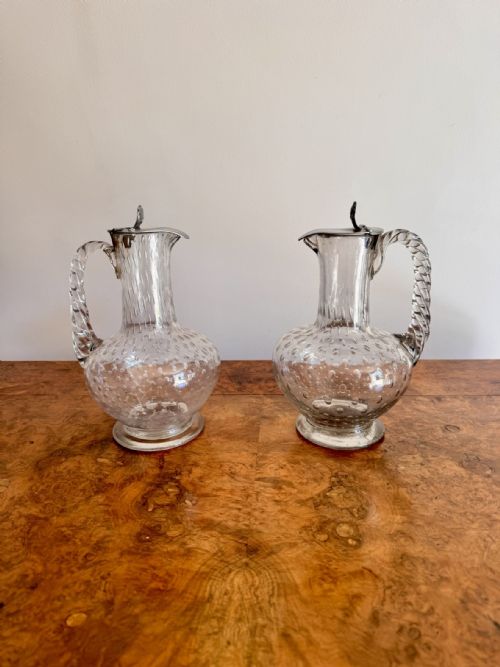
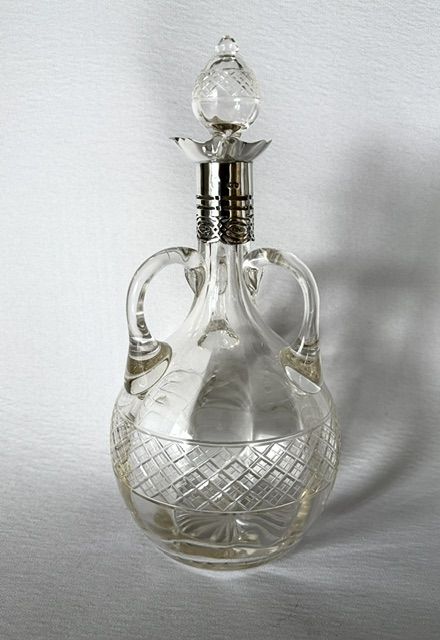
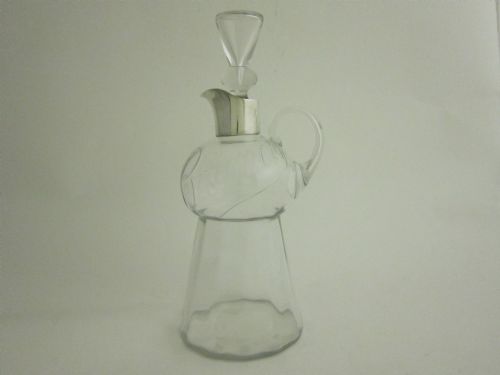
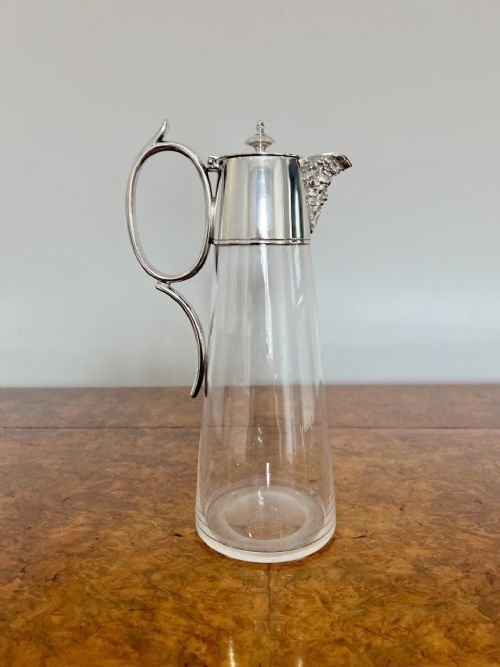
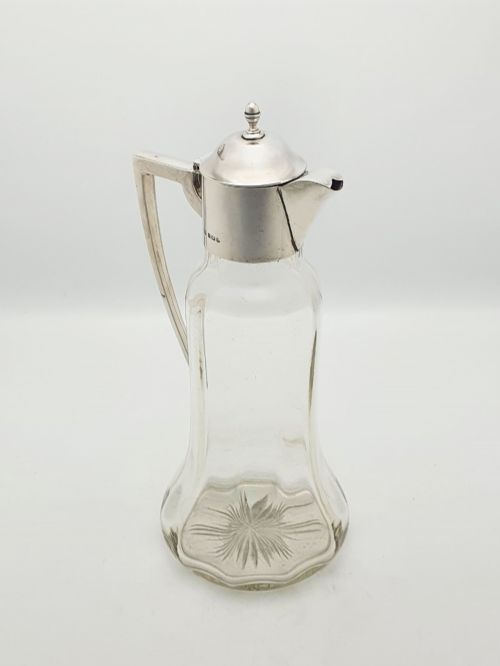

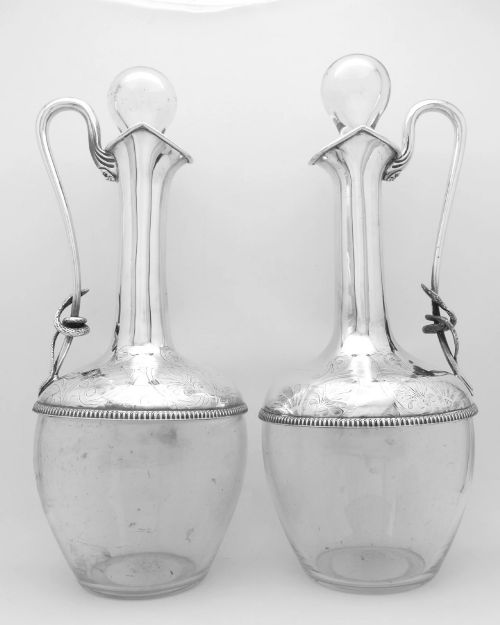


Silver Handle Claret Jug
A silver handle claret jug brings Victorian dining tables to life, offering a striking vessel for serving wine with distinction.
Silver Handle Claret Jug
A silver handle claret jug combines glass bodies with metal mounts, serving as a formal vessel for wine at the dining table. When exploring a silver handle claret jug, buyers encounter numerous examples spanning the Victorian and Edwardian eras.
Makers produced these forms in various styles including Art Nouveau, Arts and Crafts, and Aesthetic Movement alongside traditional Victorian designs. The pieces range from straightforward glass decanters with metal mounts to elaborate ewers featuring serpents or figurative motifs.
How they were made
Artisans combined blown glass, crystal, and moulded vessels with metal mounts in sterling silver, silver plate, pewter, and silvered pewter. Cut glass bodies provide weight and refraction, paired with handles shaped into serpents or geometric forms.
Metalwork involved casting, chasing, and plating to secure mounts around the glass necks and bases. Specialised makers utilised pewter and enamel alongside traditional silver mounting techniques to achieve distinctive aesthetic results.
Several Victorian jugs feature handles cast as writhing serpents, ready to strike every time someone reaches for another glass of claret.
What varies in quality
The distinction between standard production and top work rests on the clarity of the cut glass and the artistic ambition of the metal handle. Pieces bearing specific studio designs or recognised maker attributions command greater interest from collectors.
Execution of the handle and mount details, from complex serpent forms to clean Arts and Crafts lines, determines the visual weight of the vessel. Heavier crystal bodies and crisp metal chasing elevate the standing of an individual piece.
Archibald Knox for Liberty and Co·Hukin and Heath·Dr Christopher Dresser·WMF
The Silver Handle Claret Jug Glossary
- Claret jug
- A vessel specifically designed for serving red wine at the table, typically featuring a pouring spout and a hinged lid. These items often combine glass or crystal bodies with metal handles and mounts.
- Silver plate
- A manufacturing method where a thin layer of silver is applied to a base metal such as copper or nickel brass. This technique allowed makers to produce elaborate vessels at a more accessible cost than solid silver.
- Sterling silver
- An alloy consisting of ninety-two point five percent silver and seven point five percent other metals, usually copper. It provides durability while maintaining the bright appearance of pure silver.
- Tudric pewter
- A proprietary brand of pewter utilised by Liberty and Co during the early twentieth century. This material was favoured by Arts and Crafts designers for its tactile qualities and dark finish.
- Ewer
- A large pitcher or jug with a wide spout and a decorative handle, historically used for pouring water or wine. In later periods, makers adopted the form for decorative serving pieces.
Silver Handle Claret Jug: Frequently Asked Questions
What is a silver handle claret jug?
A silver handle claret jug is a serving vessel that combines a glass or crystal body with a metal handle, mount, and hinged lid. Makers designed these pieces primarily for holding and pouring red wine during formal meals.
These items became particularly popular during the nineteenth and early twentieth centuries. They frequently appeared on dining tables alongside matching decanters and glassware.
How do I identify a Victorian claret jug?
Victorian examples often feature heavy cut glass bodies paired with elaborate silver plated or sterling silver mounts. The decorative styles range from formal Neoclassical patterns to ornate naturalistic motifs.
Examining the hallmarks or manufacturing stamps on the metal mounts helps determine the exact period of production. Many pieces from this era also display registration marks or manufacturer initials near the rim.
Were these jugs used for daily dining?
These vessels were created for formal entertaining and household display rather than casual everyday use. Wealthy households utilised them to serve claret and other fine wines during dinner parties.
The hinged lids and spouts allowed hosts to pour wine cleanly at the table while keeping the contents covered between servings.
What materials make up an Art Nouveau jug?
Art Nouveau examples frequently incorporate silvered pewter or cast pewter alongside stylized glass bodies. Designers favored flowing organic lines, often shaping the handles into mer serpents, mermaids, or abstract plant forms.
Makers such as WMF and individual studio designers produced these distinctive pieces using specialised metal alloys that took dark patinations well.