

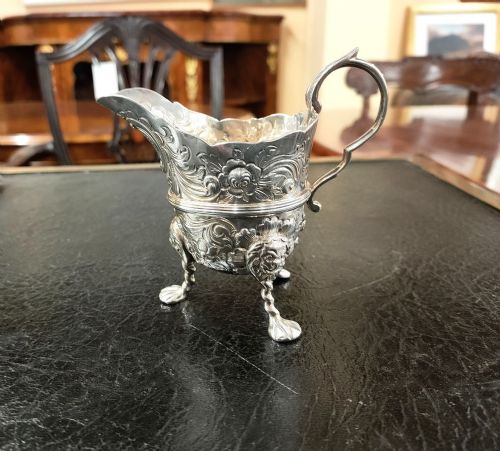
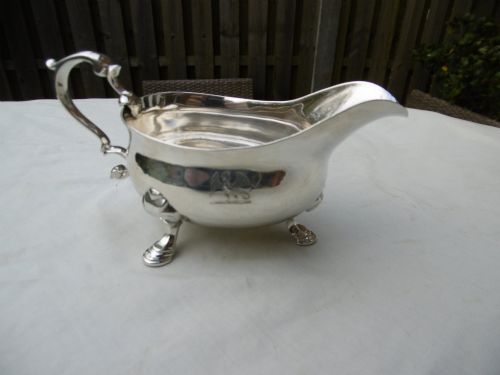
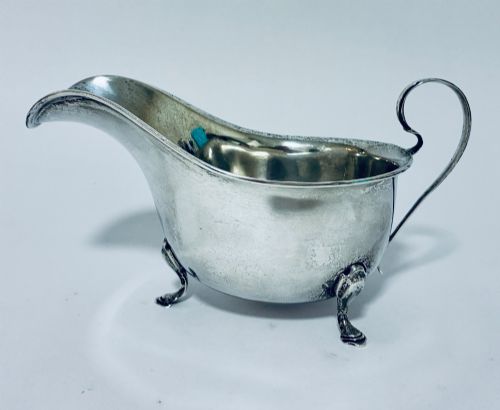
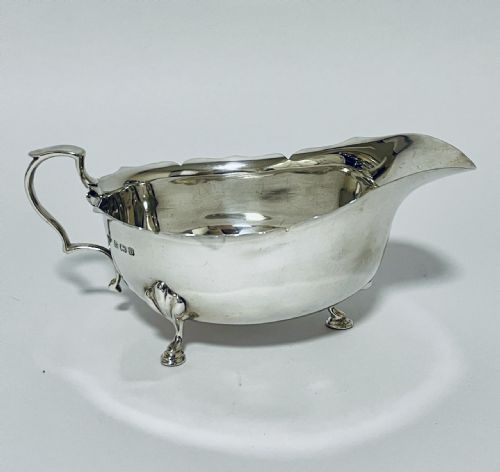
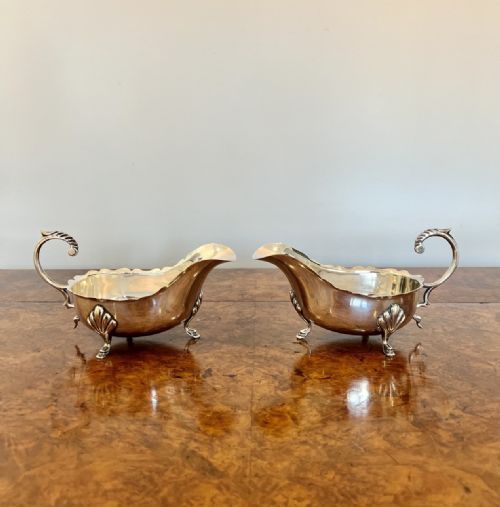
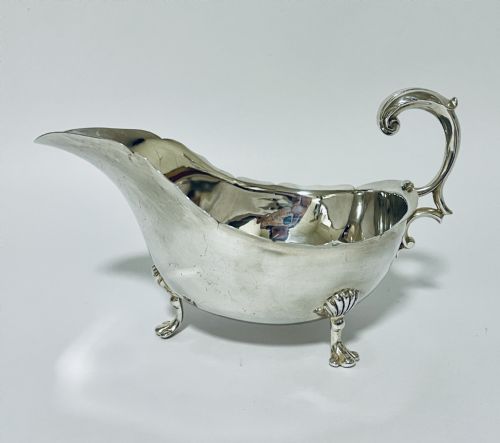
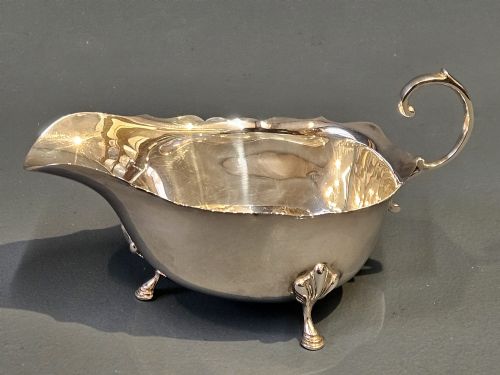
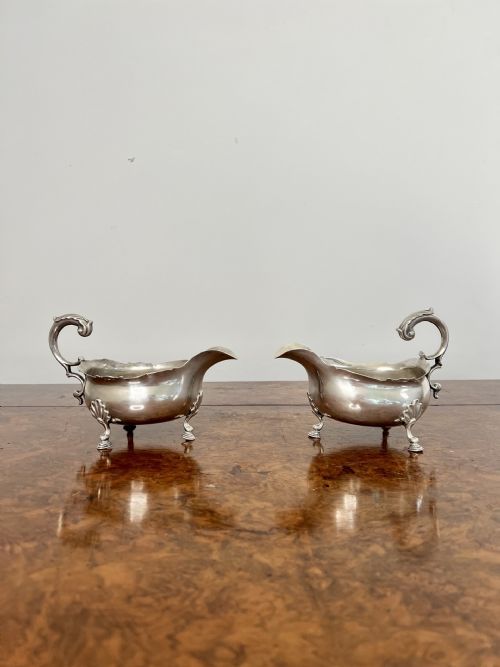


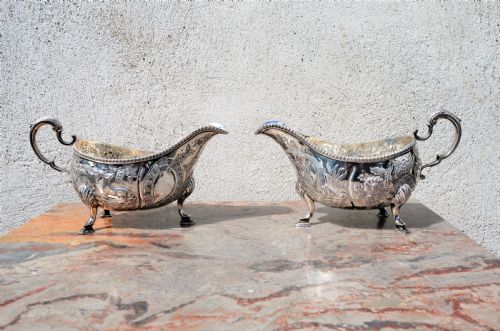


Silver Gravy Boat on Feet
These silver gravy boat on feet pieces bring period elegance to the table, offering a graceful way to serve sauces and gravies with traditional British style.
Silver Gravy Boat on Feet
A silver gravy boat on feet is a foundational piece of dining serveware designed to hold and pour sauces at the table. When you search for a silver gravy boat on feet, you are looking at hollowware vessels raised on supports, ranging from single examples to matched pairs.
The pieces appearing on this page span several centuries, with examples originating from the Georgian, Victorian, and Edwardian eras. Makers from the eighteenth century onwards produced these vessels in various forms, including plain sterling silver bodies and ornate embossed designs.
Materials and methods of construction
Construction methods rely heavily on traditional silversmithing techniques, utilising sterling silver and copper-based base metals covered with silver plating. Manufacturers employed casting and hammering methods to raise the body from a single sheet of metal and to attach the feet and handles securely.
Plated variations utilise techniques like Old Sheffield plate and electroplated nickel silver to achieve the appearance of solid silver at a different scale of production. Surface decoration often includes hand engraving, embossing, and naturalistic motifs such as acorn designs applied during finishing.
Silver Gravy Boat on Feet Retail Price Guide 2026
Typical asking prices for silver gravy boat on feet among the pieces listed under this phrase on Sellingantiques today, from the lower quarter to the upper quarter. They describe what is for sale here now, not the wider market.
Certain Victorian examples feature acorns on their feet, suggesting makers liked the idea of mighty sauces from little nuts growing.
Factors that distinguish quality
Quality in these vessels is determined by the weight of the metal, the crispness of any chased or embossed detail, and the integrity of the joins where the feet meet the body. Superior examples maintain balanced proportions and secure foot attachments that ensure stability on the dining table.
The distinction between solid sterling silver and plated items affects the long-term character of the piece, particularly how the surface wears over generations of use and polishing. Maker marks and city hallmarks provide additional indicators of origin and workshop standards.
The Silver Gravy Boat on Feet Glossary
- Sauce boat
- A container with a lip and handle used for serving sauces, typically raised on feet.
- Old Sheffield plate
- A material made by fusing a thin layer of silver to a copper core, common in nineteenth-century production.
- Sterling silver
- An alloy containing a high proportion of pure silver, standard for quality British tableware.
- Hallmark
- A stamp or series of marks applied to precious metals to indicate origin, standard, and date.
- Embossing
- A technique where a design is raised from the reverse side of the metal by hammering.
Silver Gravy Boat on Feet: Frequently Asked Questions
How do I clean a silver gravy boat?
Clean your piece using a soft cloth and a specialised silver polish designed to remove tarnish without abrading the surface details.
Avoid harsh chemical dips, particularly on plated items or pieces with delicate embossed decoration, to preserve the finish.
Were these vessels used only for gravy?
While named for gravy, these vessels served various liquids including melted butter, cream, and thin fruit sauces during formal meals.
Their spouts and raised footed designs allowed servants to pour contents easily into plates at the table.
Can I use these pieces for daily dining?
These vessels function well for modern dining, though solid silver and antique plated items require careful hand washing rather than dishwasher cleaning.
Regular use helps maintain their lustre through natural handling and gentle maintenance.
How do I identify the date of a piece?
Dating relies on identifying stamped hallmarks, style markers such as Georgian or Victorian motifs, and manufacturing techniques.
Consulting reference guides for specific town marks and date letters provides accurate chronological placement.