




Silver Gilt Enamel Jewellery
Silver gilt enamel jewellery brings together bright vitreous enamels and gilded silver in brooches, pendants and earrings spanning the nineteenth century to the mid-twentieth century.
Silver Gilt Enamel Jewellery
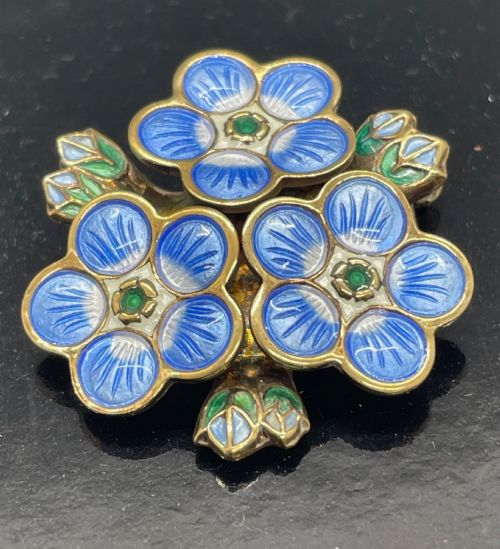
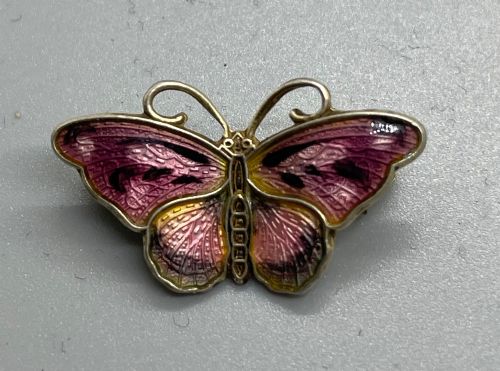
Silver gilt enamel jewellery encompasses brooches, pendants, necklaces and earrings created across various historical periods, including Victorian, Edwardian and mid-century eras. When searching for silver gilt enamel jewellery, buyers encounter diverse forms ranging from naturalistic butterfly brooches to geometric Scandinavian designs.
The inventory spans delicate everyday pieces and larger statement items incorporating pearls, gems and glass. These ornaments reflect distinct stylistic movements from Art Nouveau to mid-century Scandinavian modernism.
Materials and construction
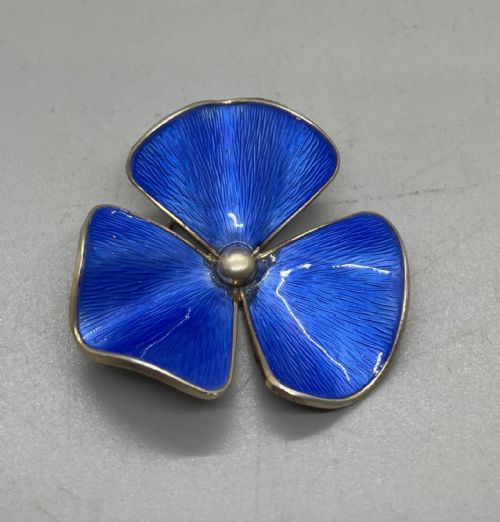
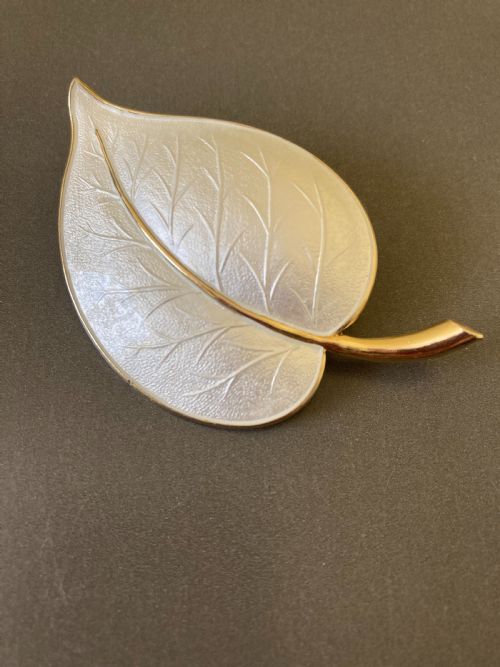
Makers formed these pieces using sterling silver and gilt metal as the primary foundation, applying a layer of gold wash over silver to create the gilt finish. Vitreous enamel and guilloche enamel provide the rich surface colour across the pieces.
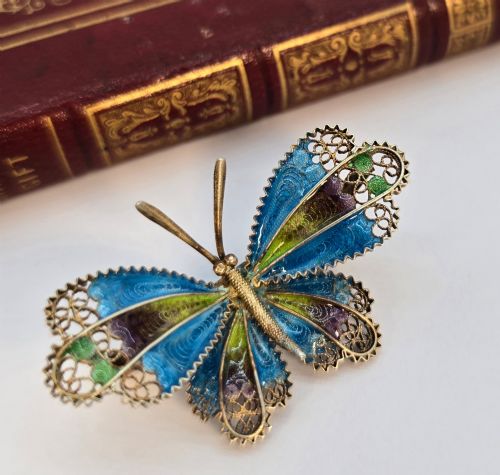
Techniques varied from opaque enamelling to translucent plique-a-jour, which allowed light to pass through the colourful enamel cells without a metal backing. Pearls, citrines, amethysts and seed pearls frequently accented the metalwork.
Listings feature items from the nineteenth century through to the nineteen-sixties, incorporating silver gilt, vitreous enamel, pearls and gemstones.
Assessing quality and execution
Quality in silver gilt enamel jewellery depends on the precision of the metalwork and the clarity of the enamel surface. Master enamellers achieved smooth, even colour application without clouding or visible pitting in the glass layers.
Design complexity and the integration of secondary stones such as pearls and gemstones separate standard production from exceptional pieces. The crispness of guilloche engine-turning beneath translucent enamel further distinguishes finer examples.
Aksel Holmsen·Gustav Gaudernack·Levinger & Bissinger·Meyle & Mayer·Heinrich Levinger
The Silver Gilt Enamel Jewellery Glossary
- Silver gilt
- Sterling silver that has been coated with a thin layer of gold. This process combines the durability of silver with the warm appearance of gold.
- Vitreous enamel
- A material made by fusing powdered glass to a metallic substrate through firing at high temperatures. It creates a smooth, durable and glossy coloured surface.
- Guilloche
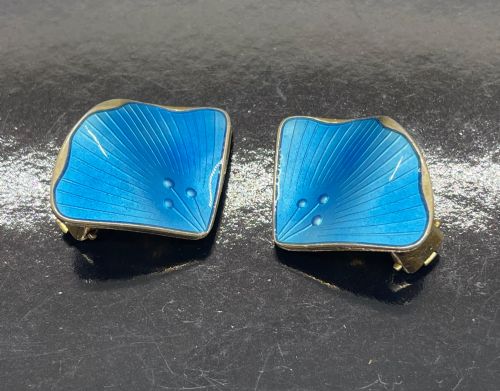
- A decorative engraving technique where a precise, intricate pattern is mechanically etched into the metal surface beneath translucent enamel. The underlying pattern shows through the coloured glass.
- Plique-a-jour
- An enamelling technique where the enamel is applied within a cellular metal framework with no backing, resembling miniature stained glass. Light passes directly through the translucent colour.
- Brooch
- A decorative pin designed to be attached to clothing, often featuring safety catches or pin stems. These ornaments served as primary display pieces for enamel work.
Silver Gilt Enamel Jewellery: Frequently Asked Questions
How do I care for silver gilt enamel jewellery?
Clean these pieces gently using a soft, dry cloth to remove dust and oils. Avoid harsh chemical dips, ultrasonic cleaners and prolonged exposure to water, which can damage the delicate enamel and thin gold wash.
Store each item separately in a lined box or soft pouch to prevent scratching from other pieces. Taking care when fastening brooches and pendants preserves the integrity of the vintage metalwork.
What periods are common in silver gilt enamel jewellery?
The selection includes nineteenth-century revival pieces alongside early twentieth-century Art Nouveau and Art Deco designs. Mid-century Scandinavian pieces from the nineteen-fifties and sixties are also frequently found.
Victorian and Edwardian items often display intricate revival motifs, while later twentieth-century pieces favour cleaner modernist lines and guilloche patterns.
What is the difference between guilloche and plique-a-jour enamel?
Guilloche enamel involves laying translucent glass over an engine-turned metal background, allowing the engraved geometric pattern to reflect light through the colour. This technique creates a shimmering, textured depth.
Plique-a-jour lacks a solid metal backing behind the enamel cells, producing a transparent effect similar to stained glass. This method requires exceptional skill to suspend the vitreous enamel entirely within open wireframes.
Were these items worn daily or saved for occasions?
Many smaller brooches and earrings served as everyday accessories to brighten lapels and collars during the mid-twentieth century. Elaborate necklaces and Renaissance revival pendants were typically reserved for formal wear.
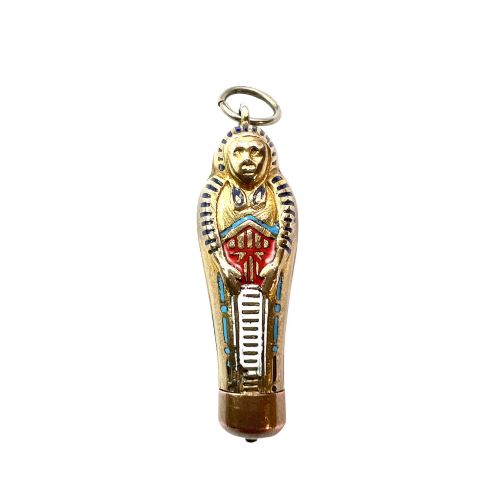
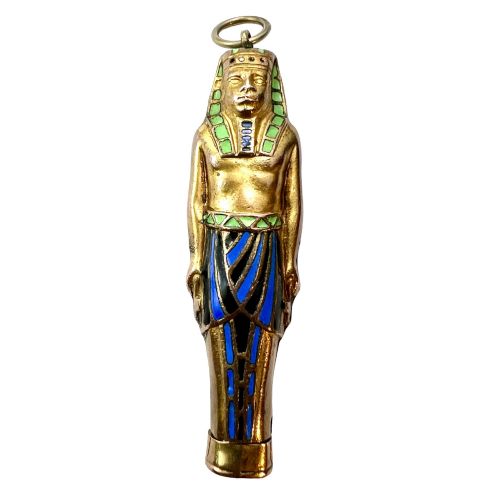
Novelty items like propelling pencil pendants combined practical utility with decorative function, serving as wearable accessories for daily use.