



Silver Fruit Spoon Set
A silver fruit spoon set brings polished refinement to the table, housing matching utensils designed specifically for citrus, berries, and desserts.
Silver Fruit Spoon Set
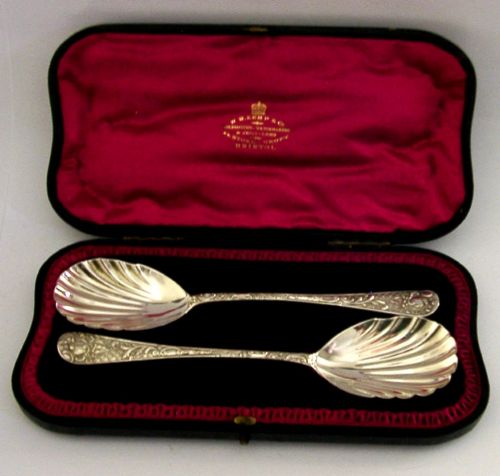
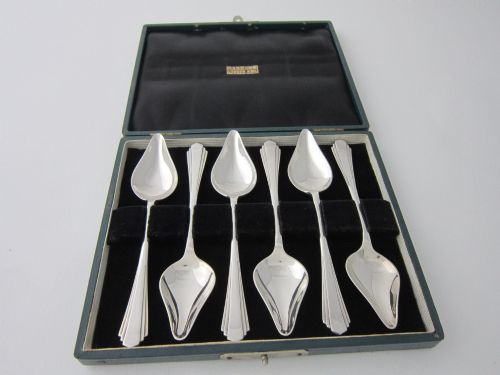
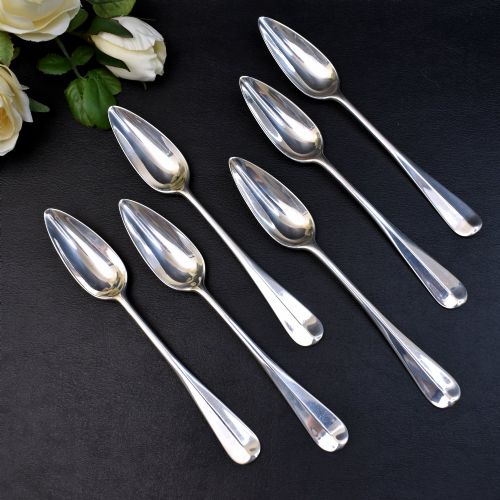
A silver fruit spoon set comprises matched eating or serving utensils intended for table service, often found in fitted presentation boxes lined with protective fabrics. When you search for a silver fruit spoon set, you encounter groupings that range from pairs of large serving spoons to larger sets of six or seven individual citrus or dessert implements.
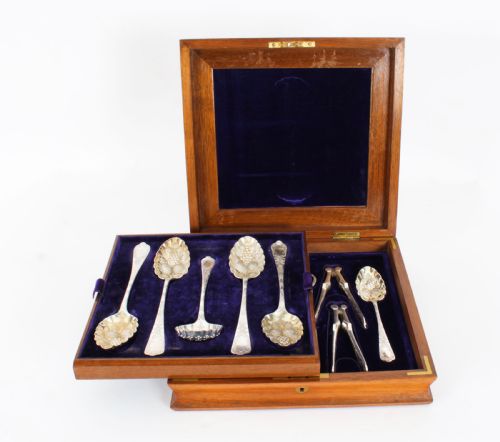
The pieces on this page span several centuries and design movements, moving from George III and Victorian creations through Edwardian silver plate to geometric Art Deco sets. You meet both solid sterling silver versions and silver plate alternatives, frequently accompanied by supplementary tools such as nutcrackers or grape shears within the original case.
Materials and Manufacture
Silversmiths utilised sterling silver or silver plate for the metal components, shaping bowls into forms like shells or pointed grapefruit profiles. Many Victorian berry spoons received subsequent Victorian or later gilding, known as silver gilt or parcel gilt, alongside ornate hand engraving upon the handles and bowls.
Fitted presentation cases utilise rigid outer shells covered in leatherette, fabric, or leather, protecting the metalware within interiors lined with velvet, satin, or silk. Makers such as Hamilton & Inches, Hukin & Heath, and Josiah Williams & Co stamped their pieces with official hallmarks to denote purity and origin.
Quality Variations
Quality rests primarily in the execution of the metalwork, distinguishing between deeply chased, hand-engraved ornamentation and simpler stamped or plated commercial production. Sterling silver holds intrinsic metal value and durability superior to silver plate, though heavy plating on a solid base metal still provides resilience.
The integrity and original condition of the fitted presentation box influence the overall standard of a set, particularly when interior velvet or silk linings remain intact alongside working clasps. Complete sets maintaining matching hallmarks across every spoon reflect higher initial commissioning standards than assembled groups.
Hamilton & Inches·Hukin & Heath·Josiah Williams & Co·Tiffany & Co·William Hair Haseler·Mappin & Webb
The Silver Fruit Spoon Set Glossary
- Sterling silver
- A standard alloy consisting of a high percentage of pure silver combined with other metals to ensure structural strength for cutlery.
- Silver plate
- A base metal substrate covered with a thin layer of silver through electroplating or older manufacturing methods.
- Berry spoon
- A large serving spoon with an expanded bowl, frequently embossed or engraved with fruit and floral motifs during the Victorian period.
- Parcel gilt
- Silver objects that feature selective gold plating applied only to specific areas, such as the interior of spoon bowls.
- Hallmark
- A stamped official mark applied by an assay office indicating metal purity, the maker, and the year of testing.
Silver Fruit Spoon Set: Frequently Asked Questions
What are silver fruit spoon sets used for?
These sets serve specialised dining functions, ranging from portioning grapefruit and berries to serving desserts at the dining table.
Many configurations include dedicated serving pieces or matching implements designed to handle specific table fruits.
How do I care for antique silver spoons?
Gentle cleaning with a dedicated silver cloth prevents the accumulation of tarnish while preserving any delicate hand engraving.
Storing the spoons inside their original fitted cases protects the metal from atmospheric moisture and surface scratching.
Are all fruit spoons made of solid silver?
Manufacturing methods vary between solid sterling silver and silver plate over a base metal foundation.
Examining the metal for official assay hallmarks helps identify solid silver pieces from plated alternatives.
Why do some fruit spoons have pointed tips?
Pointed bowls and serrated edges on grapefruit spoons assist in separating citrus segments from the surrounding membrane.
This specific shaping developed during the early twentieth century to accommodate changing dietary habits and breakfast customs.