




Silver Footed Tray
A silver footed tray brings genuine weight and polished presence to a room, offering the classic form collectors expect from traditional tableware.
What a silver footed tray is
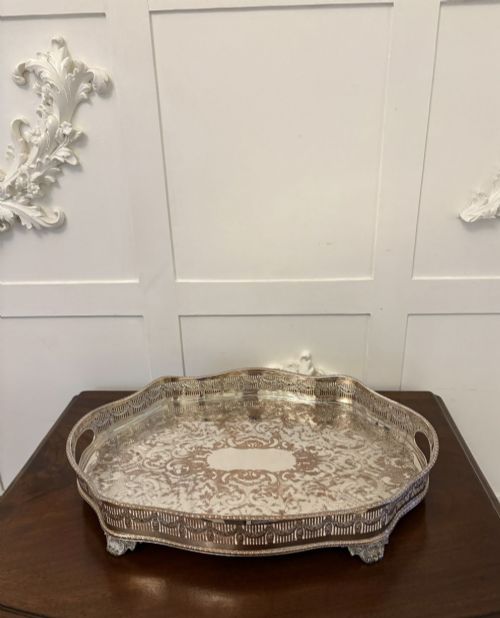
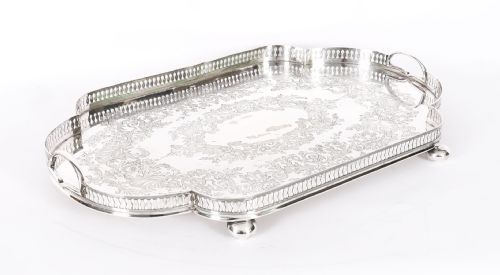
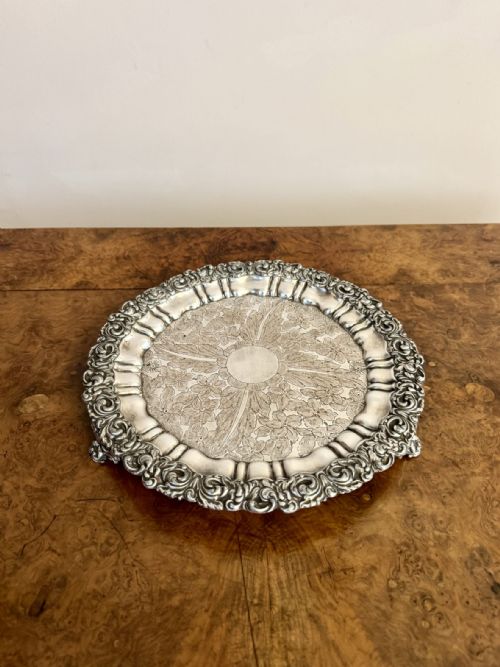
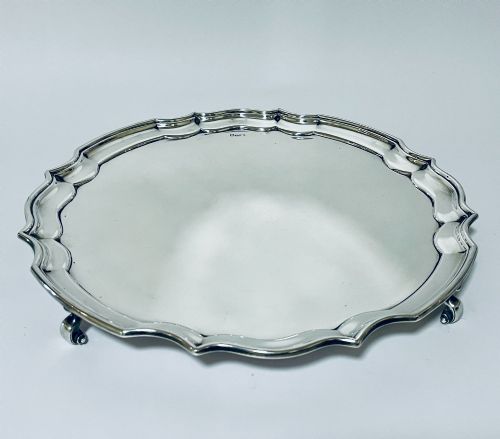
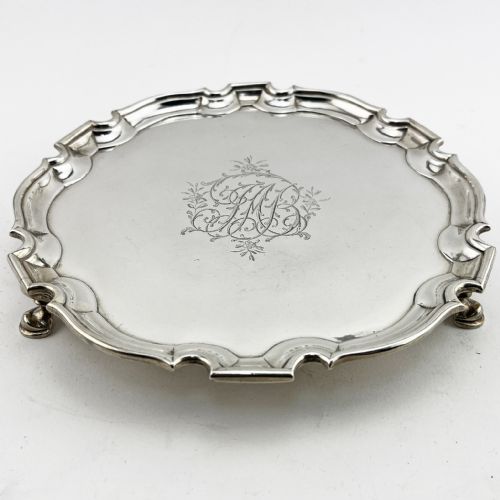
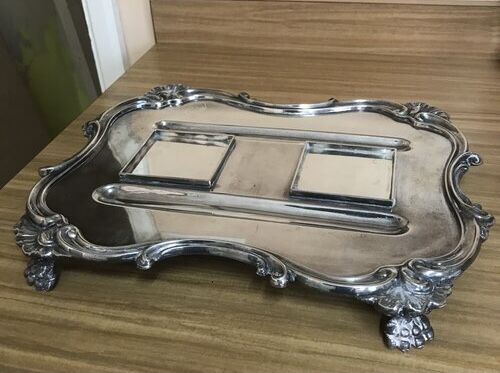
When you search for a silver footed tray, you encounter traditional serving pieces designed to sit raised on small feet above a table surface. The listings on this page include salvers and trays spanning the Georgian, Victorian, and Edwardian periods.
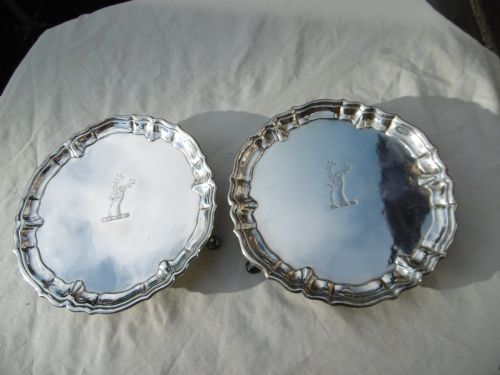
The versions you meet most frequently on this page take the form of circular salvers or serving trays resting on cast or applied supports. These pieces range from early eighteenth-century examples to later plated varieties created for formal hospitality.
Makers from the past produced these items in various sizes, from small waiters intended for calling cards or glasses to larger salvers designed for heavy service. Each item reflects the domestic routines and social entertaining of its respective era.
How they were made
Makers shaped these objects using sterling silver or copper fused with silver through the Old Sheffield Plate technique. Smiths hammered, cast, and chased the metal to achieve the desired rigidity and decorative surface.
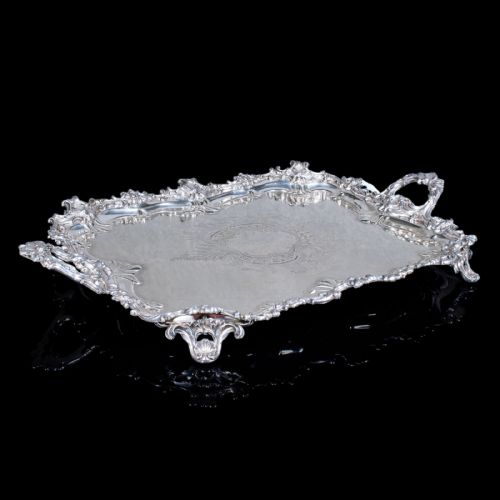
The supports were frequently cast separately and then soldered or attached to the underside of the main body. Artisans decorated the surfaces using hand-chasing, engraving, and applied borders influenced by styles such as Rococo Revival.
Retail Price Guide 2026
Typical UK retail prices for silver footed tray, calculated from the Sellingantiques database of over a million retail prices indexed since 2003. This retail price guide relies exclusively on Sellingantiques data; no external sources or auction records are used, so the figures do not describe the wider market.
Listings for a silver footed tray span the Georgian, Victorian, and Edwardian periods, utilising sterling silver, copper, and Old Sheffield Plate.
What varies in quality
The distinction between standard examples and the finest work lies in the crispness of the chasing and the weight of the metal. Superior pieces demonstrate confident hand-tooling on the borders and a balanced construction where the feet sit true on a flat surface.
Plating technique also marks the difference in quality, particularly in how evenly the silver layer bonds to the copper core in older plated wares. Pieces with clear hallmarks or substantial sterling gauges generally represent the higher tier of production.
Robert Abercromby·Philip Ashberry And Sons
The Silver Footed Tray Glossary
- Salver
- A flat plate or tray with feet, traditionally used for serving drinks or presenting letters. This term often appears interchangeably with tray in older inventories.
- Old Sheffield Plate
- An early method of fusing a thin sheet of silver to a thicker copper core by heat and pressure. This technique predates electroplating and creates a distinct layered edge.
- Chasing
- A metalworking technique where the artisan pushes the metal from the front using hammers and punches to create raised decorative designs. It differs from engraving, which removes metal.
- Hallmark
- A series of official stamps applied to precious metals to indicate the maker, standard of purity, and year of testing. These marks provide a secure anchor for dating a piece.
Frequently Asked Questions
What is a silver footed tray used for?
These trays served primarily for carrying and presenting beverages, glassware, or calling cards in formal households.
Today, they function well as decorative display surfaces on sideboards or coffee tables to hold smaller items.
How do I tell sterling silver from plated trays?
Sterling silver pieces typically carry a set of official hallmarks stamped into the metal to denote silver purity.
Plated items, such as those made in Old Sheffield Plate or later base metals, may show traces of copper beneath worn areas.
What periods do these trays come from?
The available selection includes pieces originating from the eighteenth century, the Georgian era, and the Victorian period.
Archive records also show Edwardian examples among the wider variety of surviving serving trays.
How do I clean a silver footed tray?
Maintenance requires a gentle silver polish and a soft cloth to remove tarnish without harming the underlying metal or chasing.
Avoiding harsh abrasive cleaners protects the delicate hand-engraved details and keeps the surface intact.