




Silver Food Platter
A silver food platter brings architectural weight to the dining table, offering substantial metal covers and dishes designed to keep large roasts warm.
Silver Food Platter
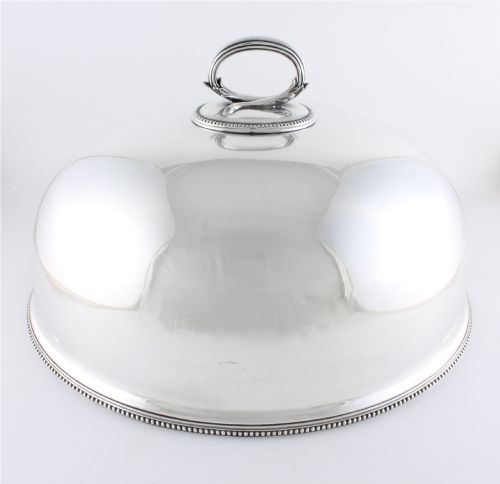
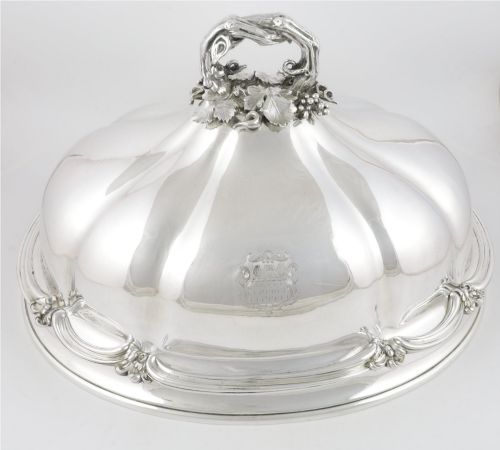
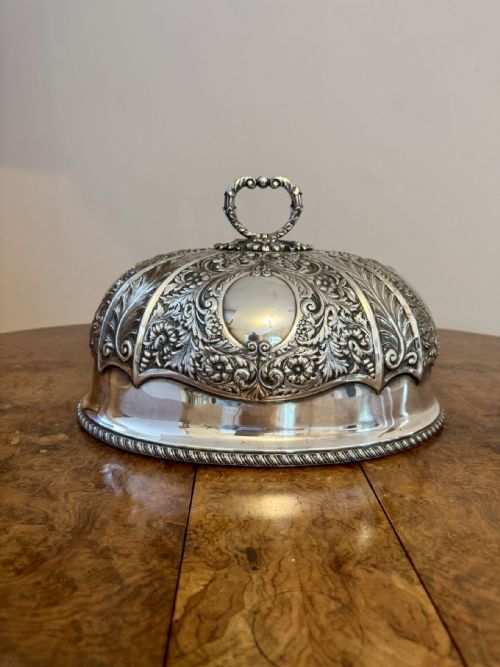
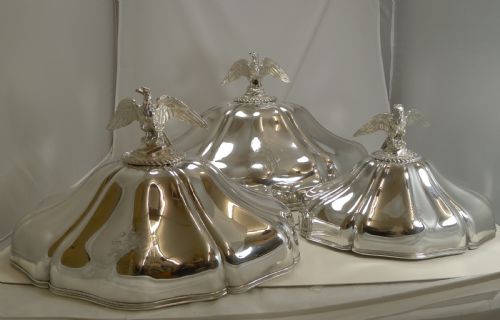
The versions most frequently met on this page are silver plated and Old Sheffield Plate meat covers from the nineteenth century. These items often feature shaped handles, engraved crests, and graduated sizes designed for formal dining arrangements.
Materials and construction
Makers utilised heavy base metals such as copper and nickel silver, applying fused sheets of silver in Old Sheffield Plate or depositing a thin layer through electroplating in later Victorian and Edwardian examples. This marriage of a sturdy core with a precious outer metal provided durability alongside the appearance of solid silver.
Forming these large domes required skilled raising from flat metal sheets or shaping over heavy iron stakes, followed by applied borders and cast handles soldered securely to the crown.
Silver Food Platter Retail Price Guide 2026
Typical asking prices for silver food platter among the pieces listed under this phrase on Sellingantiques today, from the lower quarter to the upper quarter. They describe what is for sale here now, not the wider market.
Listings feature items spanning the Georgian, Victorian, and Edwardian periods, constructed in silver plate, Old Sheffield Plate, copper, and nickel silver.
Judging quality in domestic silver
Quality rests in the weight of the metal and the crispness of the applied decoration, where heavy gauge copper or nickel silver prevents distortion across large expanses. Thinner metal flexes under pressure and loses structural integrity over generations of polishing.
The refinement of cast handles, armorial engravings, and maker marks distinguishes utilitarian pieces from workshop productions by notable makers such as Boulton, Roberts Cadman, or Henry Wilkinson.
Roberts Cadman·Henry Wilkinson·Boulton·Durand
The Silver Food Platter Glossary
- Old Sheffield Plate
- A fused composite material made by melting a sheet of silver onto a thicker copper ingot before rolling them together into thin sheets. This technique predates electroplating and leaves a characteristic thin copper line visible at cut edges.
- Meat Dome
- A large, domed cover designed to fit over a platter and retain heat for large joints of meat. These pieces often feature ring handles on top for lifting.
- EPNS
- Electroplated Nickel Silver, a common nineteenth-century manufacturing method that deposited a silver coating onto a strong nickel alloy base. It provided a bright finish at a lower cost than solid silver.
- Regency
- A decorative style spanning the early nineteenth century characterised by classical revival motifs, bold forms, and restrained ornamentation. Pieces from this period display strong architectural lines.
Silver Food Platter: Frequently Asked Questions
What is a silver food platter?
A silver food platter typically refers to large serving pieces including meat domes, entree dishes, and heavy metal covers designed for nineteenth-century dining tables. These items were built to protect roasted meats and keep them warm between the kitchen and the dining room.
Today, collectors use these substantial metal covers as decorative display items, sideboard centerpieces, or practical servers for large family feasts.
How do I clean old silver plate?
Cleaning requires gentle silver dip or non-abrasive cream applied with a soft cloth to preserve the underlying plating, particularly on Old Sheffield pieces where harsh rubbing can expose the base copper. Regular dusting and minimal washing keep the metal stable.
Avoid abrasive pastes and automatic dishwashers entirely, as these will strip the historic silver surface and ruin the patina built up over centuries.
How do I tell Old Sheffield Plate from EPNS?
Old Sheffield Plate reveals a thin line of orange-red copper where the silver layer has worn thin along edges or raised seams. This method involves fused sheets rather than chemical deposition.
Electroplated Nickel Silver shows a dull grey nickel or brassy base metal underneath worn spots rather than copper, reflecting the later nineteenth-century shift in manufacturing technology.
Were these domes used in private homes?
These large domes and entree dishes served primarily in large country houses, civic halls, and wealthy urban residences where staff transported food across vast distances. They ensured meals remained hot in grand dining rooms.
Smaller households relied on simpler ceramic or basic metal wares without the heavy domes seen in these formal dining collections.