



Silver Fob Medallion
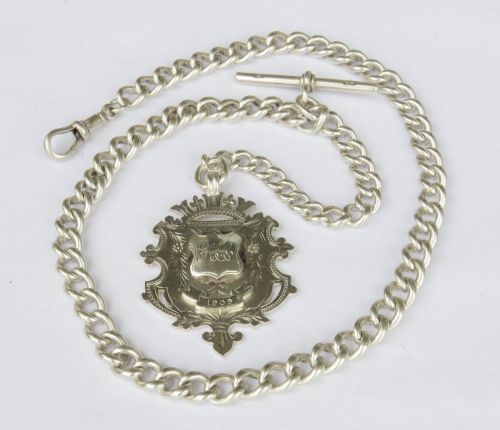
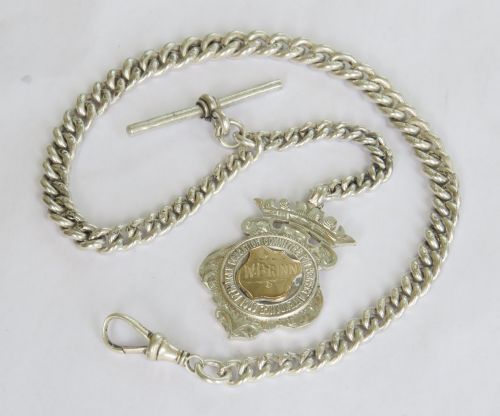
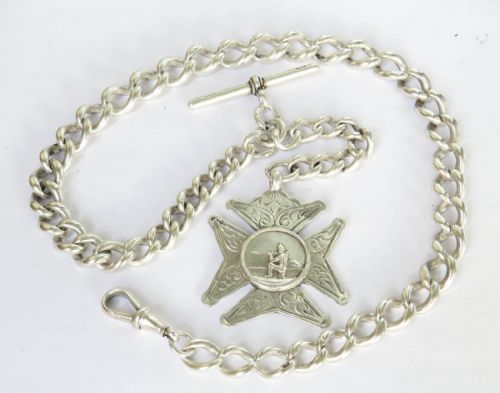
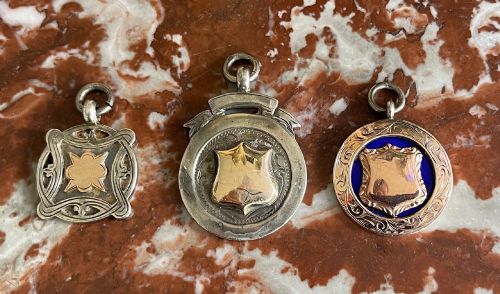
These silver fob medallion pieces are pocket watch chain attachments and pendants celebrating sporting achievements and personal milestones, offering miniature craftsmanship for the collector.
Silver Fob Medallion
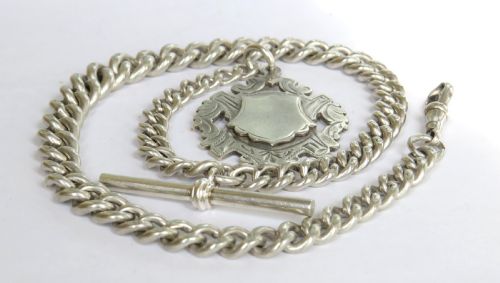
A silver fob medallion sits at the end of a pocket watch albert chain or serves as a standalone pendant recording sports and society events. These items span from the late Victorian and Edwardian eras into the Art Deco period, carrying dates from the eighteen nineties through to nineteen forty five.
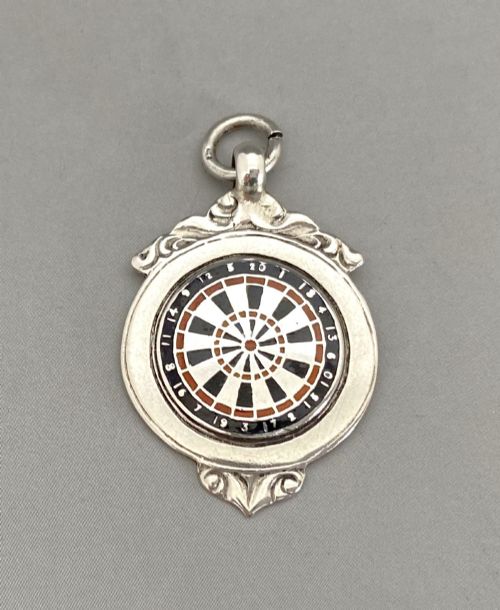
The pieces on this page take the form of dedicated medals and pendants rather than plain watch attachments alone. You will find items dedicated to golf, football, cricket, cycling, and even novelty designs such as darts boards.
Victorian and Edwardian examples sit alongside Art Deco pieces that utilise geometric framing and floral motifs. Most of these medals originate from specific years across the late nineteenth and early twentieth centuries, reflecting community and club competitions of the past.
Materials and construction
These items rely principally on silver, sterling silver, and occasionally gold components shaped into medallions and pendants. Metalwork from this era frequently incorporates hallmarking to indicate the standard of the metal and the town of assay, such as Birmingham.
Colour is introduced through the application of enamelwork, particularly on novelty pieces and sports medals where team colours or board details require definition. Engraving and die-stamping techniques shape the figures of golfers, footballers, and cricketers onto the surface of the silver.
Silver Fob Medallion Retail Price Guide 2026
Typical asking prices for silver fob medallion among the pieces listed under this phrase on Sellingantiques today, from the lower quarter to the upper quarter. They describe what is for sale here now, not the wider market.
Assessing quality in medallions
The standard of a silver fob medallion rests upon the crispness of the chased or engraved figures and the complexity of the subject matter. Pieces depicting specific sports like golf or cricket with detailed human forms demand greater skill from the silversmith than plain geometric discs.
The presence of undamaged enamelwork and clear hallmarks pointing to specific assay offices elevates certain pieces above standard production items. Heavier construction and intact suspension loops further distinguish the finer examples within this group.
The Silver Fob Medallion Glossary
- Silver fob medallion
- A small decorative pendant attached to a pocket watch chain, often engraved to commemorate a sporting victory or club event.
- Sterling silver
- A silver alloy containing ninety-two point five percent pure silver by mass, standard for quality British plate and medallions.
- Albert chain
- A type of pocket watch chain named after Prince Albert, designed to secure a timepiece in a waistcoat pocket with a fob attached at the centre.
- Enamel
- A glassy substance fused to the surface of the metal through firing, used to add permanent colour and detail to sports medals.
- Hallmark
- An official stamp applied by an assay office indicating the purity of the metal, the maker, and the year of testing.
Silver Fob Medallion: Frequently Asked Questions
What is a silver fob medallion?
A silver fob medallion is a small decorative pendant originally worn suspended from a pocket watch chain. They were frequently awarded as prizes for sports such as football, golf, and cycling.
Most examples date from the late Victorian period through to the nineteen forties. They feature engraved details, shields, or circular designs marking club victories and personal achievements.
How were watch chains used?
Pocket watch chains, often called albert chains, secured a pocket watch to a gentleman's waistcoat or jacket. The chain passed through a buttonhole, with the watch tucked into one pocket and the fob medallion dangling as a counterweight or ornament.
Over time, the medallion became the focal point of the chain. Many owners collected multiple fobs from different events to display along a single strand.
How do I date these medallions?
Dating relies primarily on official hallmarks stamped into the silver, combined with engraved dates marking specific sporting events. Birmingham hallmarked pieces often include date letters corresponding to the year of assay.
Stylistic shifts also provide clues to the period. Victorian and Edwardian pieces favour ornate scrollwork, while Art Deco examples from the nineteen twenties and thirties introduce sharper geometric lines and stylised lettering.
Can I wear them as pendants?
These medallions adapt easily to modern jewellery as pendants when suspended from a suitable chain. Their original suspension loops make them straightforward to thread onto neckchains.
Collectors often wear them to showcase historical sports motifs or regional club history. Their solid silver and enamel construction makes them durable enough for daily wear.