




Silver Floral Lapel Brooch
A silver floral lapel brooch offers a subtle touch of botanical charm, bringing delicate petals and leaves in polished metal to a jacket lapel.
Silver Floral Lapel Brooch
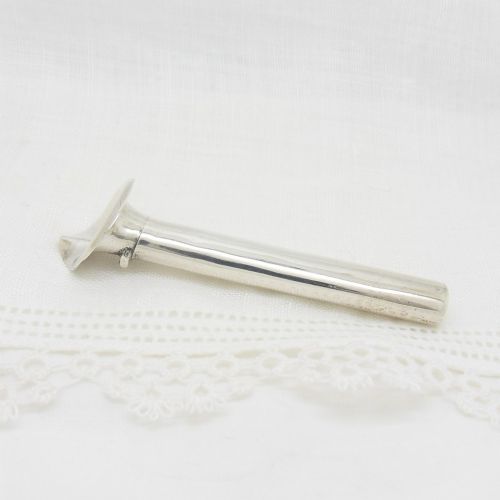
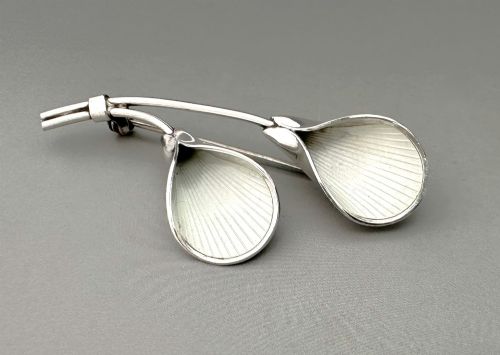
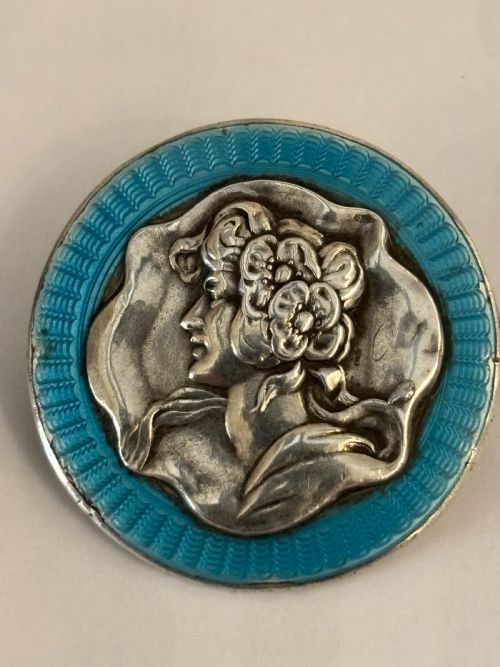
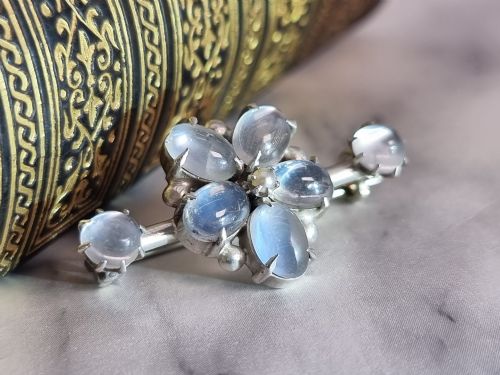
A silver floral lapel brooch is a small decorative fastener designed to secure a lapel or fasten a collar while displaying a flower motif. These pieces range from Edwardian posy holders and pansy designs to mid-century enamel creations and moonstone flower studies.
You are most likely to encounter Edwardian silver items, alongside pieces from the 1940s and 1950s that feature vitreous enamel or marcasite. Styles span from the sinuous lines of Art Nouveau and Arts and Crafts moonstones to Scandinavian modern enamel work and British mid-century pieces.
How they were made
The foundation of these brooches is worked in silver, often sterling standard or enhanced with silver gilt, sometimes incorporating gold gilt highlights. Makers shaped the metal into stems, petals, and frames to hold floral and bird motifs.
Colour is introduced through vitreous and guilloche enamel, fused to the metal surface to create vibrant petals and leaves. Selected pieces incorporate natural moonstones or gemstones as central flower heads, secured in bezels or prong settings.
Silver Floral Lapel Brooch Retail Price Guide 2026
Typical asking prices for silver floral lapel brooch among the pieces listed under this phrase on Sellingantiques today, from the lower quarter to the upper quarter. They describe what is for sale here now, not the wider market.
What varies in quality
Quality in a silver floral lapel brooch rests upon the crispness of the metalwork and the precision of the botanical representation. Pieces with finely chased petals and well-defined leaves show a higher level of benchwork than simpler stamped designs.
Where enamel is applied, the depth of the guilloche pattern and the evenness of the translucent colour separation distinguish finer examples. The integration of materials, such as moonstones paired cleanly with silver wirework, marks out superior craftsmanship.
Henry Matthews·A H Darby & Son
The Silver Floral Lapel Brooch Glossary
- Posy holder
- A small tubular or cornucopia-shaped brooch designed to hold a fresh stem or display metal flowers on a lapel. Edwardian examples often include a pin fastening for secure placement.
- Guilloche enamel
- A decorative technique where translucent enamel is laid over engine-turned metalwork, creating repeating geometric patterns beneath the glossy colour. It catches the light particularly well on mid-century floral designs.
- Silver gilt
- Silver that has been coated with a thin layer of gold, giving it a warm, golden appearance while retaining a silver core. This finish was frequently used on mid-century bird and floral brooches.
- Marcasite
- Small, faceted pieces of iron pyrite set into silver jewellery to provide a glittering, diamond-like sparkle. It provides textural contrast against smooth silver petals and polished enamel.
Silver Floral Lapel Brooch: Frequently Asked Questions
How do you wear a lapel brooch?
A lapel brooch is typically pinned through the buttonhole or directly into the fabric of a jacket lapel. Position it slightly angled so the floral motif sits naturally against the line of the collar.
Heavier posy holders or multi-coloured enamel designs require sturdy jacket wool or tweed to support their weight without pulling the fabric.
What is an Edwardian posy holder?
An Edwardian posy holder is a specialised silver brooch designed during the early twentieth century to hold fresh buttonhole flowers. They often feature engraved scrollwork and a pin finding on the reverse for attachment.
These pieces capture the Edwardian taste for fresh botanicals combined with decorative silversmithing from workshops like Birmingham.
What distinguishes Arts and Crafts brooches?
Arts and Crafts brooches emphasise hand-wrought silver work and natural stones over mass-produced uniformity. They frequently feature moonstones set in unpolished or hammered silver mounts.
Makers of this period focused on visible craftsmanship and organic forms inspired by nature, dating mostly around the turn of the twentieth century.