

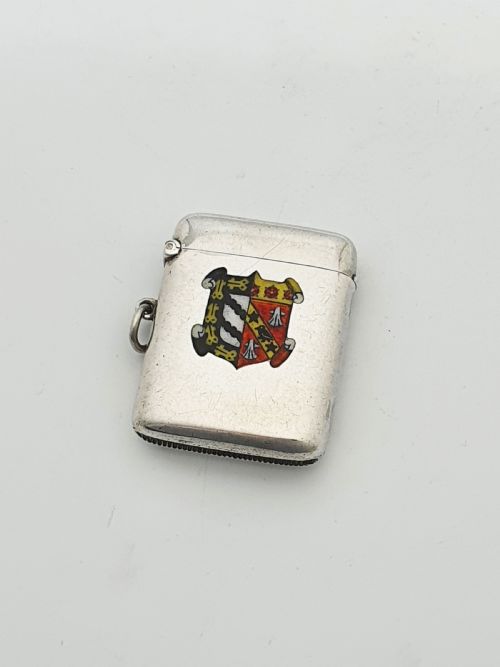


Silver Enamel Vesta Case
A silver enamel vesta case is a pocket match holder combining precious metal and fired glass, prized for miniature hand-painted animal portraits, crests and flags.
Silver Enamel Vesta Case
A silver enamel vesta case is a pocket match holder combining precious metal and fired glass, designed to carry safety matches safely in the waistcoat or pocket. You are looking at small match safes produced predominantly during the Victorian and Edwardian periods, stretching from the 1880s through to the 1920s.
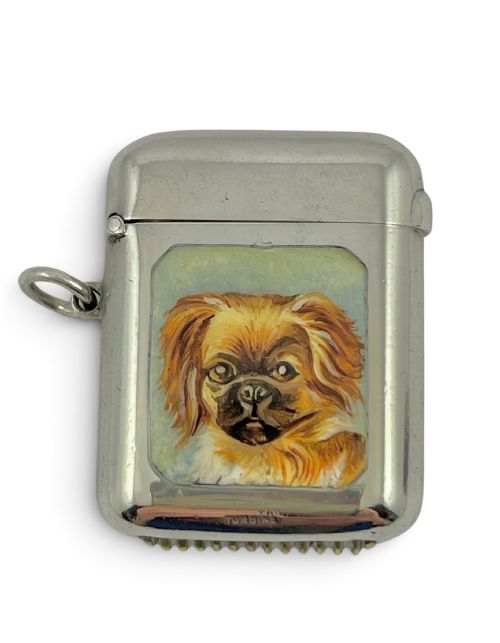
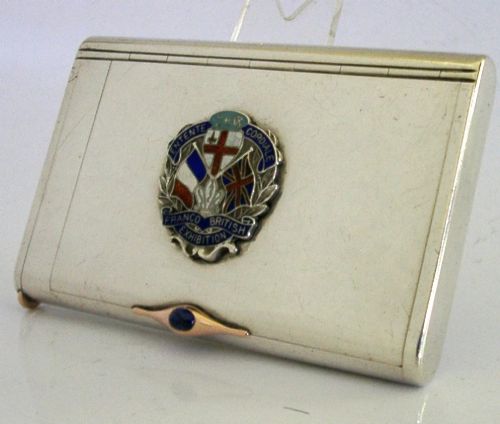
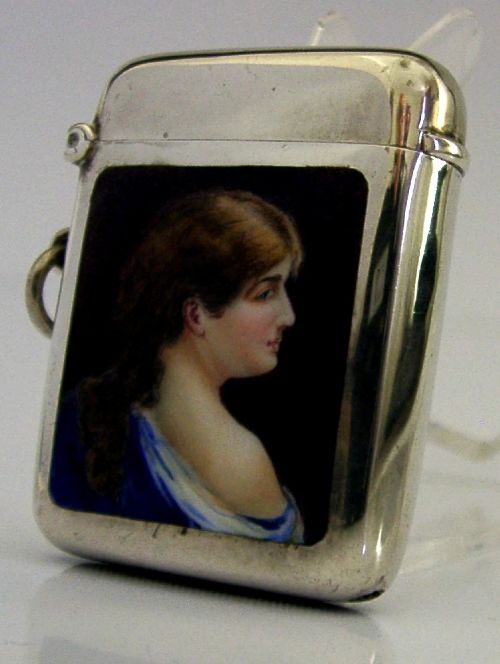
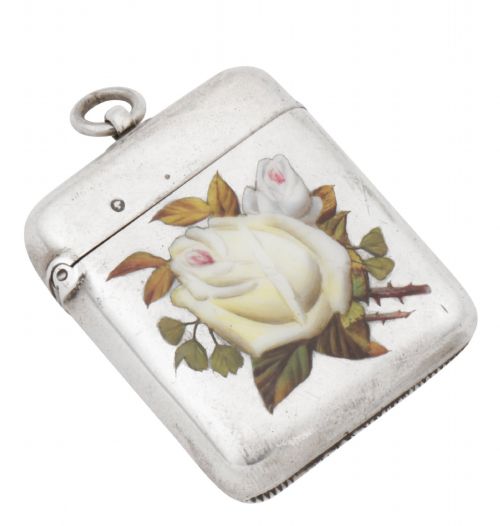
The versions you are most likely to meet on this page feature sterling silver bodies combined with vitreous enamel decoration on the front face. These portable containers span simple geometric coats of arms to highly detailed miniature paintings of dogs, horses, and maritime flags.
Materials and technique
Makers formed the body of each vesta case from sterling silver or silver-gilt, often striking the components using heavy steel dies to shape the main container and spring-hinged lid. The base commonly incorporates a corrugated or crosshatched striking panel for igniting matches.
Vitreous enamel decoration involved fusing powdered glass to the silver surface at high temperatures in a kiln. Artisans frequently applied hand-painted pigments beneath or within the glassy layers to create lasting portraits of animals, crests, and sporting colours.
Some Victorian makers turned match storage into miniature theatre by shaping silver cases as tiny upright military sentry boxes.
Quality differences
Quality rests heavily on the artistry and precision of the enamel work on the front panel. Finer pieces display detailed miniature brushwork in subjects such as dog portraits and jockey silks, whereas standard examples utilise simple heraldic crests or plain coloured enamel.
The crispness of the silversmith's original stamping and the tight fit of the hinged lid dictate the overall standard of the piece. Makers who incorporated complex novelty shapes, such as sentry boxes or animal heads, achieved a much higher tier of craftsmanship than those producing standard rectangular match safes.
William Neale·Sampson Mordan·Joseph Cook and Son·Wm Hare Hasler·Rolason Brothers·David Andersen
The Silver Enamel Vesta Case Glossary
- Vesta case
- A small pocket container designed to hold matches, fitted with a hinged lid and a serrated striking surface on the base.
- Vitreous enamel
- A material made by fusing powdered glass to a metallic substrate through high-temperature firing, creating a glossy coloured surface.
- Silver-gilt
- Sterling silver that has been coated with a thin layer of gold, providing a rich yellow metallic finish.
- Cloisonne
- An enamelling technique where metal wires form small compartments on the surface to hold different colours of glass paste.
- Burgee
- A small triangular or swallow-tailed flag used by yacht clubs and maritime organisations, frequently depicted on sporting vesta cases.
Silver Enamel Vesta Case: Frequently Asked Questions
What is a vesta case used for?
A vesta case was carried in the pocket or attached to a watch chain to store matches safely.
The hinged lid protected the matches from moisture, while the textured bottom allowed the owner to strike them on demand.
How do I date a silver vesta case?
English silver vesta cases carry hallmarks stamped into the metal, usually inside the rim or on the lid.
These marks identify the assay office, the maker's initials, and a specific date letter corresponding to the year of manufacture.
What are the common enamel subjects?
Common enamel subjects include portrait heads of dogs such as pugs and terriers, alongside naval flags and yacht club burgees.
Sporting motifs like jockey colours and university coats of arms also appear frequently on Edwardian and Victorian pieces.