




Silver Enamel Match Safe
These silver enamel match safe pieces are pocket containers safeguarding vestas, combining precious metal and vitreous colour for daily utility.
Silver Enamel Match Safe
When you search for a silver enamel match safe, you examine pocket vesta cases created to protect matches from moisture. The pieces on this page span the Victorian and Edwardian eras, reaching into the early twentieth century.
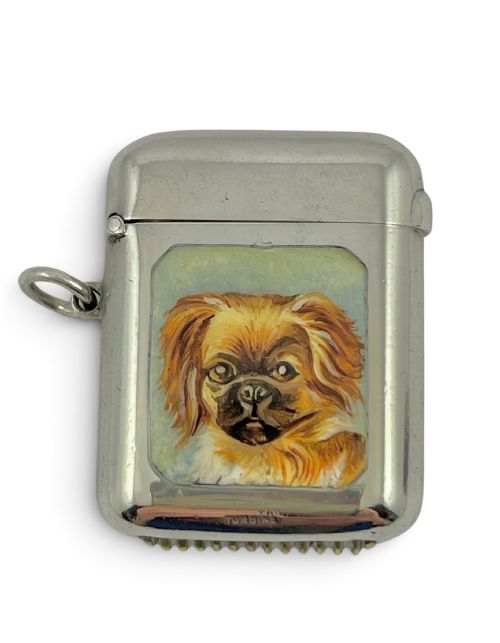
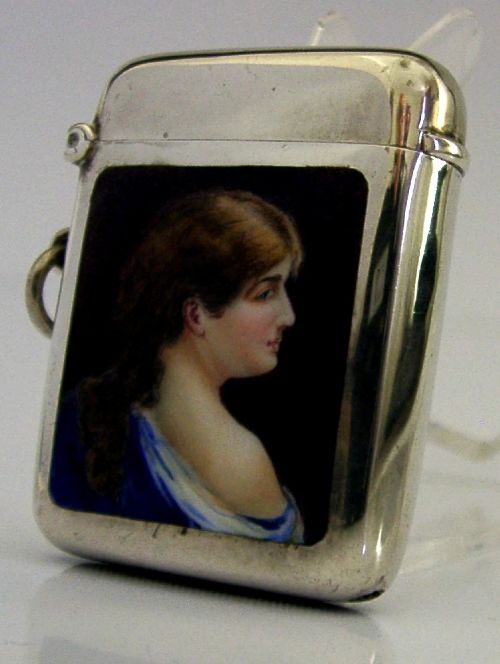
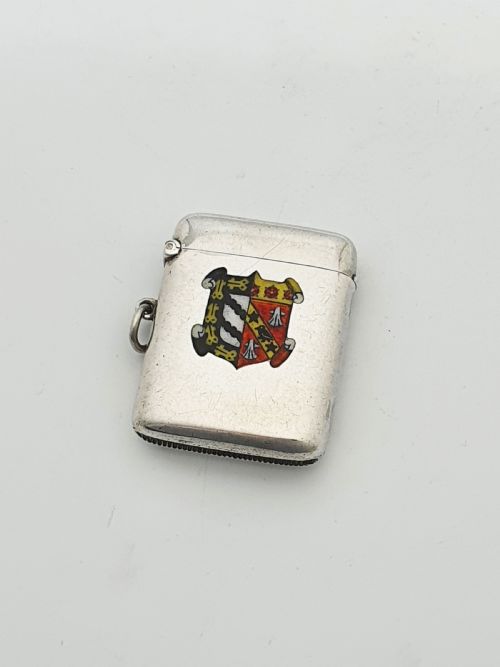
You are most likely to meet sterling silver examples ornamented with hand-painted vitreous enamel surfaces. These portable containers reflect the tastes of late nineteenth and early twentieth century owners through heraldic crests, canine subjects, and sporting motifs.
How they were made
Maker's workshops formed these objects from sterling silver, shaping the metal into hinged boxes designed to fit a waistcoat pocket. Surface decoration relied upon vitreous enamel fused to the metal base through kiln firing.
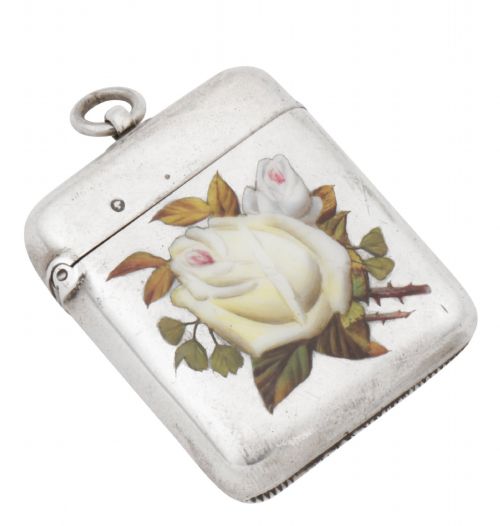
Artisans applied hand-painted details directly onto the enamel ground, depicting subjects such as dogs, flowers, and jockey portraits. Assay office hallmarks stamped into the silver record the year of creation and the town of assay.
Silver Enamel Match Safe Retail Price Guide 2026
Typical asking prices for silver enamel match safe among the pieces listed under this phrase on Sellingantiques today, from the lower quarter to the upper quarter. They describe what is for sale here now, not the wider market.
Listings show items originating from the Victorian and Edwardian periods, utilising sterling silver and vitreous enamel.
What varies in quality
The sophistication of the painted enamel subject sets the finest examples apart from standard production pieces. Detailed figurative work, such as canine portraits and racing silks, requires superior miniature painting skill.
The crispness of the silver hallmarks and the structural integrity of the spring-loaded hinge determine the overall standard of construction. Pieces retaining unblemished enamel surfaces command greater appreciation among collectors.
William Neale·Sampson Mordan
The Silver Enamel Match Safe Glossary
- Vesta case
- A small pocket container designed to hold matches, commonly fitted with a striking serration on the base. These objects date primarily from the nineteenth and early twentieth centuries.
- Vitreous enamel
- Glass fused to a metal substrate through high-temperature firing. This material provides the glossy, colourful ground for hand-painted decoration.
- Sterling silver
- A silver alloy containing ninety-two point five percent pure silver by mass. Assay offices stamped this standard onto British items to guarantee metal purity.
- Hallmark
- A set of official marks stamped on precious metals by an assay office. These symbols indicate the maker, the metal standard, the assay town, and the year of testing.
Silver Enamel Match Safe: Frequently Asked Questions
What is a silver enamel match safe used for?
These containers held wax matches safely inside pockets before the widespread availability of safety matches. The textured base allowed the owner to strike a vesta upon the case itself.
Today, collectors appreciate them as pocket art and historical objects reflecting Victorian and Edwardian pastimes.
How do I date a silver enamel match safe?
You rely upon the assay office hallmarks stamped directly into the silver body. These marks include a date letter corresponding to the exact year the piece was tested.
Stylistic details such as enamel subjects and Victorian or Edwardian manufacturing conventions also help confirm the period of origin.
What subjects appear on these enamel cases?
Makers decorated the enamel surfaces with a variety of illustrative motifs. Common themes include canine portraits, floral arrangements, heraldic crests, and sporting subjects.
Equestrian figures and racing colours also feature prominently among the surviving nineteenth-century examples.
How should I care for a silver enamel match safe?
You handle the piece with care to protect the vitreous enamel from sharp impacts that can cause chipping. Store the container in a dry environment away from extreme temperature shifts.
Clean the sterling silver sections gently with a soft cloth while avoiding abrasive polishes near the painted enamel areas.