




Silver Enamel Jar
These silver enamel jar pieces bring a bright splash of colour to dressing tables, combining precious metal with lustrous vitreous work.
Silver Enamel Jar
A silver enamel jar is primarily a dressing table accessory, vanity piece, or small scent bottle designed for daily use in the Edwardian and mid-century periods. These lidded pots and trinket boxes combine sterling silver mounts with colourful enamel details on glass or crystal bodies.
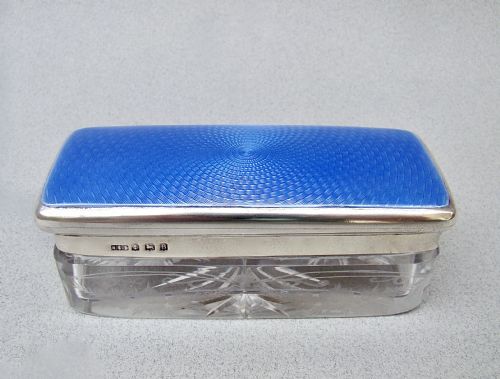
You will most frequently meet Art Deco examples featuring engine-turned guilloche patterns beneath translucent blue or pink enamel. These pieces range from small lidded bowls to tall cut glass scent bottles bearing hallmarks from Birmingham and London.
How they were made
Silversmiths formed the mounts and lids from sterling silver, often sending them to specialist workshops for the application of vitreous enamel. Glass bodies were frequently heavy cut or etched crystal, designed to hold perfumes, powders, or small trinkets securely beneath a tight-fitting silver top.
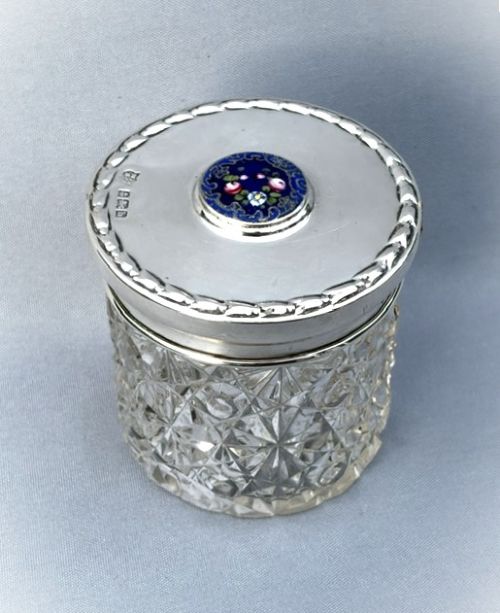
Guilloche enamel work involved machine-engraving geometric patterns into the silver base before applying translucent coloured glass pastes that were kiln-fired to a high gloss. Plain enamelling utilised smooth, opaque colour fields set directly into the silver lid mounts.
Silver Enamel Jar Retail Price Guide 2026
Typical asking prices for silver enamel jar among the pieces listed under this phrase on Sellingantiques today, from the lower quarter to the upper quarter. They describe what is for sale here now, not the wider market.
Some Edwardian jars still faintly smell of vintage rose powder after a century on the dressing table.
What varies in quality
Quality in a silver enamel jar rests upon the crispness of the engine-turned guilloche engraving and the evenness of the fired vitreous enamel layer. Finer pieces display complex, underlying geometric patterns that shimmer clearly through the translucent coloured glaze.
The weight and depth of the cut glass or crystal body also distinguish standard production from superior examples. Heavier sterling silver mounts with clear, legible hallmarks indicate higher tier manufacturing by notable silversmiths.
Henry Clifford Davis·Henry Perkins·Goldsmith's and Silversmith's Co.
The Silver Enamel Jar Glossary
- Guilloche Enamel
- A decorative technique where a mechanical lathe engraves a precise, repetitive pattern into metal before translucent enamel is applied. This method creates a shimmering, light-reflecting depth beneath the coloured glass surface.
- Sterling Silver
- A metal alloy consisting of ninety-two point five percent silver and seven point five percent other metals, usually copper. It provides the durable structural framework for the lids and collars of these dressing table jars.
- Dressing Table Jar
- A functional container designed to hold cosmetics, pins, or perfumes on a vanity surface. They typically feature a wide glass or crystal bowl with a matching silver and enamel lid.
- Cranberry Glass
- A distinctive pinkish-red glass created by adding gold chloride to the molten glass batch. It appears frequently in early twentieth-century trinket boxes and scent bottles.
Silver Enamel Jar: Frequently Asked Questions
How do I clean a silver enamel jar?
Use a soft, dry cloth to gently wipe the silver and enamel surfaces, avoiding harsh chemical dips that can damage the vitreous glass layer. Keep moisture away from the interior rims where the silver meets the glass body.
Store the jars in a dry environment away from direct sunlight to preserve the vibrant colours of the enamel over time.
What periods do these jars come from?
The available pieces span from the Edwardian era through the nineteen-twenties, thirties, and into the nineteen-sixties. Art Deco geometric styles dominate the mid-period pieces.
Early twentieth-century examples often carry clear Birmingham or London hallmarks that help date the exact year of manufacture.
Are the glass bodies original to the lids?
Most pieces feature matched cut glass or cranberry glass bodies paired with their original sterling silver and enamel tops. Hallmarks on the silver components often correspond with the production era of the glass.
Inspect the fit between the silver collar and the glass rim to ensure secure alignment.
What were these jars originally used for?
Owners kept them on dressing tables to hold perfumes, smelling salts, face powders, and small hairpins. They served as both functional vanity items and decorative bedroom accessories.
Scent bottles included ground glass stoppers beneath the silver caps to prevent liquid evaporation.