



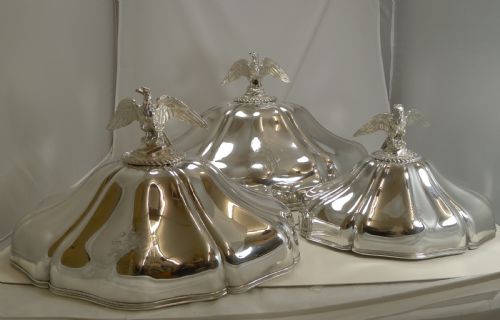


Silver Dome Cover
A silver dome cover brings grand dining table tradition home, guarding roasts and cheeses with period weight and polished shine.
Silver Dome Cover
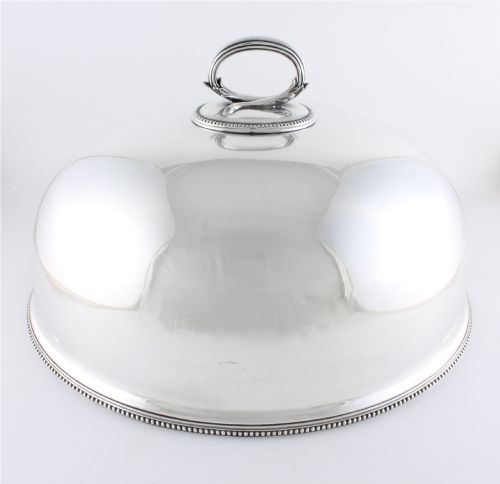
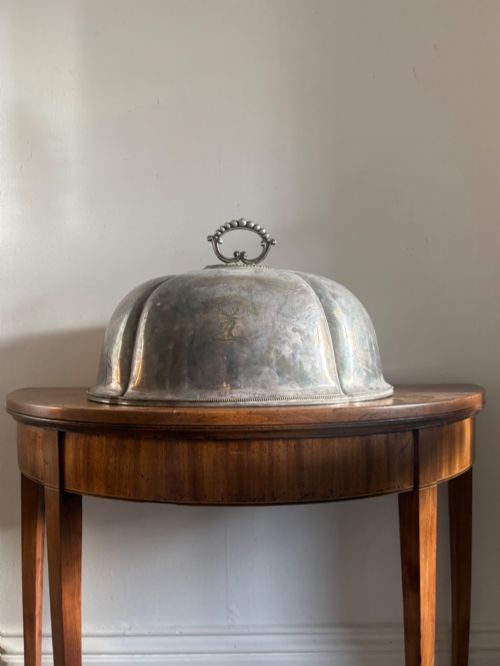
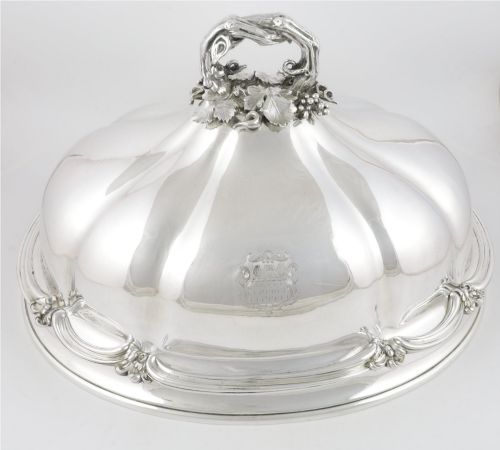
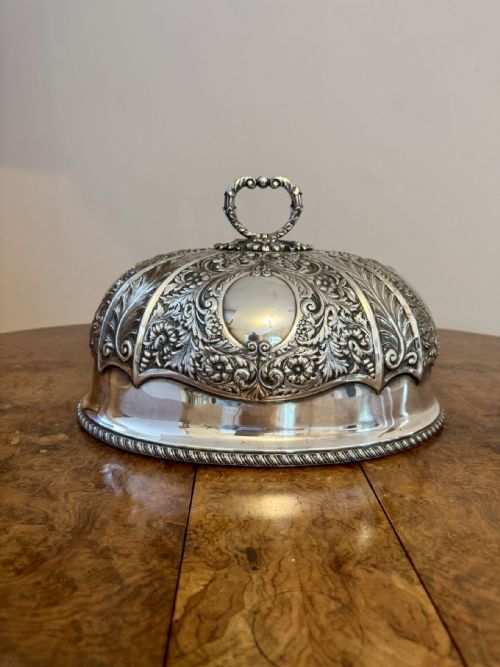
A silver dome cover serves as table serveware designed to keep large joints of meat, game, or cheese warm and protected at the dining table. Buyers searching this phrase will find meat domes, dish covers, entree dishes, and cloches spanning periods from the Georgian era through the Edwardian years.
The most common forms on this page include substantial silver plated meat covers and Old Sheffield Plate domes from the nineteenth century. Pieces range from single serving covers to graduated sets and matching cheese dishes featuring glass inserts.
Origins stretch across British workshops as well as continental makers such as Durand in Paris and WMF style pieces from nineteen twenty. Styles reflect the prevailing tastes of Victorian, Regency, Edwardian, and William IV periods.
Materials and construction
Makers constructed these covers using solid silver, Old Sheffield Plate, and copper beneath silver plate or electroplated nickel silver. Old Sheffield Plate involves fusing a thin sheet of silver to a copper core, a method visible along cut edges where the base metal shows.
Victorian and Edwardian examples frequently utilise silver plate on a base metal or EPNS, providing the lustre of silver with greater structural rigidity. Glass components appear in combination with silver plate for specialised forms like cheese dishes.
Silver Dome Cover Retail Price Guide 2026
Typical asking prices for silver dome cover among the pieces listed under this phrase on Sellingantiques today, from the lower quarter to the upper quarter. They describe what is for sale here now, not the wider market.
Listings feature items from the Georgian period through nineteen twenty, utilising silver plate, copper, old Sheffield plate, and glass.
Evaluating quality in covers
Quality rests in the weight of the metal, the crispness of applied handles or crests, and the integrity of the plating over copper or base metal. Superior examples retain their original form without heavy distortion and show balanced proportions across graduated sets.
Fine craftsmanship appears in decorative chasing, engraved coats of arms or monograms, and maker marks stamped into the metal. The transition from fused Old Sheffield Plate to later electroplating methods marks a distinct shift in manufacturing technique that influences character.
Roberts Cadman·Henry Wilkinson·Boulton·Durand
The Silver Dome Cover Glossary
- Old Sheffield Plate
- An early form of silver plating created by fusing a sheet of silver to a copper ingot before rolling. This technique predates electroplating and often reveals thin lines of copper at exposed edges.
- EPNS
- Electroplated Nickel Silver, a common base material introduced in the nineteenth century for silver plated wares. It provides a durable foundation for heavy table items.
- Cloche
- A bell-shaped cover used in dining to keep food warm or to present dishes at the table. These often pair with matching platters or entree dishes.
- Entree dish
- A shallow vessel with a removable cover designed for serving individual courses or side dishes. They frequently appear in matched pairs on this page.
Silver Dome Cover: Frequently Asked Questions
How do I clean a silver dome cover?
Clean these pieces using a gentle silver polish and a soft cloth to preserve the plating and any underlying copper or base metal. Avoid harsh abrasives that can wear away historic plating over time.
For pieces with glass inserts or combination materials, wash the glass separately in warm soapy water. Dry thoroughly with a lint-free cloth to maintain the shine.
Were these covers used only for meat?
While most large examples function as meat domes or game covers for roasts, smaller variants serve specific purposes. Cheese dishes combine a dome cover with a glass plate for table presentation.
Graduated sets allowed households to cover platters of varying sizes during formal Victorian and Georgian meals. They served both a practical warming function and a decorative display role.
How do I date an old silver dome?
Dating relies on stylistic clues, manufacturing techniques, and any maker marks or crests stamped on the metal. Georgian and Regency pieces often show Old Sheffield Plate construction with visible copper edges.
Victorian and Edwardian examples tend to use electroplated nickel silver and feature heavier ornamentation reflecting the period. Graduated sets from makers like Durand carry specific stylistic markers from the mid-nineteenth century.
Can I use these on a modern dining table?
These covers adapt well to contemporary dining tables as functional serveware or decorative focal points. Their substantial weight and polished surfaces complement traditional and modern interior settings alike.
Ensure any food placed beneath them is at serving temperature, as the metal acts primarily as a cover rather than a heating vessel. Displaying them over platters recreates historic tablescapes in a home environment.