


Silver Cut Glass Caster
A silver cut glass caster combines heavy faceted glass with gleaming metal mounts to dispense sugar or pepper at the dining table.
Silver Cut Glass Caster
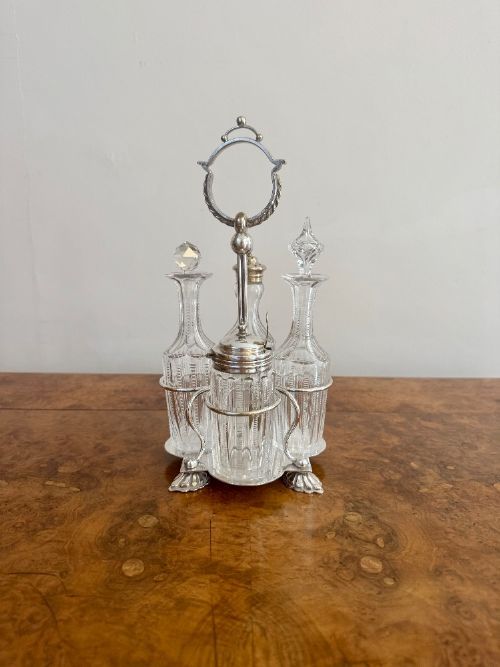
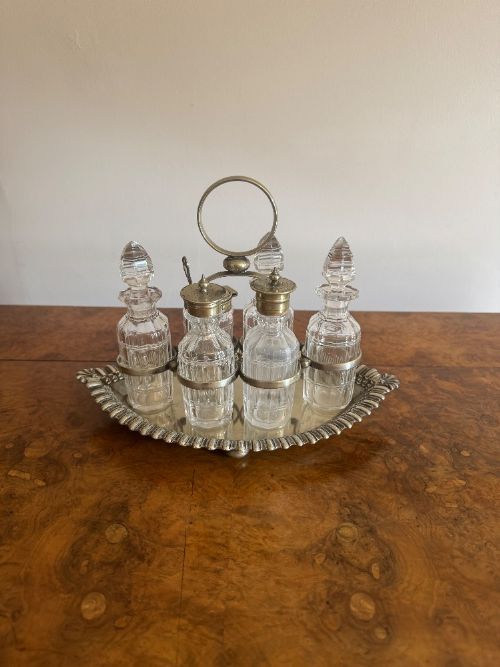
When you search for a silver cut glass caster, you are looking at table wares designed to hold and sift sugar, pepper or condiments. These pieces appear singly as tall shakers or within larger cruet sets holding multiple bottles on a stand.
The selections on this page span the Georgian, Victorian and Edwardian periods up to the Art Deco era, alongside mid-century British examples. Forms range from simple lighthouse shapes to elaborate multi-bottle stands in silver plate or sterling silver.
Materials and construction methods
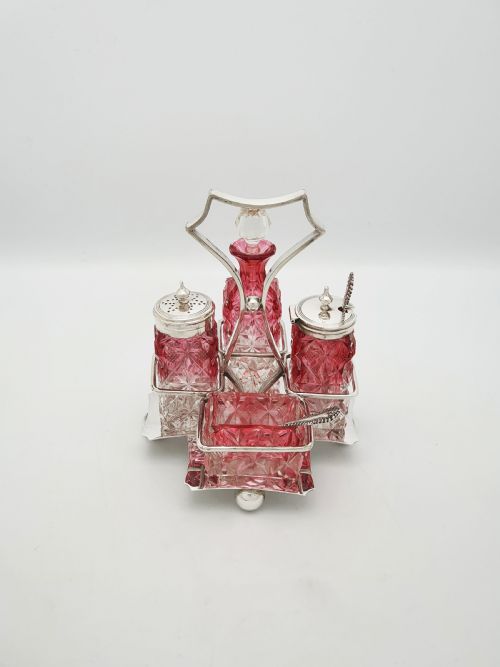
The bodies utilise heavy cut glass, sometimes flashed with cranberry colour, paired with sterling silver or silver plate mounts for the pierced lids. Certain pieces incorporate ebonised wood or oak stands to house the glass vessels securely.
Lids are pierced with geometric or floral patterns to allow contents to shake through, often secured with threaded collars or simple push-fit silver tops.
Listings feature pieces spanning the eighteenth century through the Georgian, Victorian, Edwardian and Art Deco eras.
Factors of distinction
Quality rests in the crispness of the glass faceting and the weight of the metal mounts. Thick, deeply cut glass and substantial silver gauge separate finer workshop productions from lighter commercial wares.
Completeness matters significantly in sets, where matching original bottles and fully intact pierced tops determine the standing of the piece.
Mappin Brothers·Walker & Hall·Charles Thomas Fox·Elkington & Co·Preece & Willicombe·Wade Wingfield Wilkins
The Silver Cut Glass Caster Glossary
- Caster
- A small container with a perforated top used for sprinkling sugar or condiments. They stand upright on a flat base.
- Cruet set
- A fitted stand holding multiple glass bottles or casters for oil, vinegar, pepper and mustard. These frames often possess a central carrying handle.
- Sifter
- An alternative term for a caster, typically utilised for fine castor sugar over desserts. The pierced lid allows an even distribution.
- Silver plate
- A base metal, often copper or Britannia metal, coated with a thin layer of silver. This technique provided the look of solid silver at a lower cost.
- Sterling silver
- An alloy of silver containing ninety-two point five percent pure silver and seven point five percent other metals, usually copper. British pieces carry hallmark stamps verifying this standard.
Silver Cut Glass Caster: Frequently Asked Questions
How do I clean the glass and silver?
Wash the glass gently in warm soapy water using a soft brush to clear old residue from the cut facets. Keep silver polish away from the glass surface to avoid staining the cuts.
Dry the metal components immediately after cleaning to prevent moisture damage, especially around the pierced lid threads.
Were these used daily?
Wealthy households kept cruet sets and casters permanently on the dining table for seasoning food during meals. They transitioned from formal dinners to everyday family dining by the Victorian period.
Individual sugar casters sat on sideboards ready for afternoon tea service or dessert courses.
How do I date a silver mount?
Sterling silver pieces bear hallmarks that indicate the assay office, date letter and maker's mark. These tiny stamped symbols provide precise years for items made in London and other British cities.
Silver plated items rely on style cues, maker marks and registration numbers to narrow down their decade of production.
Can I still use them for dining?
Modern sugar and pepper fit easily inside these historic vessels for actual table use. Ensure the interior glass is thoroughly washed and dried before filling with dry condiments.
Avoid leaving damp condiments inside silver plated pieces to protect the interior metal lining from corrosion.