



Silver Crystal Necklace
A silver crystal necklace catches the light with timeless brilliance, offering collectors a striking piece of wearable history spanning multiple eras.
Silver Crystal Necklace
A silver crystal necklace brings together precious or base metalwork and light-catching mineral or glass components. When searching for a silver crystal necklace, buyers encounter an array of historical designs ranging from Victorian sentimentality to mid-century modern boldness.
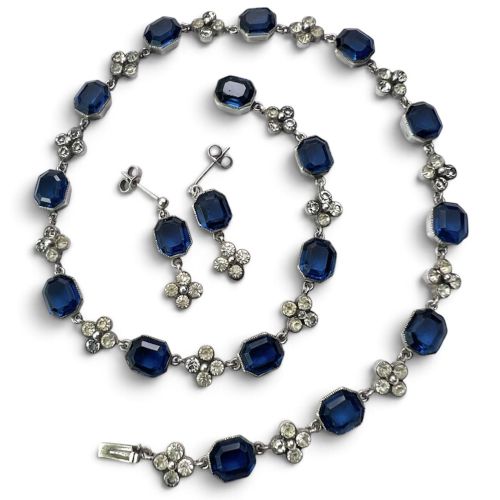
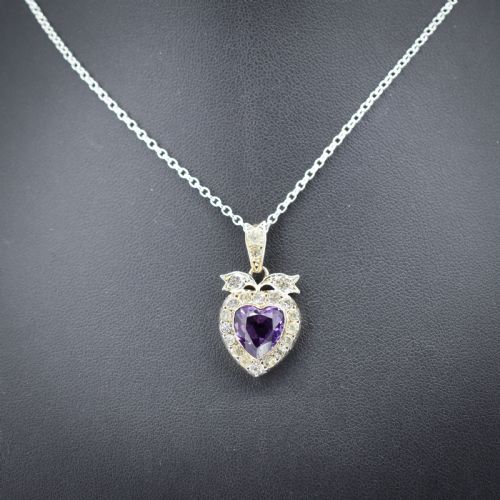
The selections span distinct periods including the Victorian era, the Art Nouveau and Arts and Crafts movements, Art Deco, and the 1950s. Common forms include pendants, lockets, riviere chokers, and full jewellery sets complete with matching earrings.
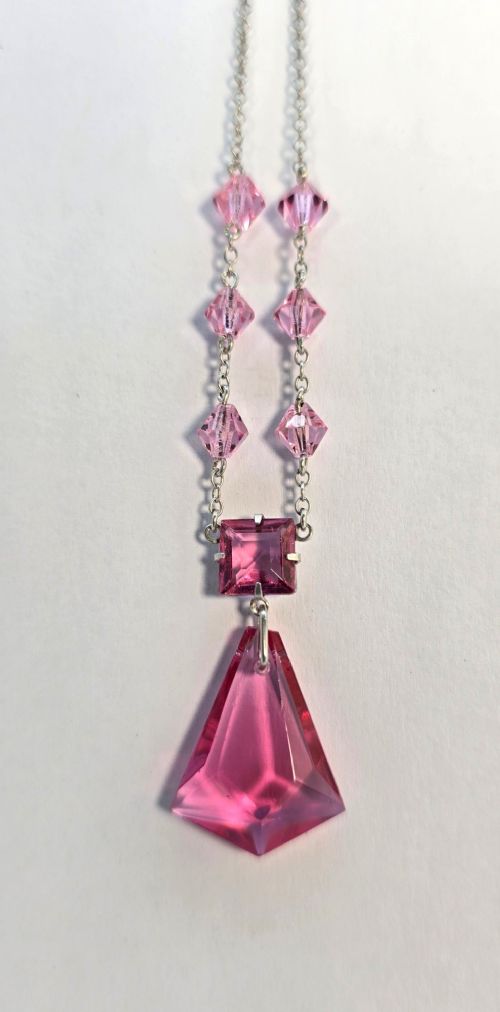
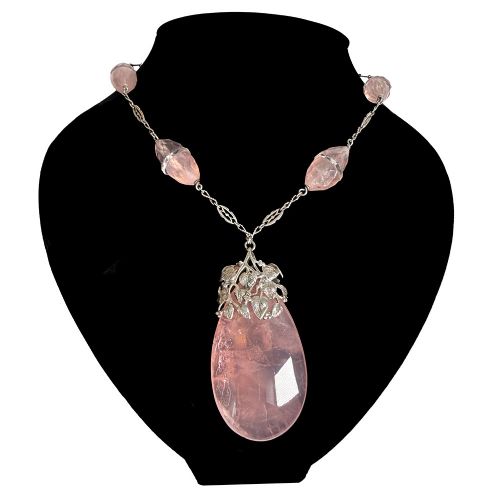
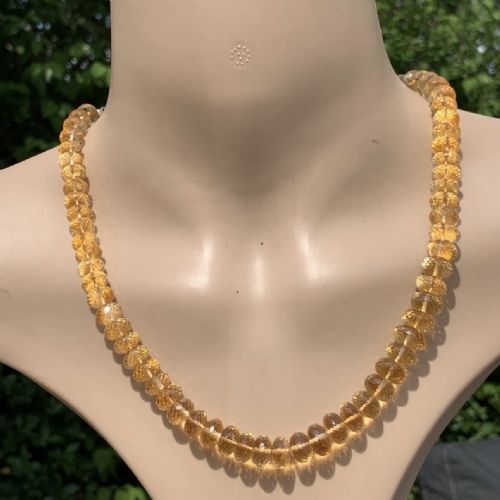
Pieces frequently incorporate genuine rock crystal alongside amethyst, rose quartz, citrine, opal, and paste glass. These combinations reflect the shifting aesthetic preferences of makers across the late nineteenth and twentieth centuries.
Materials and construction methods
Silversmiths utilised sterling or unmarked silver to form chains, filigree settings, bezels, and clasps. Metal components often feature intricate wirework, hand-stamped details, or substantial cast mountings depending on the prevailing style of the decade.
Crystals and gemstones were hand-cut, faceted, or left in natural organic shapes before being secured in prong or bezel settings. Makers frequently paired transparent rock crystal with coloured stones such as amethyst and rose quartz, or substituted paste glass to achieve specific optical effects.
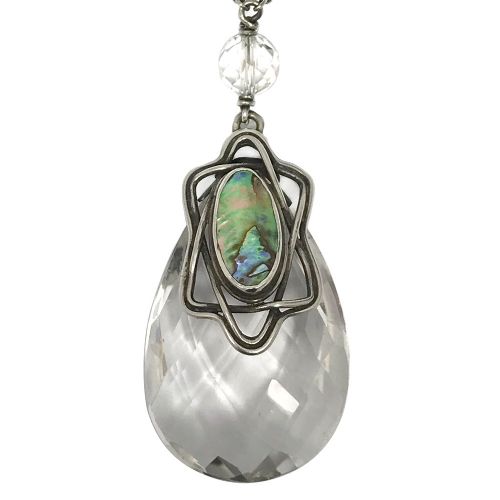
Arts and Crafts pieces on this platform showcase natural quartz and abalone alongside hand-worked silver mountings.
Distinguishing quality in period jewellery
Quality rests in the precision of the stone cutting and the integrity of the silver mountings. Superior examples display crisp faceting in the crystals and robust, well-executed metalwork that secures each stone firmly without excess solder.
Amy Sandheim·Christian Dior·George Hunt
The Silver Crystal Necklace Glossary
- Rock crystal
- A colourless, transparent variety of quartz used historically for jewellery and decorative carvings. It differs from synthetic glass through its natural mineral structure and cool touch.
- Filigree
- Ornamental work consisting of fine silver wire twisted and soldered together to form openwork patterns. This delicate technique appears frequently in Victorian and Edwardian pieces.
- Riviere
- A necklace composed of a continuous sequence of gemstones or crystals of similar size and cut linked closely together. These pieces sit neatly around the base of the neck.
- Parure
- A matched set of jewellery comprising a necklace, earrings, and often a brooch or bracelet designed to be worn together. Such suites became particularly popular during the mid-twentieth century.
Silver Crystal Necklace: Frequently Asked Questions
How do I date a silver crystal necklace?
Dating relies on stylistic markers, clasp types, and the cut of the crystals. Victorian pieces often feature closed-back settings and intricate filigree, while Art Deco items display geometric symmetry and calibré cuts.
Mid-century designs introduce bolder forms and distinct manufacturing marks. Comparing the mounting technique with known period examples clarifies the likely decade of production.
What is the difference between rock crystal and glass?
Rock crystal is a natural quartz mineral, whereas glass is a manufactured amorphous solid. Natural crystal feels noticeably cooler to the touch and possesses a higher hardness level.
Under magnification, glass may reveal tiny air bubbles or internal swirl lines absent in natural quartz. Mineral crystals also display distinct optical axes when examined with specialised gemmological tools.
Can missing stones be replaced successfully?
Replacing missing stones is possible but requires sourcing period-appropriate crystals with matching cuts, depths, and refractive indices. Mismatched replacements disrupt the visual harmony of the piece.
A skilled restorer can match vintage paste or rock crystal to fit existing antique metal bezels without altering the original structural integrity of the mounting.
How were riviere necklaces worn historically?
Riviere necklaces were designed to sit close to the collarbone, often accompanying low-cut evening gowns in the nineteenth and early twentieth centuries. The continuous line of faceted stones maximised candlelight and gaslight reflection.
Today, they transition easily from formal evening wear to layered contemporary ensembles, remaining a versatile choice for collectors.