


Vintage Glass Drop Necklace
These vintage glass drop necklace pieces combine period metals with suspended pendants, offering historic character for daily wear.
Vintage Glass Drop Necklace
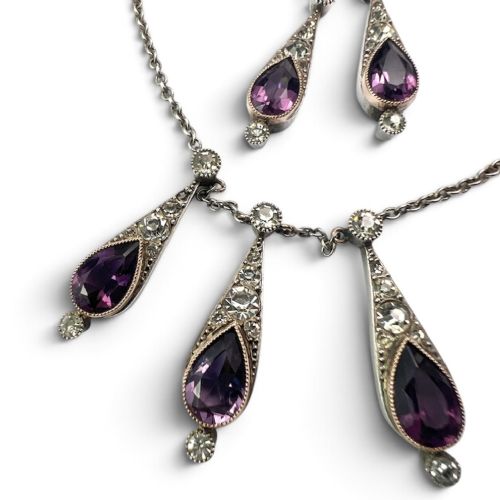
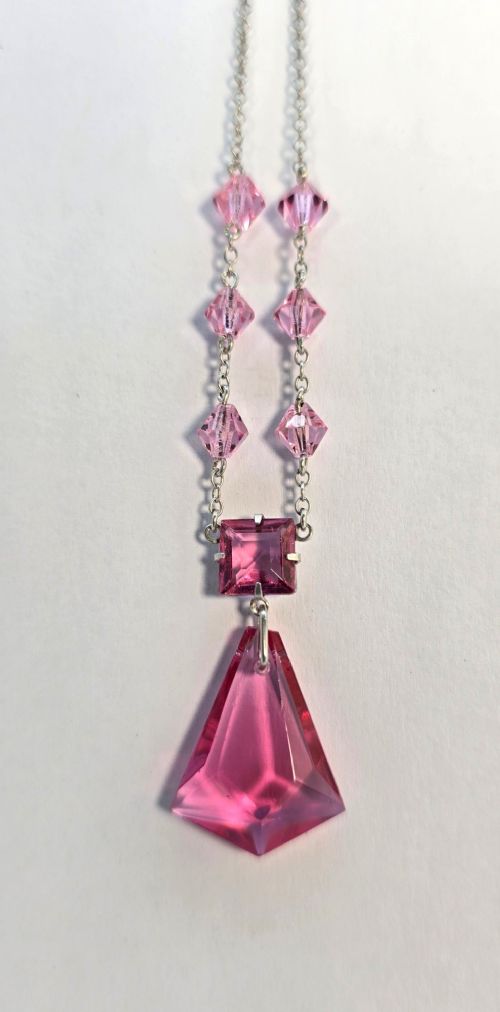
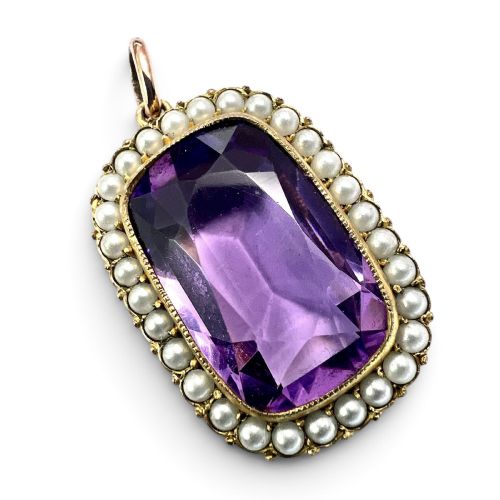
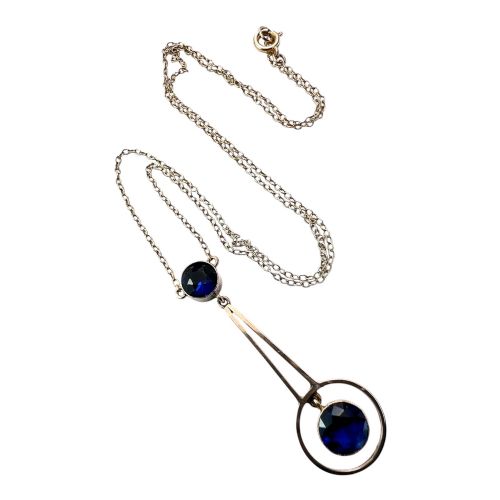
A vintage glass drop necklace draws the eye down to a suspended paste glass or crystal element, often forming the centrepiece of a pendant or lavalier design. These jewels emerge from periods spanning the Victorian era through the Edwardian years and into the Art Deco epoch.
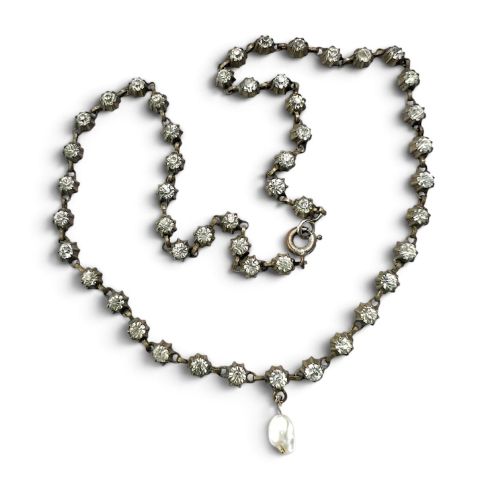
The most common formats on this page pair silver or gold settings with a distinct drop stone, such as a teardrop or intaglio pendant. Collectors encounter matching sets alongside individual necklaces, reflecting the varied social dress codes of the nineteenth and early twentieth centuries.
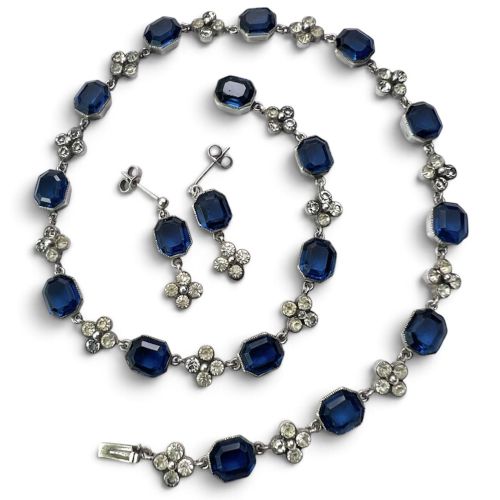
Makers utilised materials like sterling silver, nine-carat gold, and paste glass to achieve the brilliance associated with fine gemstone jewellery of the past. Each specimen bears the structural traits of its decade of origin, from floral Edwardian motifs to geometric Art Deco lines.
How they were made
Craftsmen shaped precious metals including sterling silver and nine-carat gold by hand, forming delicate chains, floral filigree, and secure settings for delicate drops. These metals provide the durable foundation required to suspend glass and crystal centrepieces securely.
Paste glass and crystal components underwent meticulous hand-cutting and polishing to replicate the light-catching properties of precious gems like emerald, sapphire, and amethyst. Jewelers then mounted these stones within halo frames, lavalier drops, and teardrop bezels using traditional bench techniques.
Some past makers cut glass so cleverly that even jewellers double-checked their loupes.
What varies in quality
Quality in these pieces rests upon the precision of the hand-cut paste glass and the intricacy of the metalwork surrounding the drop. Superior examples exhibit sharp facets that catch the light cleanly, paired with well-preserved silver or gold settings that show minimal wear.
The finesse of the secondary stones, such as seed pearls or marcasite accents, dictates the overall refinement of the necklace. Pieces with intact, original components and balanced proportions command greater appreciation among those who study period jewellery.
The Vintage Glass Drop Necklace Glossary
- Paste
- High-refractive-index glass cut and polished by hand to imitate gemstones. It has been utilised in fine jewellery for centuries.
- Lavalier
- A pendant necklace featuring a central stone or drop suspended below the main chain line. This style gained immense popularity during the Edwardian period.
- Marcasite
- Small, faceted polished pyrite stones set closely together into silver mounts to provide dark metallic sparkle. It frequently appears in Art Deco designs.
- Intaglio
- A gem or glass drop carved with a sunken design so that the image impresses in relief. This technique creates subtle depth within a pendant.
- Teardrop
- A pear-shaped stone or pendant form tapering to a rounded point at the top. It serves as the primary focal element in drop necklaces.
Vintage Glass Drop Necklace: Frequently Asked Questions
How do I clean a vintage glass drop necklace?
Use a soft, dry cloth to gently wipe the metal and glass components after wearing them. Avoid liquid immersion or harsh chemical dips, as moisture can degrade historic foil-backed paste or delicate pearl elements.
Store each necklace flat in a lined box to prevent the chain from tangling around the pendant drop.
Can I wear these necklaces every day?
Historic jewellery requires thoughtful care due to the age of the settings and delicate nature of paste glass. While durable metals like sterling silver and gold hold up well, removing the necklace during physical activities prevents accidental strain on old links.
Treating these pieces with gentle consideration ensures they remain intact for daily enjoyment.
How do I identify an Art Deco drop necklace?
Art Deco pieces typically display geometric symmetry, sharp angles, and strong colour contrasts involving materials like silver, marcasite, and pink or blue crystal. These designs move away from organic Victorian curves toward streamlined, architectural forms.
The inclusion of hand-cut crystal and calibrated paste stones often points directly to the nineteen-twenties and nineteen-thirties.