

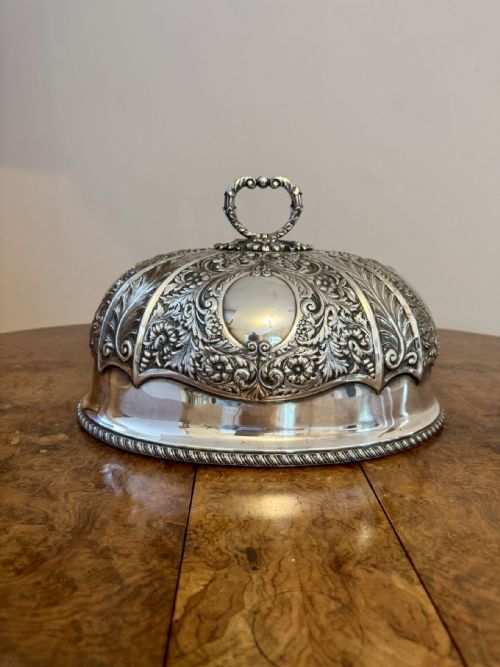
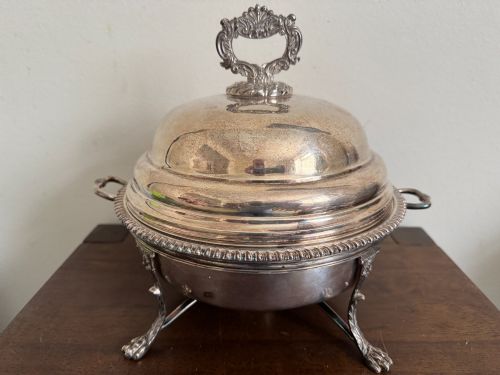


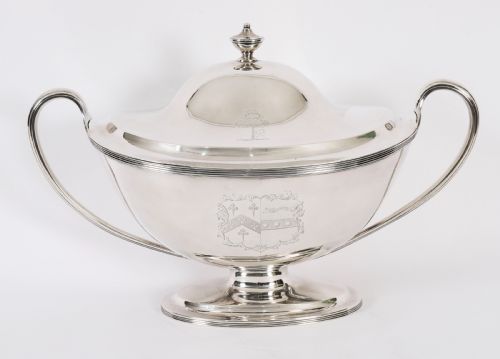


Silver Covered Dishes
Silver covered dishes keep food warm at the table and grace the sideboard with solid heft and bright reflection.
Silver Covered Dishes
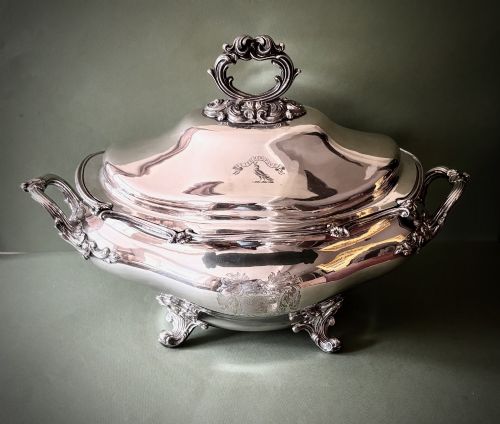
Silver covered dishes encompass a wide range of dining tableserveware, including entree dishes, meat domes, tureens, serving dishes, and butter dishes with glass liners. Buyers hunting for these pieces encounter forms designed to keep provisions hot or present them with grandeur.
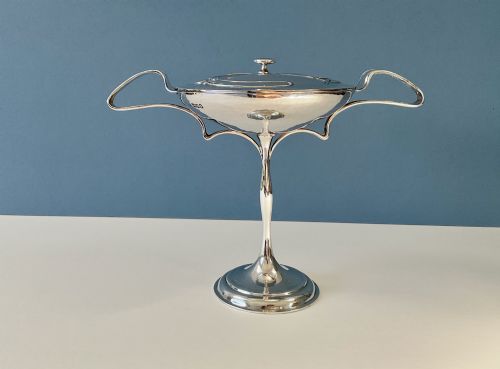
The selections span distinct historical periods from the Georgian and Regency eras through the Victorian and Edwardian decades up to nineteen twenty. Pieces range from large meat covers bearing maker crests down to smaller butter dishes and egg warmers.
The most frequent examples on this page are silver plated entree dishes from the Edwardian and Victorian periods, often shaped in rectangular or oval formats. These utilitarian yet decorative serveware items reflect the dining habits of past centuries.
Materials and construction
Makers utilised sterling silver alongside various plated techniques, notably Old Sheffield Plate and later electroplated nickel silver or EPNS. Copper formed the base metal for many older plated items, showing through where decades of polishing have worn the silver skin thin.
Techniques evolved from fusing silver sheet to copper billets in older Sheffield wares to electrodepositing silver onto nickel silver bases in later Victorian and Edwardian workshops. Handles, finials, and crests were frequently cast separately and soldered or riveted to the main body.
Silver Covered Dishes Retail Price Guide 2026
Typical asking prices for silver covered dishes among the pieces listed under this phrase on Sellingantiques today, from the lower quarter to the upper quarter. They describe what is for sale here now, not the wider market.
The object types on this page include entree dishes, meat domes, sauce tureens, butter dishes with glass liners, and egg warmers.
Assessing the pieces
Quality rests in the weight of the metal, the crispness of chased or applied borders, and the structural integrity of hinges and handles. Substantial gauge silver or thick plate resists denting and holds heat longer than thinner counterparts.
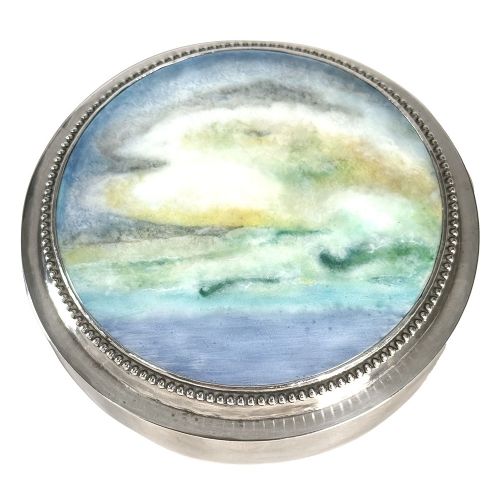
The finesse of decorative elements such as armorial engravings, beaded edges, or landscape enamel plaques distinguishes standard production items from masterworks. Balance, symmetry, and smooth inner surfaces demonstrate superior craftsmanship.
Guild of Handicrafts·Roberts Cadman·Henry Wilkinson·Mappin and Webb·William Grundy·Hamilton and Inches·Boulton·Daniel and Arter·William Bennett·Edward and John Barnard·Walker and Hall
The Silver Covered Dishes Glossary
- Old Sheffield Plate
- A material made by fusing a thin sheet of sterling silver to a thicker copper base before rolling them together into sheets. This technique was largely superseded by electroplating during the nineteenth century.
- Entree dish
- A shallow container with a fitted cover used for serving main courses or side dishes at the dining table. They frequently feature removable handles allowing the lid to double as a second serving vessel.
- Meat dome
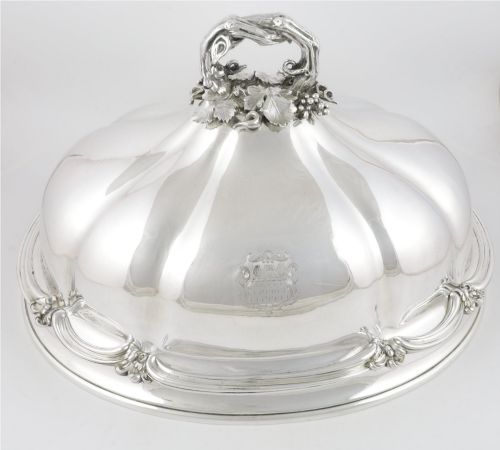
- A large, domed cover designed to fit over a platter of roast meat to retain heat and juices. They often display prominent handles and engraved family crests.
- Tureen
- A deep serving bowl with a cover used for soups, sauces, or stews. Examples range from individual sauce tureens to large centerpiece vessels.
- Electroplated Nickel Silver
- A base alloy of copper, nickel, and zinc coated with a layer of pure silver using an electrical current. This process became the industrial standard for silver plated wares from the mid nineteenth century onward.
Silver Covered Dishes: Frequently Asked Questions
How do I clean silver covered dishes?
Wash them gently in warm soapy water with a soft cloth, avoiding harsh abrasives that strip thin plating or scratch the surface.
Dry them thoroughly with a lint free towel and use a mild silver polish sparingly only when necessary to remove tarnish.
Can I use these for daily dining?
Many silver covered dishes remain sturdy enough for regular use at modern dinner parties, especially robust plated entree dishes.
Care should be taken with older sterling or delicate Old Sheffield Plate pieces, which benefit from more careful handling and hand washing.
How do I date a piece without clear hallmarks?
Examine the construction methods, such as the presence of copper showing through Old Sheffield Plate or the style of applied cast borders.
Design motifs like Art Nouveau curves or Georgian neoclassical lines offer strong clues to the decade of manufacture.
What is the difference between sterling and plate?
Sterling silver consists of solid precious metal meeting a specific legal purity standard throughout the entire object.
Plated items feature a base metal such as copper or nickel silver covered by a thin external layer of pure silver.