

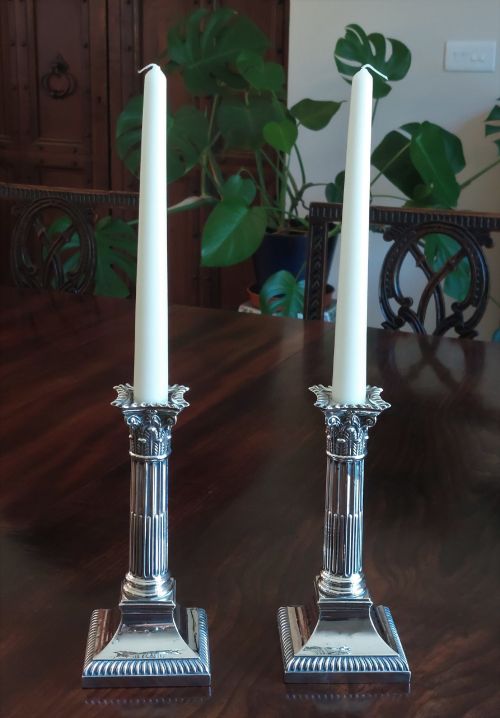
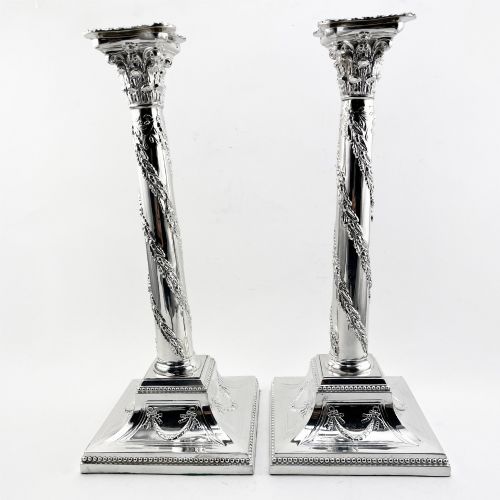
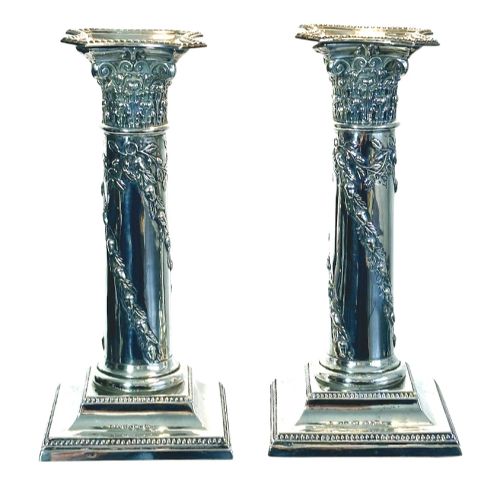
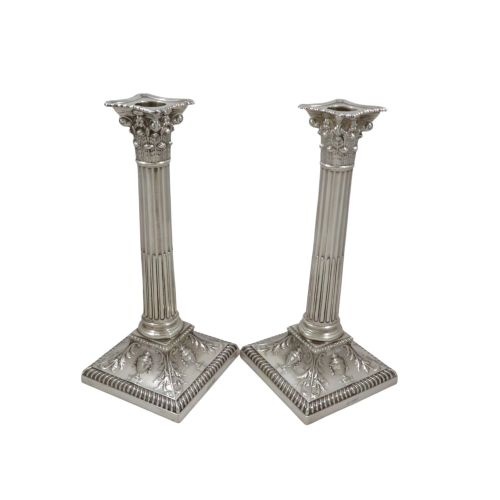

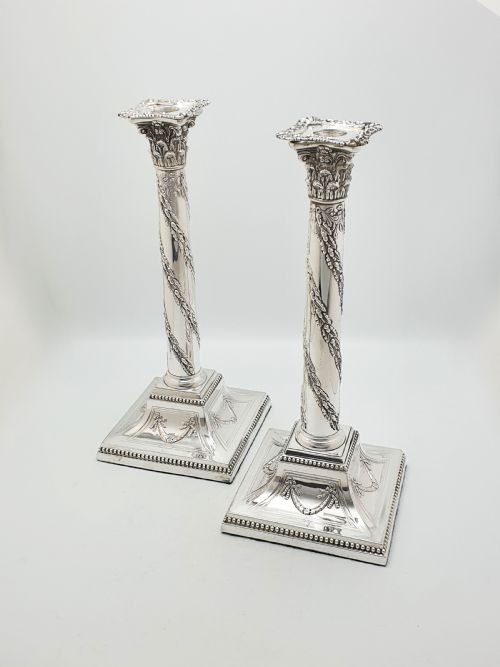


Silver Corinthian Column Candleholder
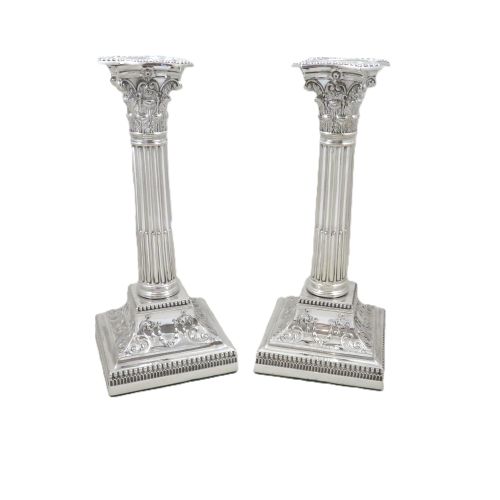
These silver corinthian column candleholders bring formal neoclassical dignity to a table, pairing classical fluted shafts with distinct ionic capitals.
Silver Corinthian Column Candleholder
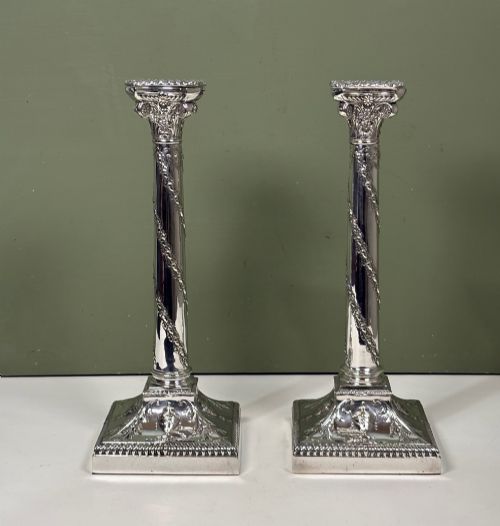
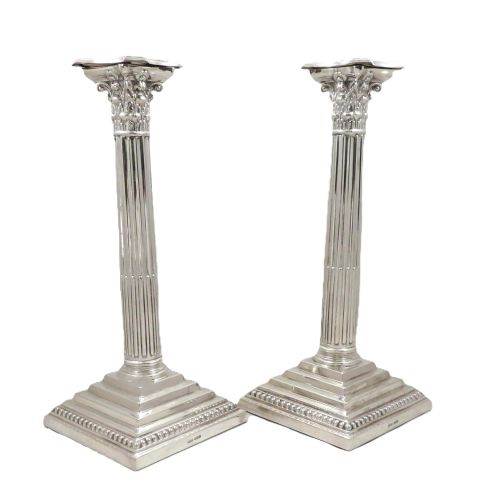
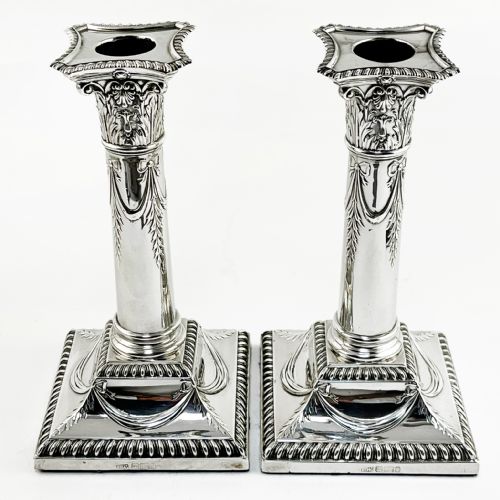
When searching for a silver corinthian column candleholder, buyers look at architectural candlesticks that mimic ancient Greek and Roman stone orders in miniature metal form. These pieces stand upon square stepped bases and rise into fluted columns topped with ornate acanthus leaf capitals. The most frequent versions encountered on this page arrive as matched pairs produced in sterling silver or silver plate during the nineteenth and early twentieth centuries.
The aesthetic draws heavily from revival movements spanning the eighteenth century through to the Edwardian period and the decades following. Examples range from early Sheffield silver plated productions to later sterling pieces bearing hallmarks from assay offices in London and Birmingham. Makers often adapted these classical forms into standard heights ranging from modest shelf pieces to substantial eleven-inch table ornaments.
How they were made
Makers constructed these columns using a combination of solid sterling silver or silver plate fused over base metals, nickel silver, or sometimes incorporating glass components. The weighted interior bases typically received a protective lining of baize cloth on the underside to prevent scratching furniture surfaces. Capitals and bases often involved stamped or cast components soldered securely to the central tubular shaft.
Silver plating techniques evolved significantly across the periods represented, shifting from old Sheffield plate methods toward electroplating on nickel silver or standard base metals. Sterling pieces relied on traditional silversmithing skills to shape, flute, and polish the columns before sending them for official hallmarking.
Silver Corinthian Column Candleholder Retail Price Guide 2026
Typical asking prices for silver corinthian column candleholder among the pieces listed under this phrase on Sellingantiques today, from the lower quarter to the upper quarter. They describe what is for sale here now, not the wider market.
The listings span multiple centuries, ranging from eighteenth-century Old Sheffield plate to mid-twentieth-century sterling silver examples.
What varies in quality
Quality rests primarily in the crispness of the cast detailing upon the acanthus leaf capitals and the structural rigidity of the fluted column. Superior examples display sharp, deep relief work in the ornamentation rather than softened or worn stamping resulting from overuse of dies. The weight and balance of the base also dictate the tactile substance of the object.
The preservation of the original silver layer on plated items or the clarity of hallmarks on sterling pieces marks another clear distinction in grade. Examples that retain their proportions without heavy distortion or clumsy repairs demonstrate superior craftsmanship from the outset.
Garrard & Co·William Hutton & Sons
The Silver Corinthian Column Candleholder Glossary
- Corinthian
- The most ornate of the ancient Greek architectural orders, characterised by slender fluted columns and capitals decorated with acanthus leaves. This motif defines the specific aesthetic of these candleholders.
- Sterling silver
- An alloy consisting of pure silver and other metals, usually copper, meeting a strict legal standard of purity. Pieces made from this material often carry official assay office hallmarks.
- Old Sheffield plate
- An early method of fusing a thin sheet of sterling silver to a thicker copper base ingot before rolling and shaping. This technique predates modern electroplating.
- Baize
- A coarse woolen material resembling felt, traditionally glued to the underside of the stepped bases. It provides a soft protective layer for polished wood tables.
- Hallmark
- An official stamp applied by an assay office indicating the purity of the precious metal, the place of testing, and often the date letter. These marks help verify the origin of sterling pieces.
Silver Corinthian Column Candleholder: Frequently Asked Questions
What is a corinthian column candleholder?
These pieces are decorative candlesticks modelled after ancient architectural columns, featuring fluted shafts and decorative leaf-carved capitals. They translate large stone building elements into portable table ornaments made of silver or silver plate.
Most examples are designed as pairs to balance a mantelpiece or dining table symmetrically. Their formal neoclassical geometry makes them a distinct choice for traditional interiors.
Were these made in pairs?
Many examples on this page are listed as matched pairs intended for dual placement on furniture. Candlesticks were traditionally produced in sets to flank mirrors, clocks, or centerpieces.
While pairs dominate the surviving selections, single items and occasional larger groupings do appear. Matching pairs generally hold more decorative utility for formal table settings.
How do I date these candlesticks?
Dating relies heavily on hallmarks stamped into sterling silver pieces, which indicate the specific year and assay office. Stylistic clues such as the manufacturing technique for silver plating also help determine the period.
Victorian and Edwardian iterations often display distinct weight proportions and manufacturing seams compared to earlier eighteenth-century or later twentieth-century pieces.
How do I care for silver plated columns?
Maintenance involves gentle cleaning with appropriate silver polishes to remove tarnish without abrading thin plated surfaces. Care must be taken around raised details on the capitals where polish can accumulate.
Storing them in stable environments away from direct moisture helps preserve both the metal finish and the baize lining on the base.