



Silver Condiment Pot Pair
These silver condiment pot pair selections bring formal dining history to the table, offering matched sets of salt cellars and pepper shakers for the collector.
Silver Condiment Pot Pair
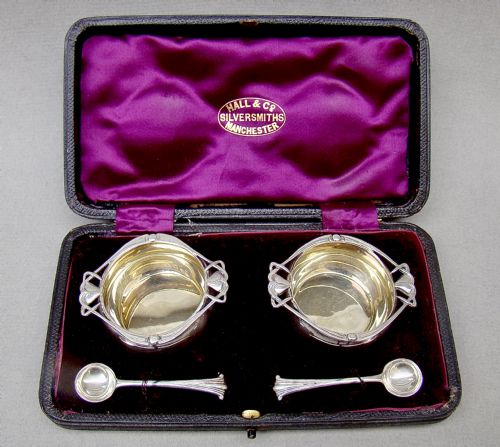
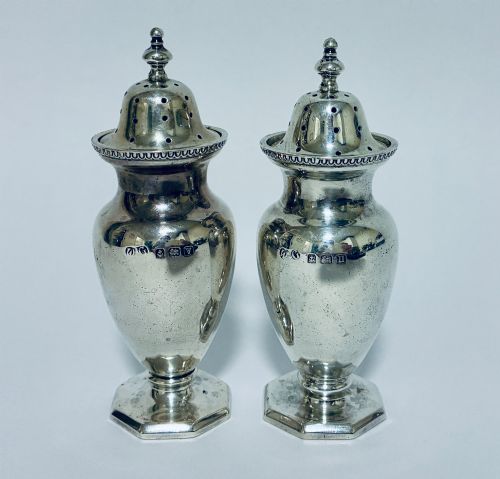
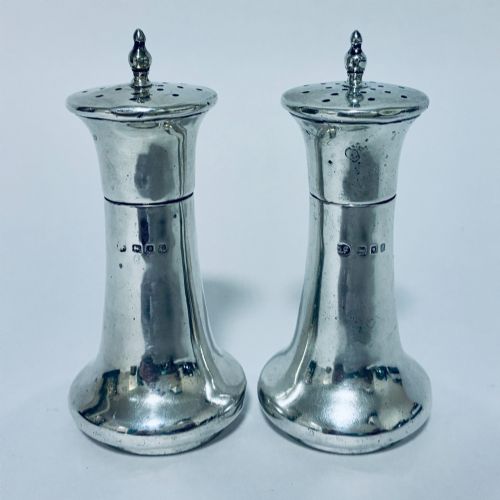
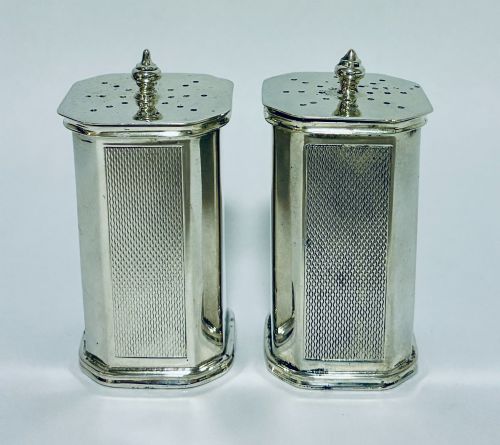
When searching for a silver condiment pot pair, buyers find matched sets designed for table seasoning, predominantly consisting of salt cellars, pepper pots, and pepperettes originating from the Victorian and Edwardian eras. These domestic items span varied forms, from traditional open salts with glass liners to novelty animal figures and wirework tubs.
The pieces on this page lean heavily towards Edwardian and late Victorian examples, often complete with original velvet or silk lined presentation boxes. Buyers frequently encounter matched pairs alongside small three-piece cruet sets that combine salt and pepper vessels for formal dining.
How they were made
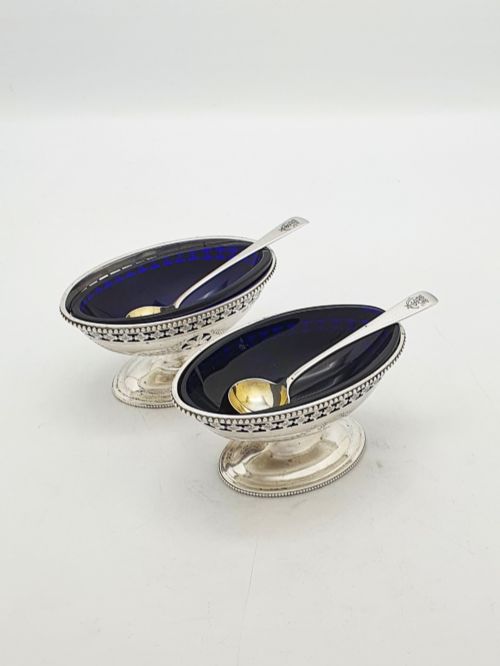
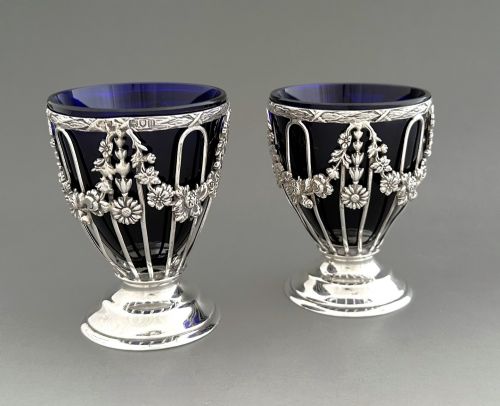
Maker workshops utilised sterling silver, shaping the metal through casting, piercing, and wirework techniques to create decorative frames and solid bodies. Many open salt cellars incorporate fitted cobalt glass liners designed to protect the silver from corrosive salt.
Makers often paired the precious metal with fitted interior materials such as velvet or silk within presentation cases, while novelty pieces required detailed modelling to render animal and character forms accurately.
Silver Condiment Pot Pair Retail Price Guide 2026
Typical asking prices for silver condiment pot pair among the pieces listed under this phrase on Sellingantiques today, from the lower quarter to the upper quarter. They describe what is for sale here now, not the wider market.
What varies in quality
Quality in these items rests upon the crispness of the silversmith's casting and the complexity of the design, distinguishing standard domestic pepper pots from elaborate novelty figural works. Superior examples display fine detailing in chased decoration and wirework construction.
The presence of undamaged original components, such as fitted cobalt glass liners or matching spoons housed inside period presentation boxes, elevates the standing of a matched set.
Josiah Williams & Co·Sampson Mordan
The Silver Condiment Pot Pair Glossary
- Salt Cellar
- An open vessel used to hold salt at the dining table before the invention of the shaker. These often require a glass liner to protect the metal.
- Pepperette
- A small shaker designed specifically for dispensing ground pepper. They commonly feature pierced tops and screw or push-fit bases.
- Cruet Set
- A matched collection of containers for holding condiments and sauces at the table. These sets frequently group salt and pepper pots together in a fitted presentation case.
- Wirework
- Openwork metal construction formed from soldered silver wires. This technique creates lightweight, decorative frames for condiment tubs.
- Sterling Silver
- A silver alloy containing ninety-two point five percent pure silver by mass. British pieces from these periods typically carry standard hallmarks indicating this standard.
Silver Condiment Pot Pair: Frequently Asked Questions
What is a condiment pot pair?
A condiment pot pair consists of two matching tableware vessels designed for holding table seasonings such as salt and pepper.
These pieces typically date from the Victorian and Edwardian periods and are often found complete with original presentation boxes.
How were salt cellars used?
Victorian and Edwardian diners used open salt cellars by taking pinches of salt directly from the vessel using small salt spoons.
Because salt corrodes silver over time, makers inserted removable cobalt glass liners to protect the metal body of the cellar.
Are these items made of solid silver?
The listings on this page comprise sterling silver and silver items bearing period hallmarks from the nineteenth and early twentieth centuries.
Makers also incorporated secondary materials such as cobalt glass, velvet, silk, and leather in liners and fitted cases.
What are novelty pepper pots?
Novelty pepper pots are condiment containers shaped into pictorial or figural forms rather than standard cylindrical pots.
Examples from these eras include items modelled as animals, birds, and character figures with pierced heads for dispensing pepper.