

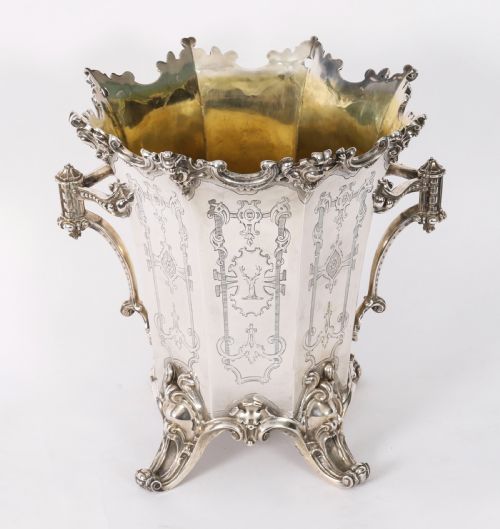

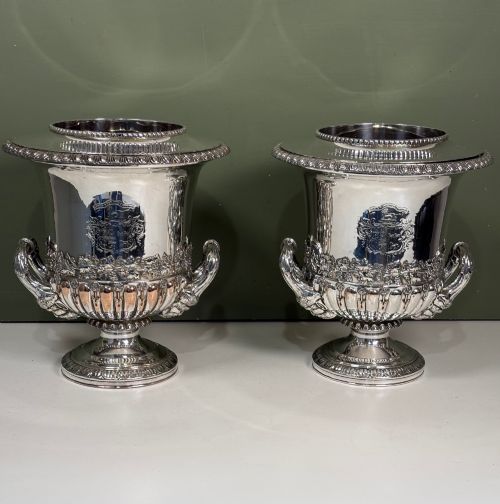


Silver Champagne Pail
A silver champagne pail cools the table, and these silver-plated and sterling vessels span the nineteenth and twentieth centuries.
Silver Champagne Pail
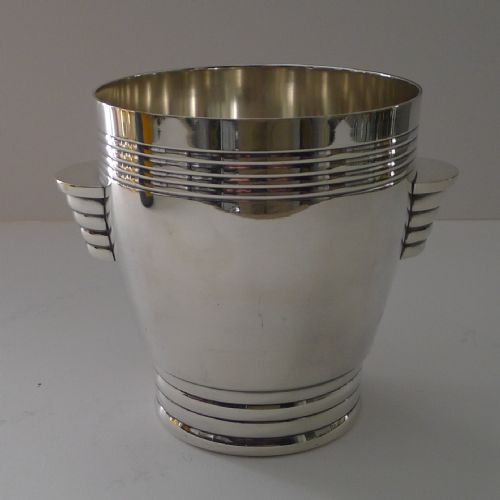
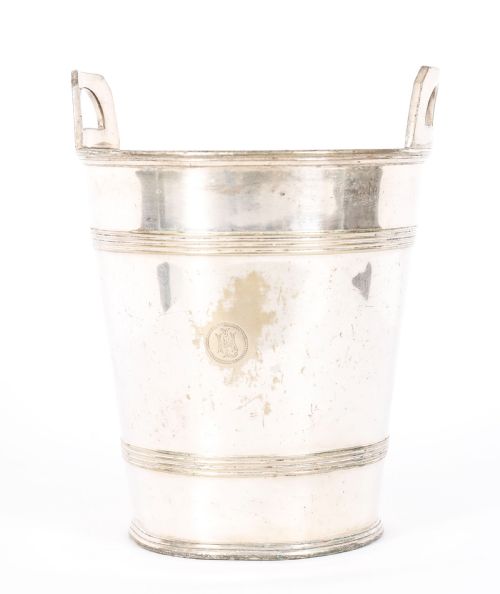
A silver champagne pail sits at the centre of formal entertaining, designed to chill bottles and hold ice. When you search for a silver champagne pail, you encounter forms ranging from heavy nineteenth-century wine coolers to twentieth-century Art Deco buckets.
The selections here include pieces from the Victorian, Edwardian, and Art Deco eras, alongside mid-century Italian vessels. Materials encompass solid silver, silver plate, Old Sheffield plate, copper, lead crystal, and cut glass.
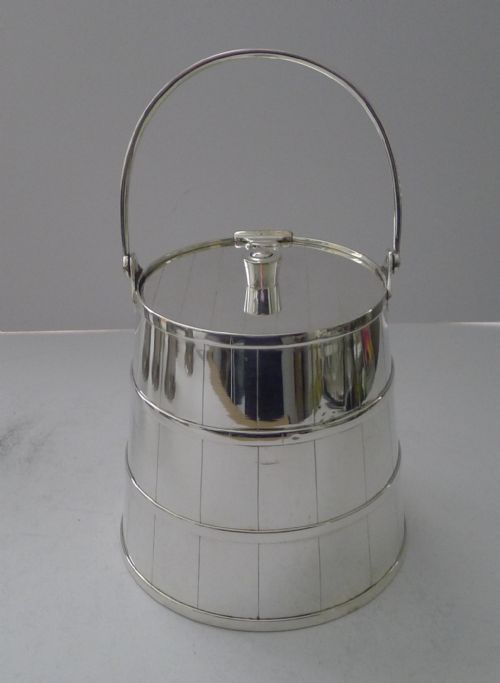
Makers represented span English workshops like Elkington and Matthew Boulton, alongside French houses such as Christofle. Forms cross over with ice buckets, wine coolers, and novelty biscuit barrels adapted for the bar.
How They Were Made
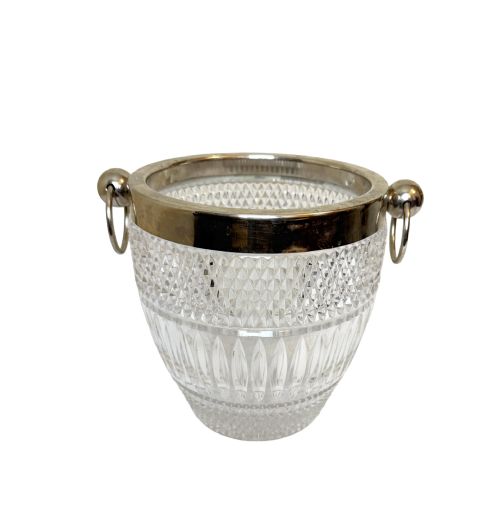
Silver plating on copper forms many of these pieces, alongside early Old Sheffield plate and solid sterling silver. Makers also combined lead crystal and cut glass bodies with silver-plated rims and mounts.
Surface decoration relies on heavy embossing, cast handles, and applied coats of arms. Ceramic creamware liners and wooden bodies appear in specific novelty ice buckets from the early twentieth century.
Silver Champagne Pail Retail Price Guide 2026
Typical asking prices for silver champagne pail among the pieces listed under this phrase on Sellingantiques today, from the lower quarter to the upper quarter. They describe what is for sale here now, not the wider market.
What Varies in Quality
Substance and weight separate the grandest coolers from standard barware, evident in thick lead crystal bodies and heavy silver plate. The integrity of the base metal, especially beneath worn plating, defines the vessel's durability.
Artistic ambition dictates value, distinguishing mass-produced twentieth-century stamped items from signed workshop pieces with cast mounts and detailed embossing.
Hutton Sheffield·Elkington, Mason & Co·Dawson·Christofle·Matthew Boulton & Co
The Silver Champagne Pail Glossary
- Old Sheffield plate
- A method of fusing a thin sheet of silver to a thicker copper core before shaping. This technique creates a distinctive warm lustre found on pieces from the Georgian and Regency periods.
- Silver plate
- A layer of silver applied over a base metal such as copper or Britannia metal. This process made grand dining accessories accessible to a wider Victorian public.
- Lead crystal
- Glass containing metallic oxide to increase weight, clarity, and brilliance. It forms the heavy, cut-pattern bodies of twentieth-century ice buckets.
- Biscuit barrel
- A covered ceramic or glass vessel, sometimes adapted with ice bucket liners and tongs. These domestic containers cross over into barware use in late Victorian homes.
Silver Champagne Pail: Frequently Asked Questions
How do I clean a silver champagne pail?
Use a soft cloth and a gentle silver cream formulated to protect plated surfaces. Avoid harsh abrasives that wear down thin silver layers.
Rinse thoroughly in warm water and dry immediately with a lint-free cloth to prevent water spots on the metal.
Can I use these buckets for ice today?
Most silver-plated and crystal buckets function properly for chilling wine or holding ice cubes at gatherings. Check whether the interior liner remains intact and watertight.
Dry the interior completely after use to prevent moisture damage to older metals and soldered joints.
What is the difference between a wine cooler and a champagne pail?
Wine coolers often feature heavier cast handles and deeper bodies intended for standing on side tables during lengthy dinners. Champagne pails typically accommodate taller bottles and frequent ice replenishment.
Both categories frequently overlap in antique market classifications and practical table use.
How do I date an unmarked silver-plated bucket?
Examine the weight, construction techniques, and decorative style to narrow down the manufacturing era. Art Deco pieces display geometric lines, while Victorian examples often feature heavy embossing.
Maker's marks, registry stamps, and base metal show-through can provide further clues to the decade of creation.