





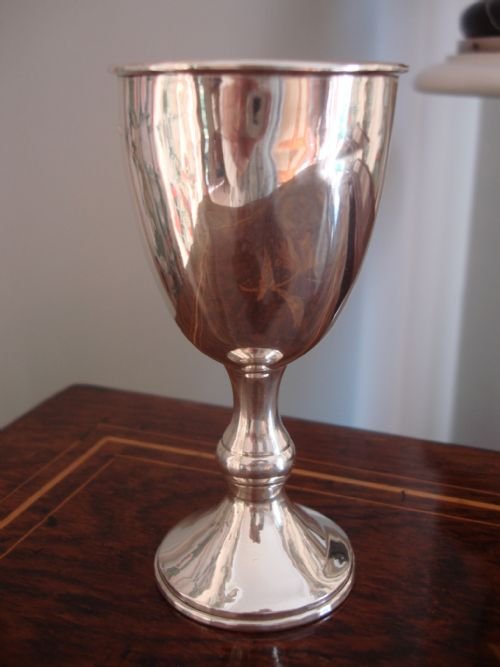


Silver Chalice Vessel
These silver chalice vessel items bring centuries of ceremonial and domestic drinking forms to the table, offering tactile weight and historical metalwork for the modern interior.
Silver Chalice Vessel
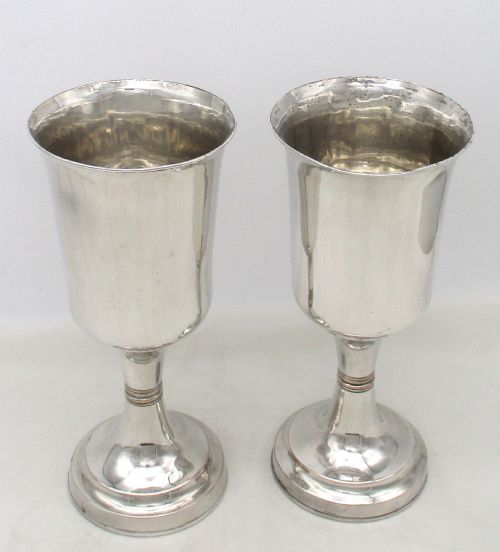
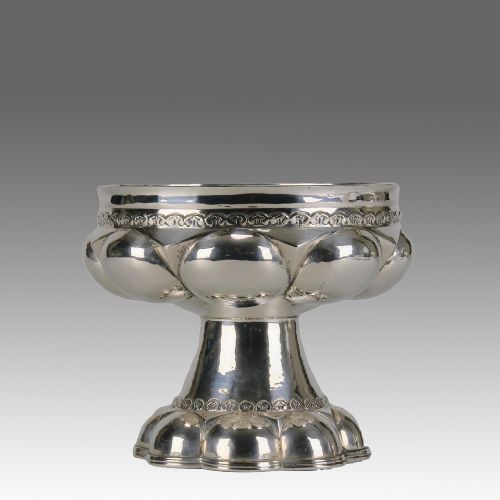
A silver chalice vessel encompasses a diverse group of drinking vessels and hollowware, ranging from ecclesiastical communion cups to domestic goblets, loving cups, and tygs originating primarily from the eighteenth, nineteenth, and early twentieth centuries.
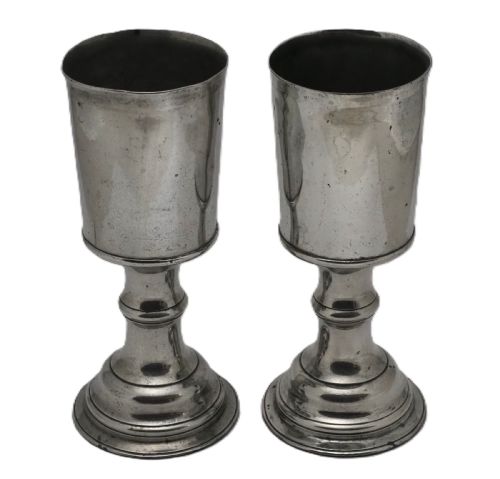
The selections available here span distinct aesthetic movements, covering Georgian sterling silver, ornate Victorian ecclesiastical plate, and tactile Arts and Crafts pewter or copper creations.
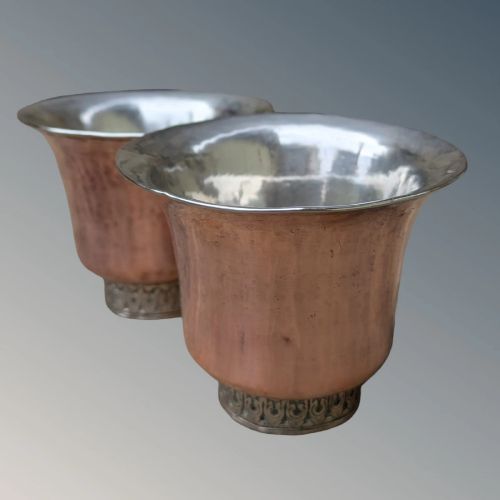
Buyers will encounter single pieces alongside matched pairs, taking the form of traditional footed chalices, multi-handled loving cups, and regional variants like Tibetan drinking vessels or Chinese export pieces.
Materials and Techniques
Metalworking techniques divide these pieces between traditional silversmithing in sterling silver, old Sheffield plate, and silver-plate, alongside alternative bases such as copper, pewter, and gold gilt.
Arts and Crafts examples frequently exhibit hand-hammered surfaces and applied enamel details, contrasting with the smooth cast and chased decoration typical of earlier Georgian and Victorian production.
Silver Chalice Vessel Retail Price Guide 2026
Typical asking prices for silver chalice vessel among the pieces listed under this phrase on Sellingantiques today, from the lower quarter to the upper quarter. They describe what is for sale here now, not the wider market.
The selection includes pieces spanning the Georgian, Victorian, and Arts and Crafts periods, utilising sterling silver, silver plate, pewter, and copper.
Assessing Quality and Execution
Quality rests in the crispness of chased and engraved ornamentation, the structural integrity of the stem and foot, and the balance of the vessel in the hand.
Maker marks and hallmarks contribute substantially to standing, separating standard commercial production from workshop pieces executed by recognised silversmiths.
Lambert and Co·Nathan and Hayes·George Unite·Wang Hing and Co·Elkington Mason·William Eaton·Joseph Rodgers and Sons
The Silver Chalice Vessel Glossary
- Sterling silver
- A silver alloy containing 92.5 percent pure silver and 7.5 percent other metals, usually copper, ensuring durability for functional tableware.
- Old Sheffield plate
- An early form of composite metal made by fusing a thin sheet of silver onto a thicker copper base, common in pieces dating around the late eighteenth and early nineteenth centuries.
- Tyg
- A large drinking vessel featuring three or more handles, designed to be passed around a company during communal toasts.
- Chased
- Decorated by hammering metal from the front to sink the design into the surface without removing material.
- Kiddush cup
- A ritual goblet used in Jewish households for the blessing sanctifying the Sabbath and festivals.
Silver Chalice Vessel: Frequently Asked Questions
What is a silver chalice vessel used for?
These pieces served both sacred and secular roles, functioning historically as communion cups in churches or as ceremonial drinking vessels for toasts and communal gatherings.
Today, collectors use them as decorative display items, mantle centerpieces, or traditional vessels for special family occasions.
How do I clean antique silver?
Maintenance requires gentle washing with warm water and mild soap, followed by drying with a soft cloth to protect the metal.
Harsh abrasive dips should be avoided to preserve the natural patina built up over centuries of handling.
Are these chalices safe for drinking?
Many sterling silver and silver-plated vessels remain suitable for beverages, provided the interior lining is clean and free from heavy tarnish.
Items containing base metals like lead-bearing pewter or certain copper alloys are best reserved for display rather than regular consumption.
How can I tell the period?
Dating relies primarily on official hallmarks stamped into the metal, which record the assay office, date letter, and maker's mark.
Stylistic cues such as Gothic Revival shaping or Arts and Crafts hand-hammering provide additional context when marks are absent or rubbed.