





Silver Chalice Goblet
These pieces range from ecclesiastical vessels to presentation prizes, uniting ceremony and craftsmanship in a single form.
Silver Chalice Goblet
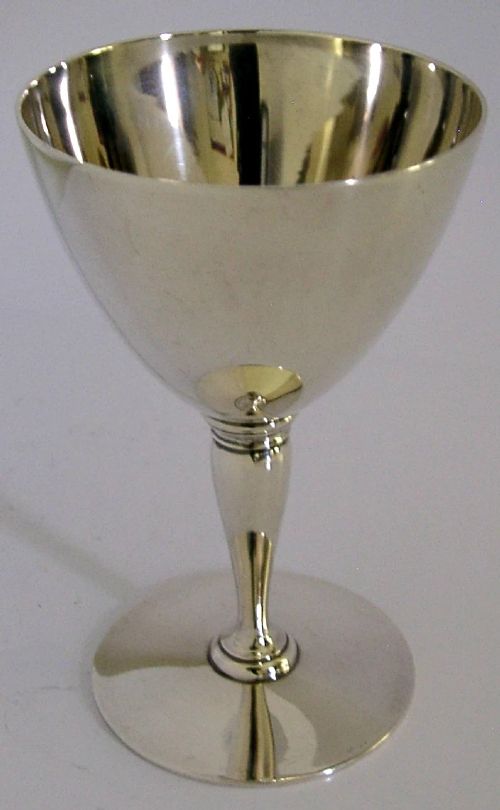
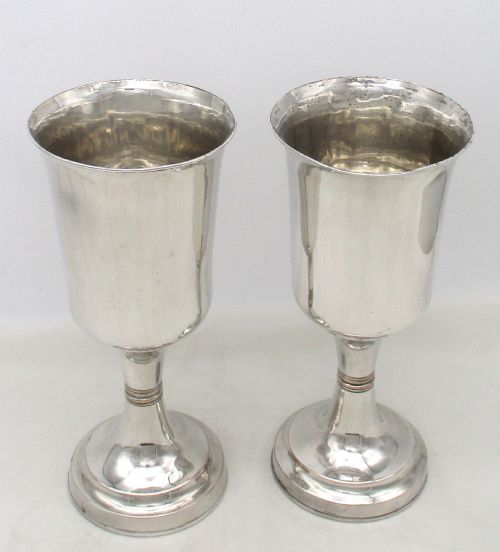
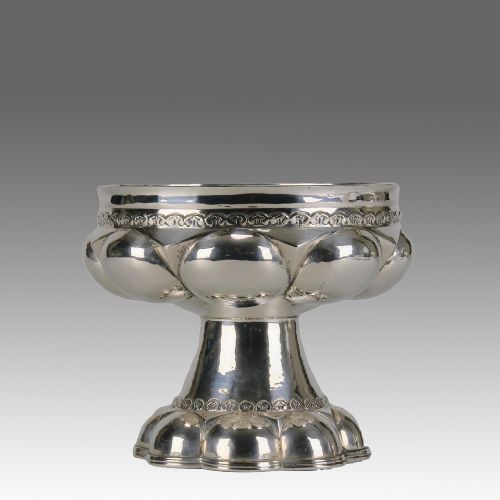
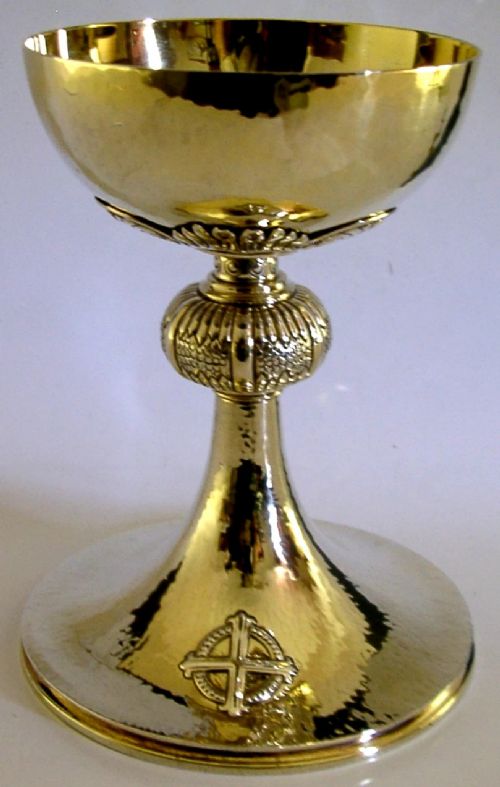
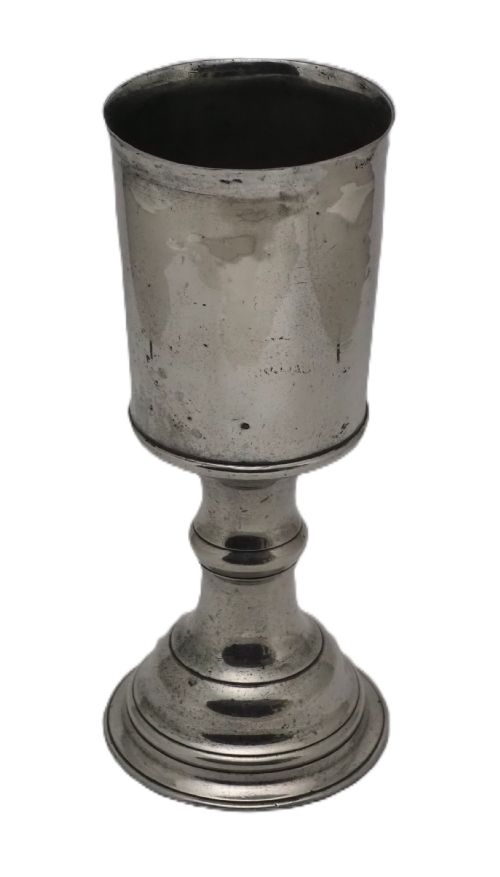
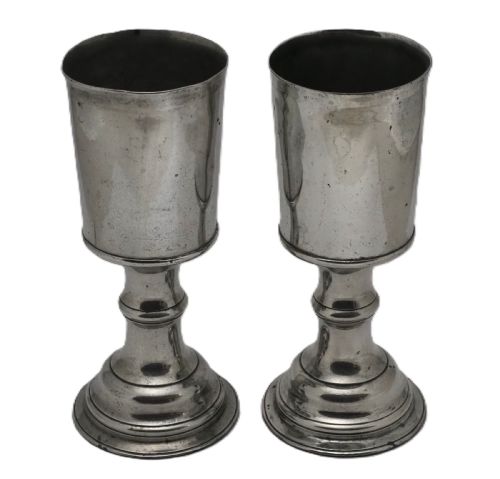
A silver chalice goblet serves both secular and sacred functions, appearing as communion vessels, sports trophies, and decorative barware. The selection includes domestic wine goblets alongside large church chalices intended for sacramental use.
Makers produced these forms across the eighteenth, nineteenth, and twentieth centuries, utilising traditional silversmithing techniques. Pieces often feature engraved presentations, crisp hallmarks, and distinct regional styles from English, Irish, and Chinese export workshops.
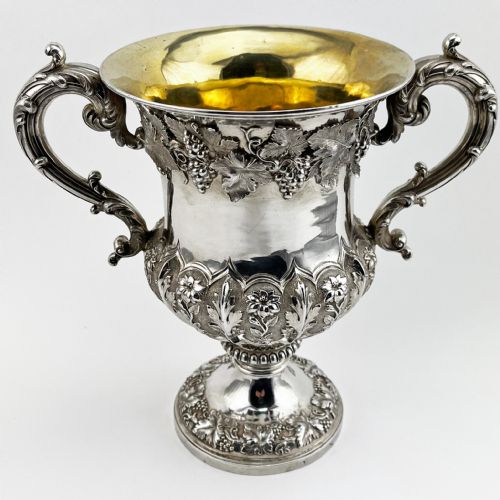
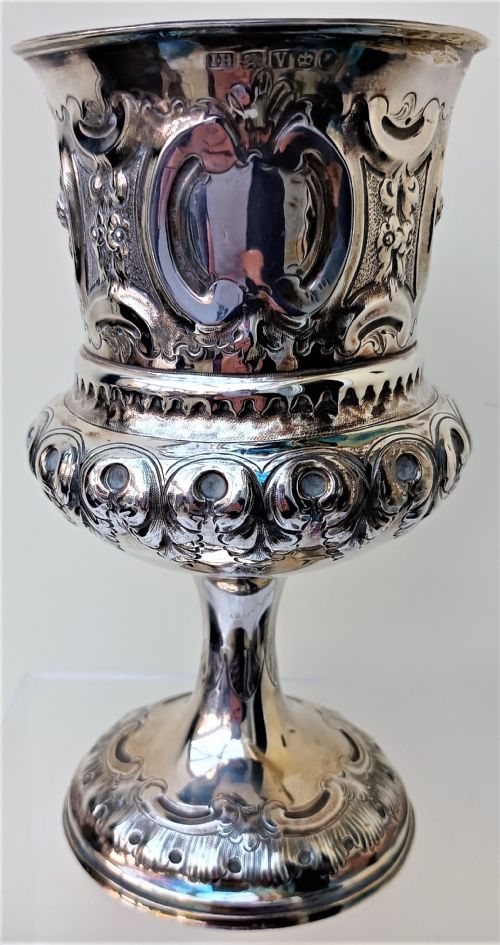
Domestic wine cups and heavy presentation chalices dominate the available forms, alongside specialised items like Kidduch cups and novelty wager vessels. Collectors encounter everything from plain Georgian vase-shaped bodies to heavily chased Victorian parcel-gilt designs.
How they were made
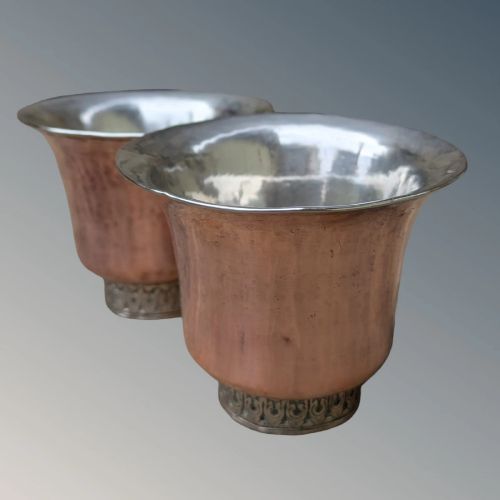
Silversmiths constructed standard bodies from sterling silver, silver gilt, and pewter, often raising the vessel from a single flat sheet of metal. Old Sheffield plate items employ a fused layer of silver over a copper base, visible along exposed interior rims and wear points.
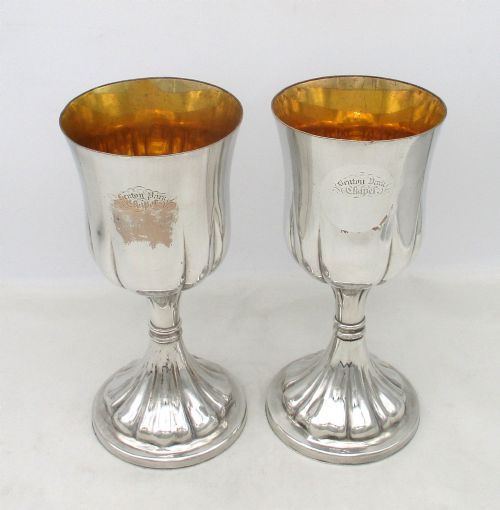
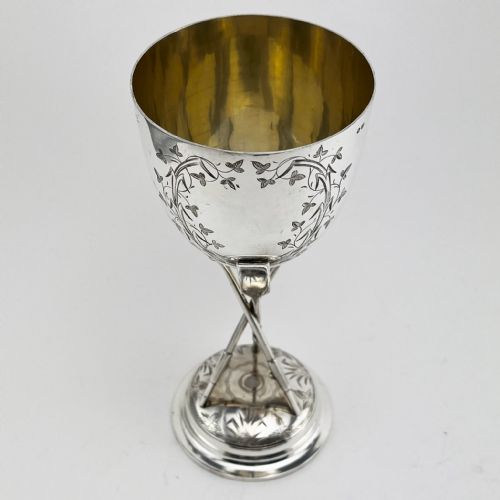
Decoration relied on hand chasing, engraving, and parcel-gilding to add contrast between the polished exterior and the gilded bowl interior. Arts and Crafts examples frequently display visible planishing marks left by the hammer across the surface.
Challice stems and domed feet were cast separately before being soldered securely to the main bowl, creating a balanced weight distribution.
Silver Chalice Goblet Retail Price Guide 2026
Typical asking prices for silver chalice goblet among the pieces listed under this phrase on Sellingantiques today, from the lower quarter to the upper quarter. They describe what is for sale here now, not the wider market.
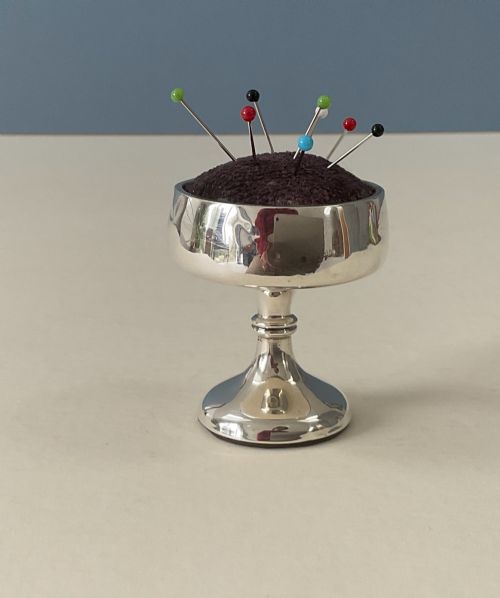
Object forms span communion chalices, wine goblets, presentation trophies, loving cups, and novelty pin cushions.
What varies in quality
The weight and gauge of the metal determine the structural integrity and feel of the vessel, with heavier gauge silver offering greater durability and balance. Finer examples maintain crispness in chased motifs and hand-engraved borders without thinning from excessive polishing.
The clarity and completeness of hallmarks establish the origin and maker, directly influencing historical interest. Superior pieces exhibit well-executed applied mounts, tight joins between stem and foot, and balanced proportions across the bowl.
TIFFANY & Co·Nathan and Hayes·George Unite·Wang Hing & Co·William Eaton·James Deakin & Sons·Henry Tatton & Son·Zee Wo·Charles Hougham·Henry Holland·Charles Stuart Harris·Mappin & Webb
The Silver Chalice Goblet Glossary
- Parcel-gilt
- Silver that is partially coated in gold leaf or gilt, usually applied to the interior bowl of a chalice while the exterior remains bright silver.
- Old Sheffield Plate
- A composite material formed by fusing a thin sheet of sterling silver to a thicker copper core, popular before the invention of electroplating.
- Wrigh-work
- A form of fine, zigzag line engraving executed with a graving tool, frequently seen bordering nineteenth-century presentation pieces.
- Planishing
- A hammering technique used to smooth and finish metal surfaces, leaving a distinctive texture characteristic of Arts and Crafts silverwork.
Silver Chalice Goblet: Frequently Asked Questions
What is the difference between a chalice and a goblet?
A chalice typically denotes a vessel used for sacramental or religious communion services, featuring a deep bowl and a substantial knop on the stem.
Goblets more commonly serve secular functions such as dining, barware, or presentation trophies, though the terms overlap frequently in historical records.
How can I date an unmarked silver goblet?
Dating relies on stylistic clues such as the vase-shaped body of the Georgian period versus the heavier chased decoration of Victorian examples.
Form, manufacturing technique, and comparative pieces provide a reliable timeline when official assay office marks are absent.
Were all old chalices used in churches?
Church chalices form a distinct portion of the inventory, often constructed from Old Sheffield plate or heavy sterling silver with gilded interiors for communion wine.
Many other examples were created entirely for domestic dining, rowing clubs, cricket presentations, and military mess halls.
What is Old Sheffield Plate?
Old Sheffield Plate is an early composite material created by fusing silver and copper together under heat before rolling them into sheets.
Under magnification or along worn edges, the thin copper layer beneath the silver surface becomes apparent on these nineteenth-century items.