





Silver Chafing Dishes
Silver chafing dishes are sophisticated serving pieces designed to keep food warm at the table, offering both elegance and practical hospitality.
Silver Chafing Dishes
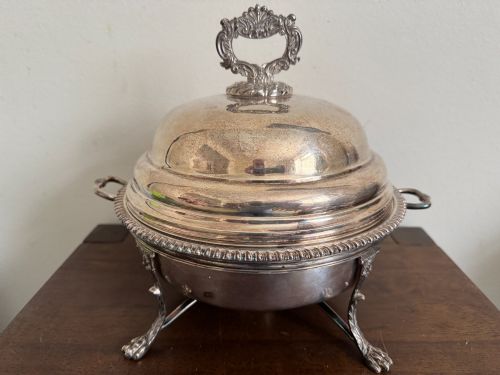
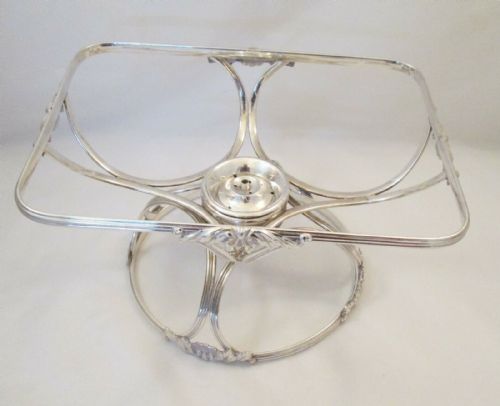
When you search for silver chafing dishes, you encounter elaborate serving vessels and food warmers spanning the Georgian, Victorian, and Edwardian eras. These pieces typically combine a container for food with an integrated stand, often housing a burner or lamp beneath to maintain temperature during meals.
Materials and construction methods
Makers utilised traditional metals such as sterling silver, copper, and early fusion techniques like Old Sheffield plate, alongside later electroplated nickel silver. These metals were shaped into vessels, covers, and stands, frequently incorporating ceramic liners inside food warmers.
Engineering mechanisms such as revolving lids, double rollover hinges, and detachable lampstands required precision smithing to ensure smooth operation. Burners were fitted securely into stands beneath the dishes to provide steady, controlled heat without damaging the surrounding metalwork.
Silver Chafing Dishes Retail Price Guide 2026
Typical asking prices for silver chafing dishes among the pieces listed under this phrase on Sellingantiques today, from the lower quarter to the upper quarter. They describe what is for sale here now, not the wider market.
Breakfast dishes often feature cunning rollover mechanisms designed so sleepy Victorians could reach bacon without burning their cuffs.
Distinctions in quality and execution
Superior examples demonstrate crisp casting in their handles and mounts, alongside balanced proportions between the dish, stand, and burner. The integrity of the plating or the thickness of the fused silver on Old Sheffield plate marks the distinction between standard production and exceptional workshop output.
The presence of original components, such as matching lampstands, burners, and interior liners, elevates the integrity of a piece. Finer items exhibit seamless mechanical movement in revolving or rollover mechanisms, maintaining alignment through decades of use.
Hamilton and Inches·Mappin and Webb·Walker and Hall·Dan Holy
The Silver Chafing Dishes Glossary
- Old Sheffield plate
- A material produced by fusing a thin sheet of silver to a thicker copper base before rolling into sheets. This technique predates modern electroplating and leaves a characteristic copper seam visible on edges.
- Electroplated nickel silver
- A base metal alloy of copper, nickel, and zinc coated with a layer of silver using an electrical current. It became widely utilised for durable tableware from the mid-nineteenth century onwards.
- Lampstand
- The supporting frame beneath a chafing dish designed to hold a spirit burner or heating lamp. It elevates the vessel to accommodate the flame safely.
- Entree dish
- A shallow serving vessel with a fitted cover, frequently utilised as part of formal dinner service. Many sit within warming stands equipped with burners.
- Rollover dish
- A serving vessel featuring a lid that rotates on a half-cylinder track to open smoothly. This mechanism reveals the contents while tucking the cover neatly beneath the body.
Silver Chafing Dishes: Frequently Asked Questions
How do silver chafing dishes work?
These vessels maintain food temperature by placing a heated dish over a lit spirit burner housed in the lower stand. Water pans were often included to provide gentle, indirect heat.
Many designs incorporate revolving or rolling lids that allow diners to serve themselves easily while keeping the contents covered between portions.
Can I use an antique food warmer today?
While many retain their functional burners and solid construction, modern users often treat them as decorative display items or utilise them for dry presentation rather than lighting historical spirit burners.
Careful cleaning with appropriate silver polish preserves the finish, though frequent heating can accelerate tarnishing on older plated surfaces.
How do I distinguish Old Sheffield plate from silver plate?
Old Sheffield plate reveals tiny lines of reddish copper where the silver layer has worn thin along high edges or seams, a result of the fusing process. Later electroplated nickel silver shows a greyish base metal underneath rather than warm copper.
Weight and manufacturing marks also help differentiate the hand-forged fused sheets of the Georgian period from mass-produced Victorian electroplate.
What periods are most common for these warmers?
The majority of pieces date from the Victorian and Edwardian eras, reflecting the expansion of formal dining and breakfast hospitality. Earlier Georgian examples, such as George III supper dishes, are considerably scarcer and more substantial.
Design styles shifted from ornate Continental Rococo Revival motifs toward cleaner, functional forms by the dawn of the twentieth century.