

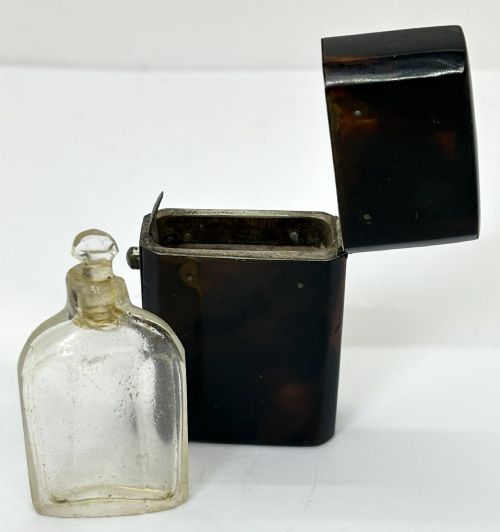


Silver Cased Perfume Bottle
A silver cased perfume bottle brings together fine glass and precious metal, offering both portable vanity luxury and decorative charm.
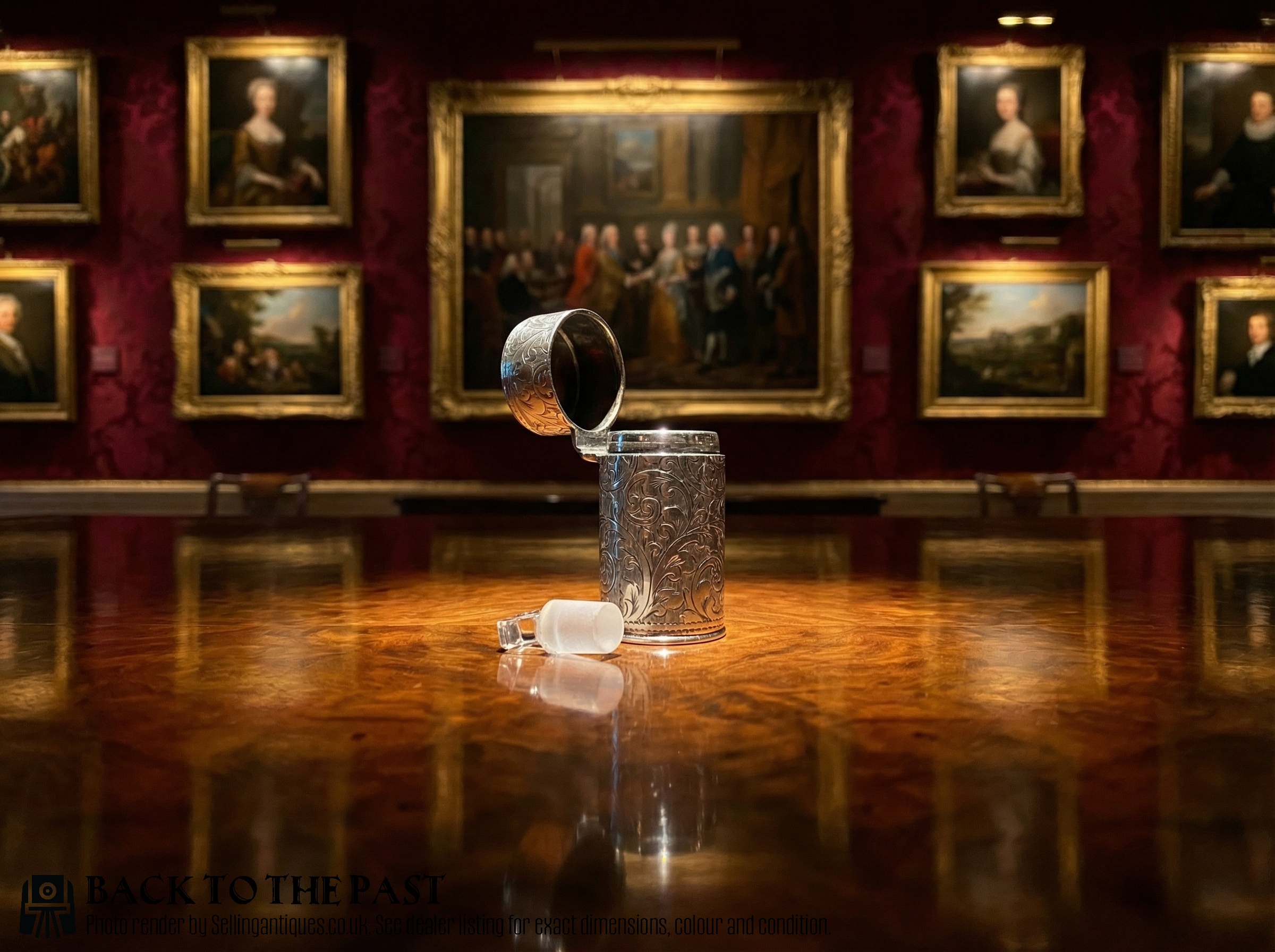
Silver Cased Perfume Bottle
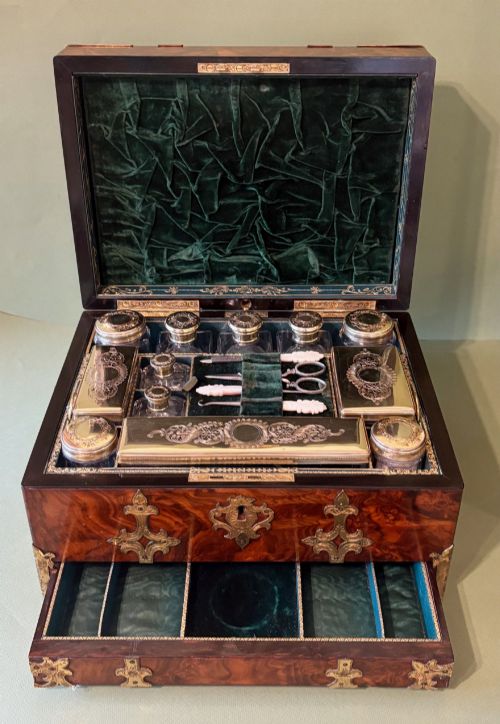
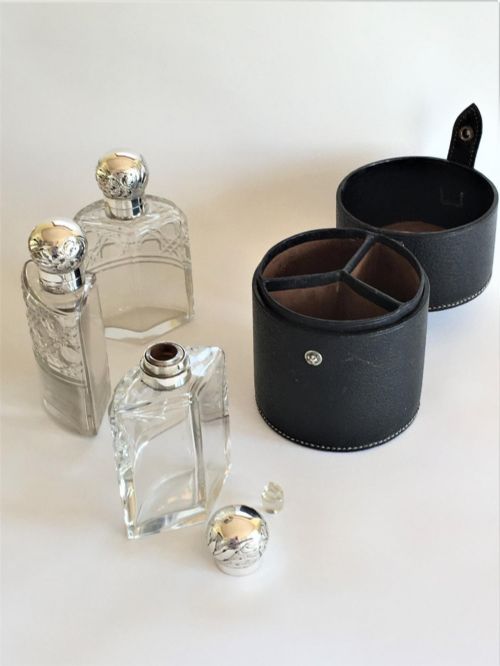
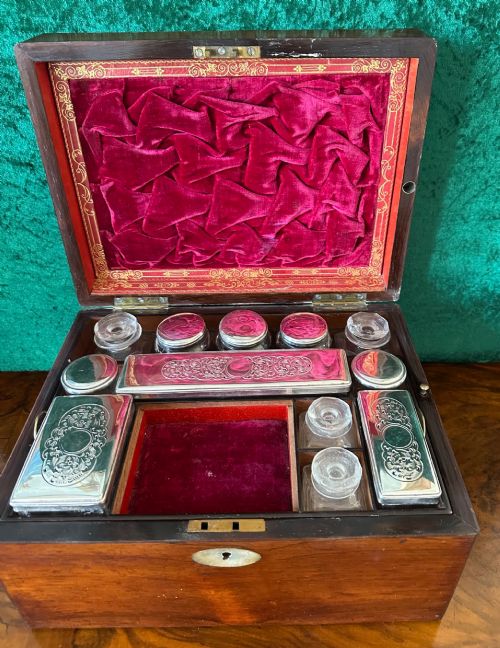
A silver cased perfume bottle combines protective exterior housing with inner glass vessels designed for travel and dressing table display. Buyers seeking a silver cased perfume bottle encounter pieces spanning the Georgian, Victorian, and Edwardian periods, often taking the form of standalone scent bottles or nested sets inside larger vanity boxes.
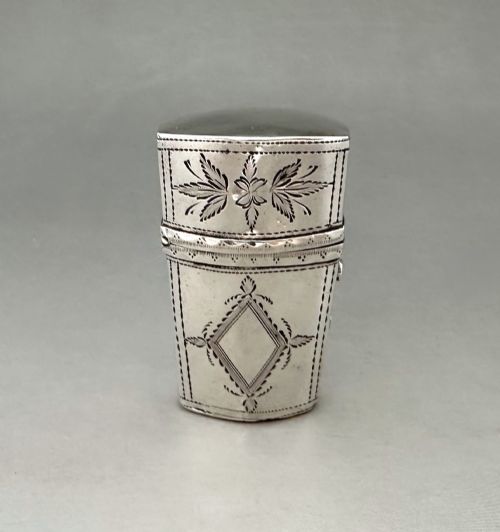
The selection ranges from simple sterling silver jackets over cut glass to elaborate etuis, necessaires, and fitted travelling cases containing multiple cologne bottles. Many examples reflect nineteenth century tastes, utilising protective cases of leather, coromandel wood, or tortoiseshell alongside the silver mountings.
Victorian and Edwardian versions dominate the current range, frequently incorporating hinged silver caps or full silver protective sheaths around opaline or clear crystal glass. These items served as essential accessories for the travelling gentlewoman, securing volatile scents during transit.
Materials and construction methods
Makers constructed these pieces using blown or cut glass vessels fitted with hallmarked sterling silver collars, caps, or full exterior sleeves. Metalwork techniques involved stamping, piercing, and repousse work to decorate the silver housings that protected the fragile glass containers within.
Outer protective cases required skilled cabinetmaking, utilising timber foundations such as coromandel wood bound in brass or wrapped in textured leather and velvet. Artisans integrated tortoiseshell panels and precision-milled hinges to create secure enclosures for intricate sets of bottles and tools.
The archive includes specialised vanity boxes and etui tool sets alongside traditional single and multiple scent bottle configurations.
Distinctions in quality and execution
Quality rests in the precision of the protective fit and the weight of the silver casing relative to the glass vessel. Superior items maintain intact inner stoppers and tight-fitting silver hinges that seal the bottle securely without binding.
The distinction between standard travelling bottles and top-tier pieces lies in the integration of matched multi-bottle sets, fine crystal cutting, and the inclusion of auxiliary toilet instruments like tweezers and bodkins within fitted cases.
Horton & Allday·Asprey
The Silver Cased Perfume Bottle Glossary
- Sterling silver
- A silver alloy containing 92.5 percent pure silver by mass, standard for British hallmarked items. This metal provides the durable outer casing and decorative caps found on period scent bottles.
- Coromandel wood
- A dense, heavily figured timber from Asia utilised for luxury Victorian vanity cases and fitted boxes. Its dark grain contrasts sharply with polished brass bindings and silver bottle mounts.
- Etui
- A small ornamental case used to hold needles, tweezers, and other personal items. In perfume sets, these often accompany the scent bottle within a fitted leather or tortoiseshell housing.
- Opaline glass
- An opaque or translucent glass popular in the nineteenth century, coloured with bone ash or metal oxides. It forms the striking pastel bodies of many cased Victorian scent bottles.
- Necessaire
- A compact travel case fitted with various grooming implements and perfume flasks. These multi-piece sets represent the height of portable vanity luxury during the Georgian and Victorian eras.
Silver Cased Perfume Bottle: Frequently Asked Questions
What is a silver cased perfume bottle?
A silver cased perfume bottle is a glass scent container protected by an exterior sleeve, cap, or full housing made of sterling silver. These items were designed to prevent breakage during travel and to ornament the dressing table.
Most examples date from the Georgian, Victorian, and Edwardian eras, reflecting changing styles in personal grooming accessories. They range from single pocket vials to multiple matching bottles fitted inside elaborate wooden vanity boxes.
How were these perfume bottles used?
Owners used these bottles to carry liquid scents, colognes, or smelling salts while travelling or attending social events. The silver casing and inner glass stoppers prevented evaporation and leakage inside handbags or luggage.
Larger sets housed within dressing cases stayed on vanity tables, providing a uniform collection of bottles for daily toilette routines. Auxiliary tools like tweezers and bodkins stored nearby assisted with personal grooming.
How do I date a silver cased perfume bottle?
Dating relies primarily on British hallmarks stamped on the silver components, which indicate the assay office, year of manufacture, and maker. Stylistic details like glass colour, cutting patterns, and case materials also point to specific periods.
Georgian pieces often feature simpler tortoiseshell or silver work, while Victorian and Edwardian items display heavier cast silver mounts and more complex fitted travel boxes.
Can I still use antique perfume bottles?
While these pieces remain functional, modern use requires caution due to age-related wear on cork stoppers or fragile glass threads. Many collectors prefer to display them as decorative objects rather than active carriers of scent.
Checking the inner glass for cracks and ensuring the silver hinge operates smoothly helps preserve the piece if perfume is added.