


Silver Candlestick Lamp Base
These silver candlestick lamp bases are versatile conversation pieces that bring period character and warm illumination to any interior.
Silver Candlestick Lamp Base
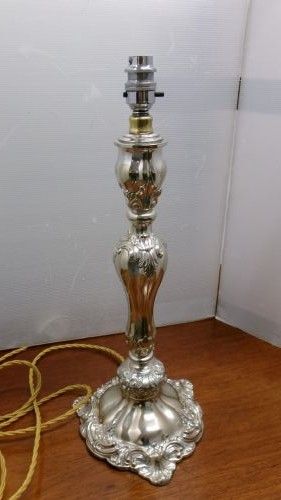
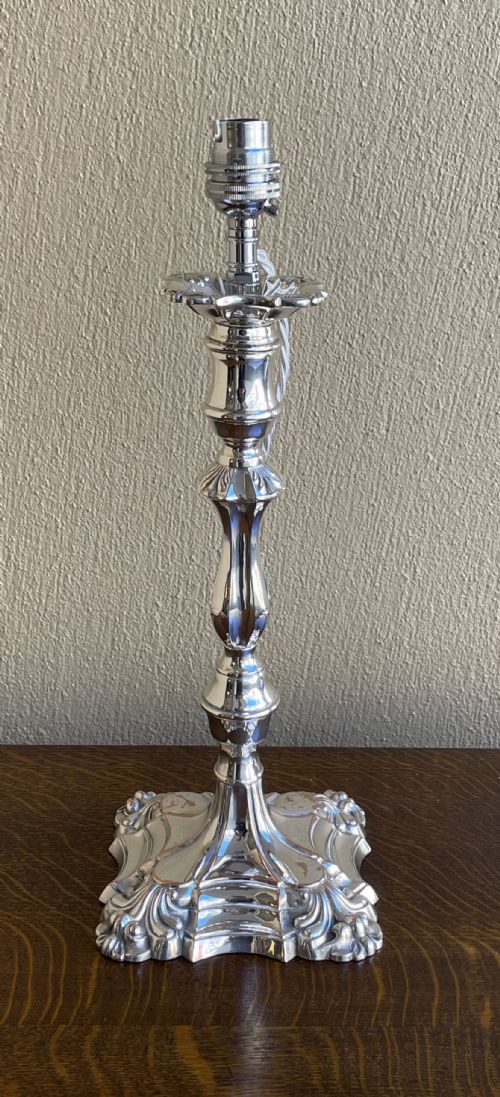
A silver candlestick lamp base brings together traditional lighting and decorative metalwork, spanning periods from the nineteenth century into the twentieth. You will frequently encounter table lamps adapted from earlier forms, alongside dedicated pieces produced during the Victorian and Edwardian eras.
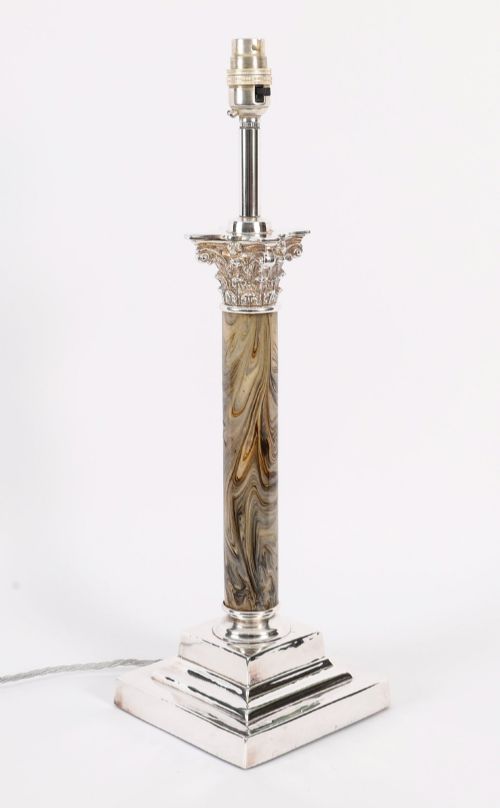
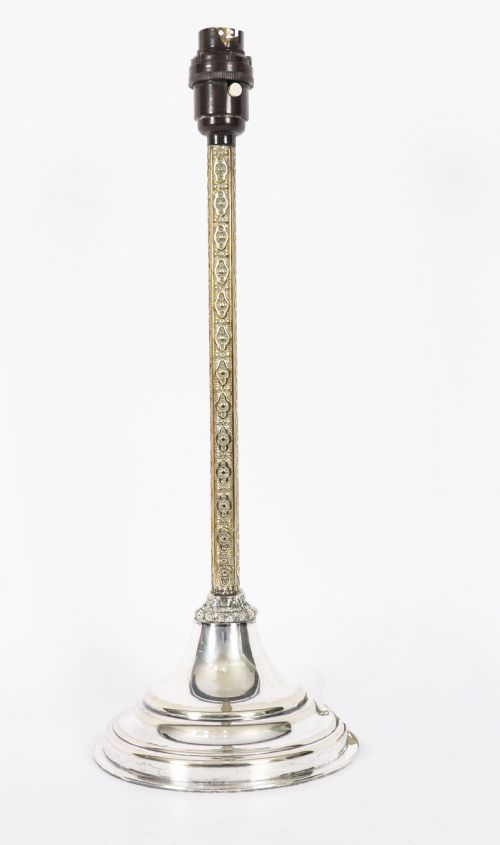
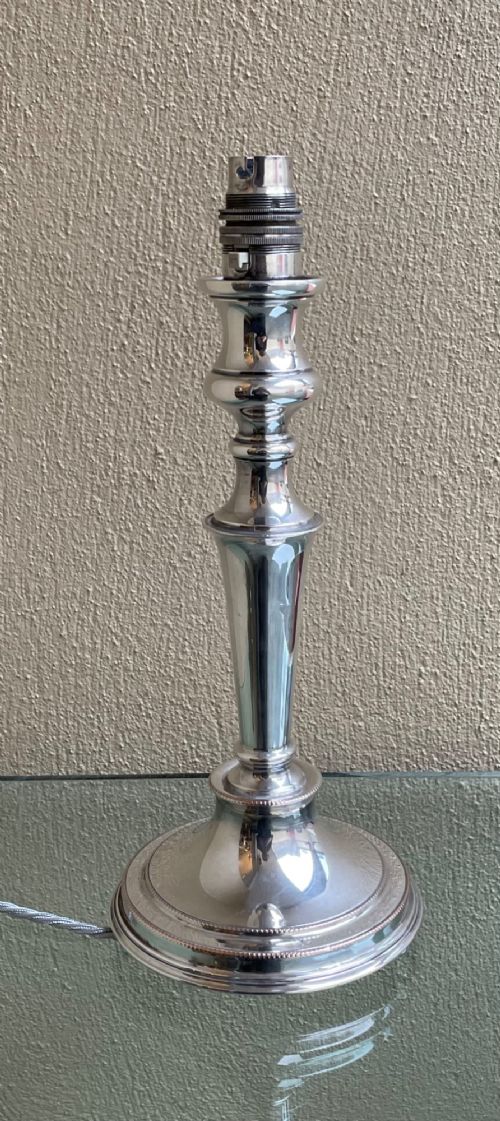
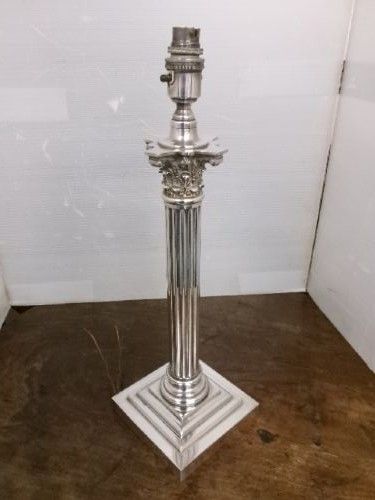
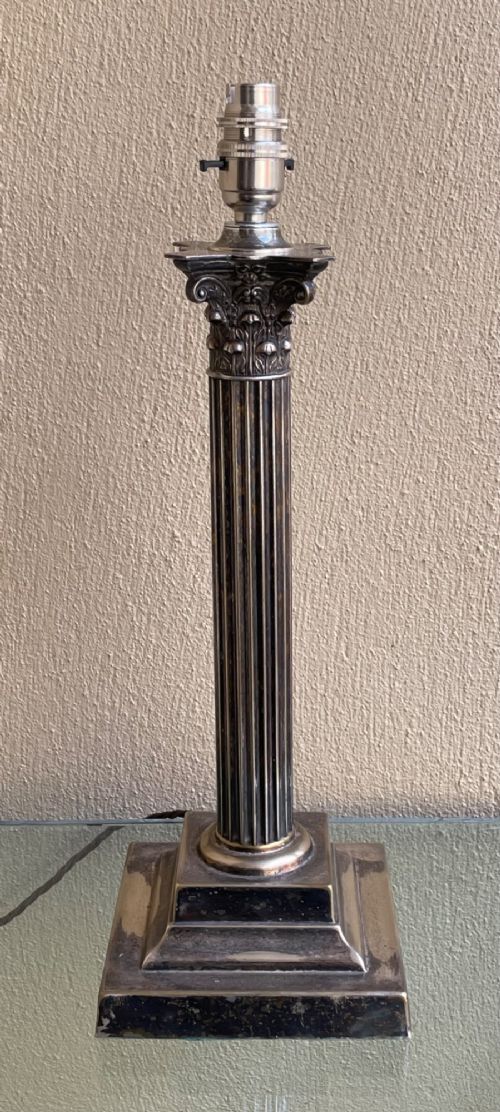
The selection here encompasses several distinct forms, most notably Corinthian column designs alongside round bases and peg oil lamps. These items draw on Neoclassical Revival, Victorian Classical Revival and French Ecclesiastical styles, reflecting the diverse design influences of their respective periods.
Makers utilised various metallic foundations and finishes, creating items that range from monumental columns with lion's paw feet to more compact candle holders. The pieces originate from domestic workshops and established makers alike, offering distinct proportions and decorative detailing.
What varies in quality
Quality rests in the crispness of the casting and the depth of the metalwork, particularly across classical details like acanthus leaves on column capitals. Superior examples display sharp definition and robust structural proportions rather than soft edges or simplified ornamentation.
The integrity of the finish determines longevity, distinguishing heavier plating or solid sterling silver from lighter surfaces that show wear. Well-executed bases also feature balanced weighting and solid construction at the junctions between the column, stem and base.
Some Corinthian column bases stand firmly on tiny lion's paw feet, giving grand classical architecture a surprisingly domestic stance.
Mappin & Webb's·Harrison Brothers & Howson·Walter Latham & Son·Goldsmiths·Palmer & Co
The Silver Candlestick Lamp Base Glossary
- Corinthian column
- An architectural column order featuring an ornate capital decorated with rows of acanthus leaves. This motif appears frequently on nineteenth-century table lamp bases.
- EPNS
- Electroplated Nickel Silver, a common base metal method utilised for durable silver-coated tableware and lighting during the Victorian period.
- Peg oil lamp
- A small oil font designed with a protruding lower peg that fits directly into the socket of a separate candlestick or lamp base. These often feature coloured satin or ruby glass bodies.
- Parcel gilt
- A surface treatment where specific portions of a silver or metal object are gilded with gold while the remaining areas retain their silver appearance.
- Pricket candlestick
- A candle holder featuring an upright metal spike in the centre of the drip pan to secure a candle, occasionally adapted into a lamp base.
Silver Candlestick Lamp Base: Frequently Asked Questions
How do I date a silver candlestick lamp base?
Dating relies on examining the specific stylistic revival markers, manufacturing stamps, and secondary materials such as glass or onyx used in the construction.
Consulting the hallmarking or maker's marks stamped onto the silver or silver plate often provides a precise window of production across the Victorian and Edwardian periods.
Were these always lamp bases?
Many examples began life as oil lamps or formal candlesticks before receiving electrical conversions during the twentieth century.
Adaptations were common practice as households modernised, transforming traditional lighting fixtures into practical table lamps.
How do I care for silver plated lighting?
Maintain the finish by dusting gently with a soft, dry cloth and avoiding harsh abrasive cleaners that strip the thin silver layer.
Keep electrical components away from excessive moisture during cleaning to preserve both the wiring and the antique metal surface.
What styles are common in these lamps?
The pieces draw heavily on Neoclassical Revival, Victorian Classical Revival, and French Ecclesiastical design vocabulary.
Architectural motifs like fluted columns, stepped bases, and classical capitals dominate the visual style across the nineteenth and early twentieth centuries.