



Silver Bottle Base
These silver bottle base pieces, commonly known as wine coasters and bottle coasters, protect your dining table while adding period elegance to your hospitality.
Silver Bottle Base
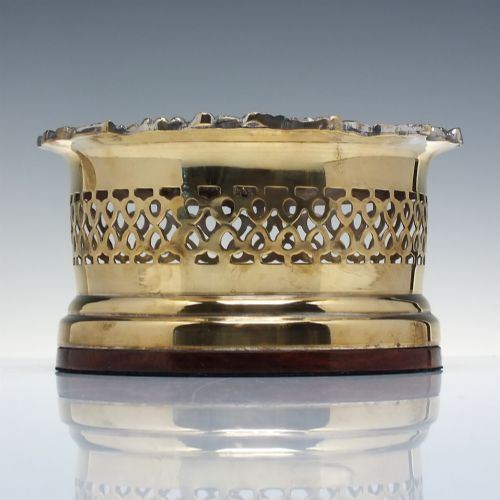
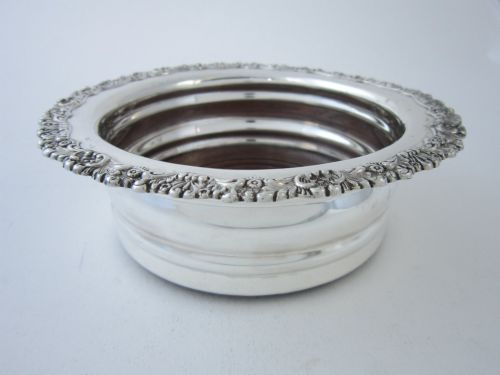
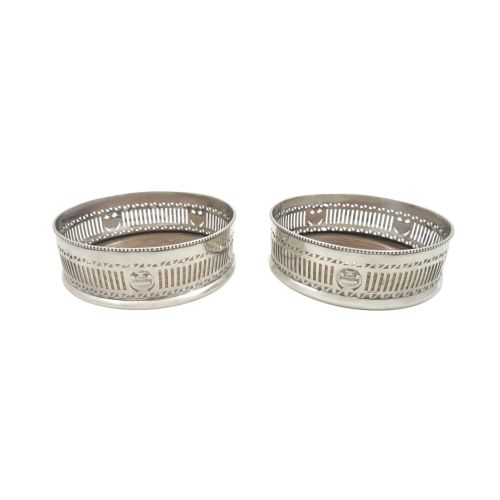
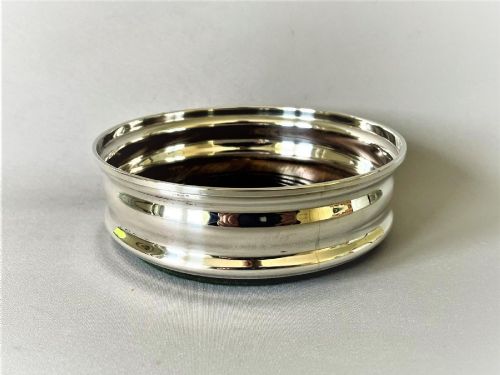
The selection on this page includes traditional single coasters alongside pairs and multi-bottle barware sets. Forms range from simple circular vessels to decorative designs featuring grape and vine motifs or novelty champagne decanters. These items serve both a functional barware purpose and a decorative role in traditional British dining settings.
Materials and construction methods
Many pieces combine sterling silver or silver plate with wooden bases, utilising mahogany and other turned timbers to provide a stable foundation. Makers often inserted felt or baize underneath the wooden base to protect furniture surfaces from scratches during use.
Metalwork techniques involve traditional plating methods such as Old Sheffield Plate alongside solid sterling silver construction. Detail work incorporates decorative borders, pierced gallery sides, and applied motifs including Bakelite accents on mid-century bar sets.
Silver Bottle Base Retail Price Guide 2026
Typical asking prices for silver bottle base among the pieces listed under this phrase on Sellingantiques today, from the lower quarter to the upper quarter. They describe what is for sale here now, not the wider market.
Some Victorian and Edwardian examples doubled as conversation pieces by incorporating novelty cork pullers and champagne decanter mechanics.
Quality variations in silver bottle bases
Quality differences emerge in the weight of the metal and the precision of the joinery between the silver gallery and the wooden insert. Finer examples display crisp casting on decorative borders and well-preserved hallmarks or plating integrity.
The choice of materials also influences the character of the piece, with solid sterling silver and heavy silver plate showing superior substance compared to lighter plated alternatives. The condition of the internal wooden base and the original felt lining further distinguishes high-grade items.
The Silver Bottle Base Glossary
- Bottle Coaster
- A small tray or stand designed to hold a wine bottle and protect the table surface. They often feature a raised gallery wall and a lined base.
- Old Sheffield Plate
- An early composite material made by fusing a thin sheet of silver to a thicker copper base. This technique creates a durable surface characteristic of nineteenth-century items.
- Sterling Silver
- An alloy consisting of pure silver and other metals, usually copper, to increase durability. Items made to this standard typically display official assay office hallmarks.
- Gallery
- The pierced or solid upright rim surrounding the edge of a coaster. This architectural feature keeps the bottle securely positioned within the base.
- Barware
- Utensils and vessels used for preparing and serving drinks. In this context, it includes bottle coasters, decanters, and associated table accessories.
Silver Bottle Base: Frequently Asked Questions
What is a silver bottle base used for?
These pieces function primarily as protective rests for wine and champagne bottles placed on dining tables. They catch drips and condensation, preventing moisture and stains from damaging polished wooden surfaces.
Beyond practical protection, they act as decorative table accessories that elevate the presentation of wine during meals and gatherings.
How do I clean a silver bottle base?
Maintenance requires gentle cleaning with a specialised silver cloth or mild polish to preserve the metal finish without removing plating. Care must be taken around wooden bases and felt linings to avoid excess moisture.
Regular, light wiping keeps the silver bright while protecting the structural integrity of the underlying wood and fabric components.
How can I tell the period of a piece?
Dating relies on identifying maker marks, assay office stamps, and stylistic cues associated with periods like the Victorian, Edwardian, or George V eras. Design motifs such as Art Nouveau curves or Georgian styling provide further chronological context.
Examining the manufacturing technique, such as Old Sheffield Plate versus mid-twentieth-century silver plate, also helps narrow down the date of production.
Are these items suitable for modern dining tables?
These traditional accessories integrate easily into contemporary table settings, offering a practical way to serve wine while introducing historic character. Their standard dimensions accommodate most modern wine and champagne bottles.
Using antique coasters adds a functional touch of heritage craftsmanship to everyday dining and formal entertaining alike.