


Silver Bedside Lamp Base
These silver bedside lamp base pieces bring steady light and bright metal to a room, drawing the eye with their polished columns and classical weight.
Silver Bedside Lamp Base
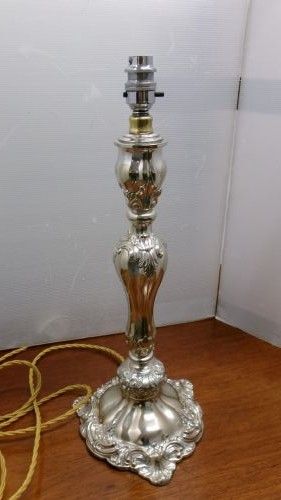
When you search for a silver bedside lamp base, you find sturdy metal and silver plated table lamps designed to sit beside a bed. The selection on this page relies heavily on silver plate, electroplate, and chrome over metal.
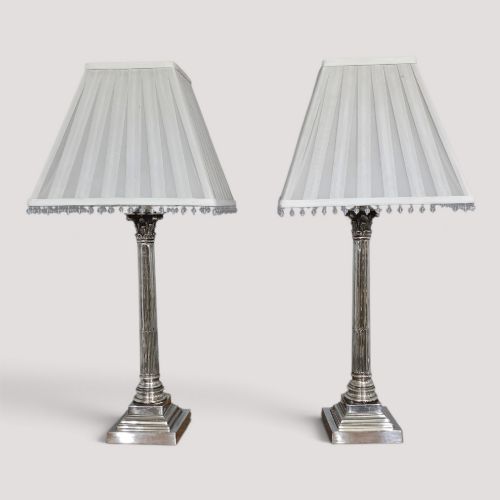
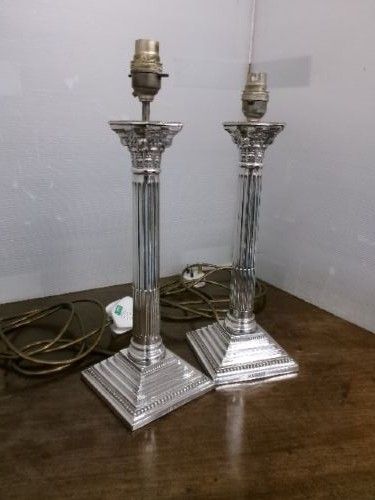
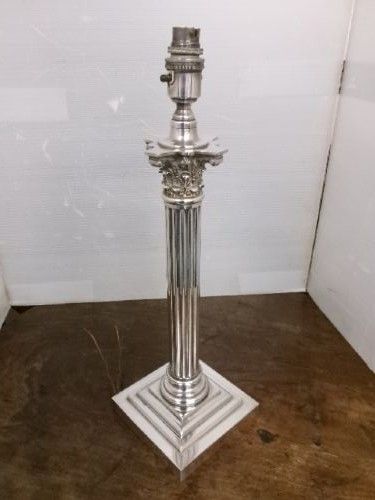
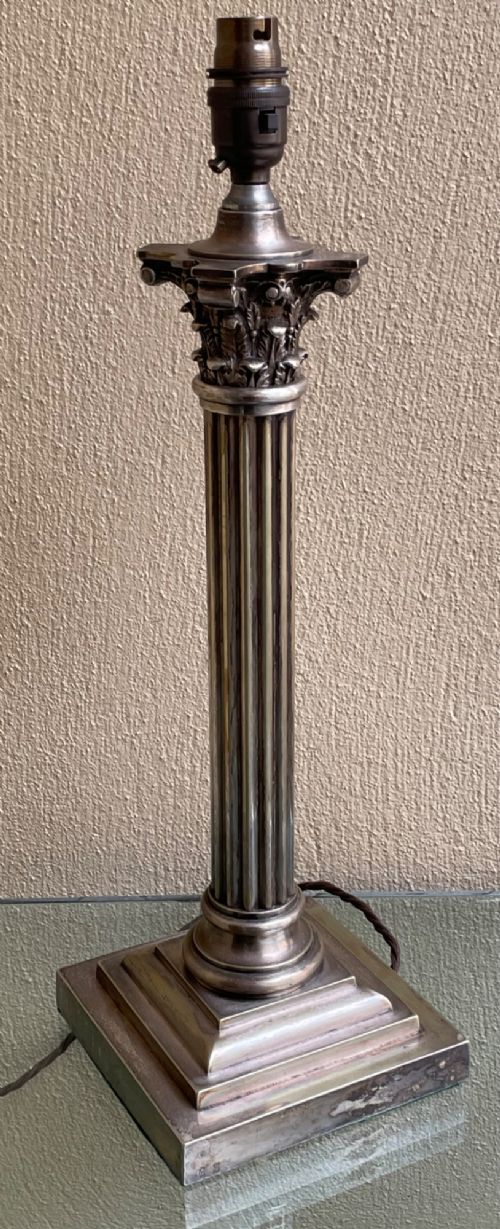
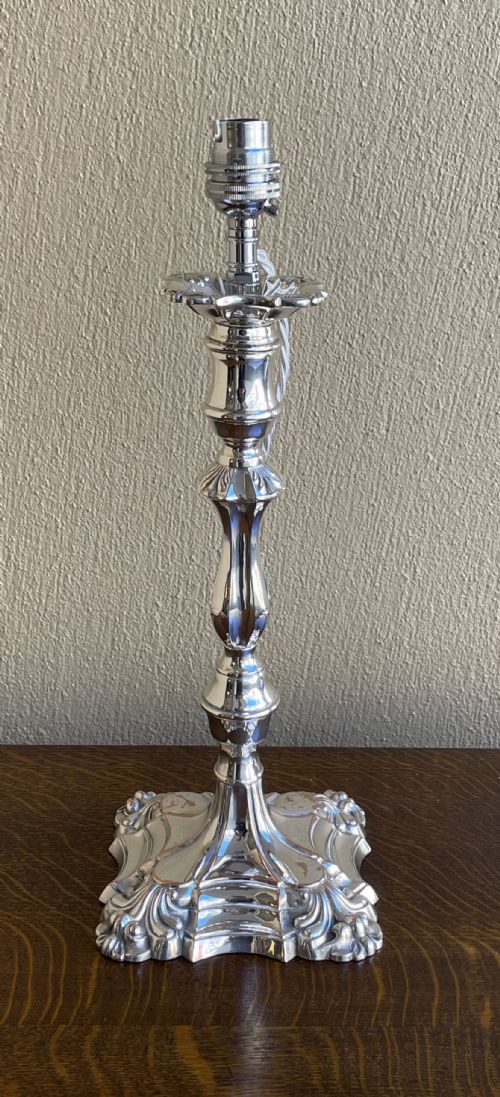
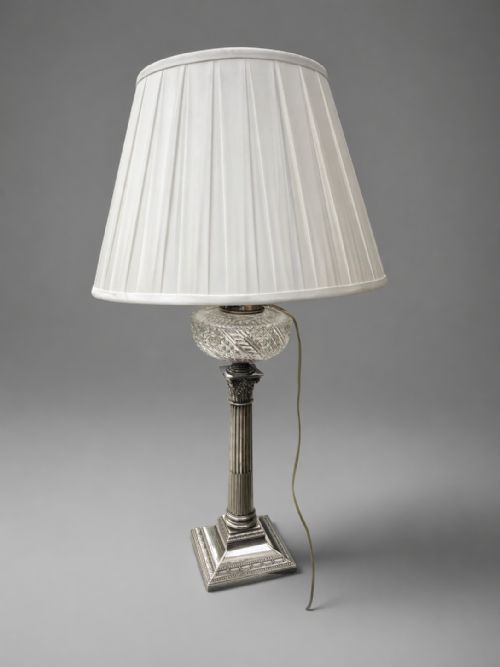
Victorian and Edwardian examples dominate the offerings, often taking the form of Corinthian columns with stepped square bases or lion's paw feet. You will also encounter Art Deco chrome pieces and round based designs from the early twentieth century.
Most items on this page date from the late nineteenth century through to the nineteen thirties, capturing a period when classical revival styles and clean geometric lines defined domestic lighting.
What varies in quality
The distinction between ordinary and superior pieces rests on the crispness of the cast ornamentation and the thickness of the original silver plating. Finer examples show sharp acanthus leaves on Corinthian capitals and well defined reeding along the column shafts.
Substantial weight and solid construction separate better lamp bases from lighter alternatives, ensuring the piece remains stable on a bedside table. The integrity of the underlying metal and the preservation of the plated surface determine the lasting character of each object.
Some nineteenth century lamps stand firmly on tiny lion's paw feet, giving a classical column the sudden urge to prowl across your nightstand.
Harrison Brothers & Howson·Palmer & Co
The Silver Bedside Lamp Base Glossary
- Silver Plate
- A thin layer of pure silver bonded to a base metal core such as brass, copper, or Britannia metal. This technique provided the appearance of solid silver at a lower production cost.
- EPNS
- Electro Plated Nickel Silver, a common designation for base metals coated with silver via an electrical bath. It represents the standard manufacturing method for durable nineteenth and twentieth century domestic metalwork.
- Corinthian Column
- A classical architectural form featuring an ornate capital decorated with carved acanthus leaves. Makers frequently adopted this column style for tall table lamps during the Victorian and Edwardian periods.
- Sheffield
- A city in Yorkshire renowned for its metalworking and silver plating industries. Pieces bearing a Sheffield stamp reflect the heart of British manufacturing output during the Victorian era.
Silver Bedside Lamp Base: Frequently Asked Questions
Are these lamp bases safe to use today?
Many older lamps have been rewired by previous owners to meet contemporary electrical standards. It remains sensible to have any vintage wiring checked by a qualified electrician before plugging it in.
Because these are solid metal bases with standard internal fittings, a professional can easily update the flex and lamp holder while preserving the original exterior.
How do I clean a silver plated lamp base?
Clean silver plate gently with a soft cloth and a specialised silver cream designed to lift tarnish without stripping the thin metal coating. Avoid harsh abrasive dips that can damage the underlying brass or copper.
Regular, light dusting keeps the polished surface bright and prevents heavy oxidation from building up in the crevices of classical columns.
What periods do these lamp bases come from?
The pieces span the Victorian, Edwardian, and Art Deco eras, ranging from the late eighteenth hundreds through to the nineteen thirties. Victorian examples often favour classical revival motifs like Corinthian columns and lion's paw feet.
Later pieces from the nineteen twenties and thirties introduce cleaner chrome finishes and round geometric bases that reflect changing tastes in interior design.
How do I identify a Victorian lamp base?
Victorian examples frequently display heavy silver plate over brass, utilising classical architectural styles such as fluted columns and stepped square bases. Look for maker's stamps and hallmarks associated with nineteenth century silversmiths.
The sheer weight of the metal and the presence of period details like lion's paw feet help distinguish these earlier pieces from later twentieth century reproductions.