


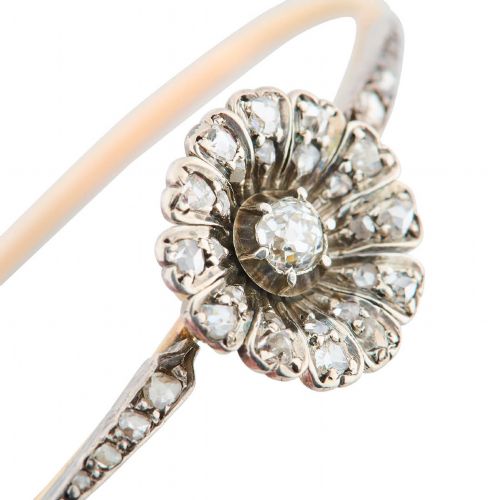

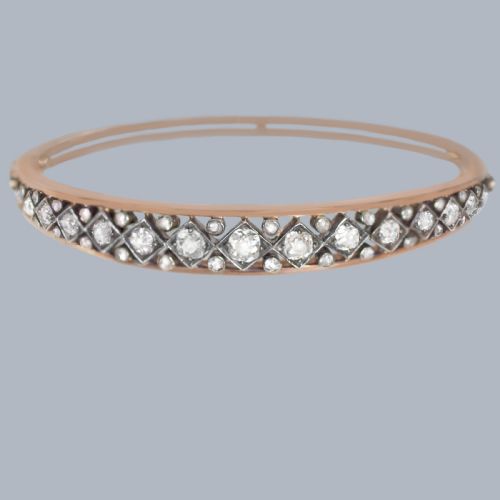
Silver Bangle Bracelet
A silver bangle bracelet wraps the wrist in solid metal or delicate links, offering enduring wearable design from the Victorian era to the mid-century.
Silver Bangle Bracelet
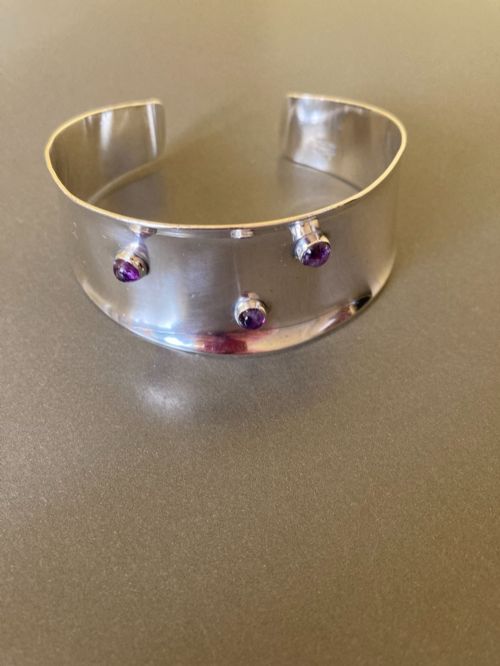
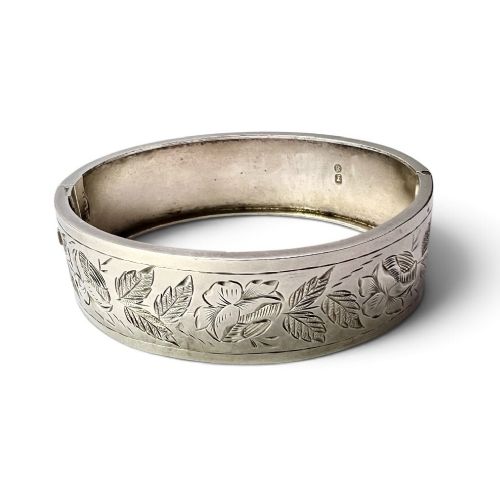
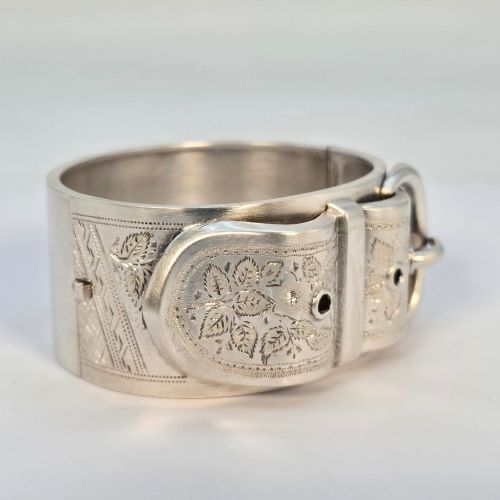
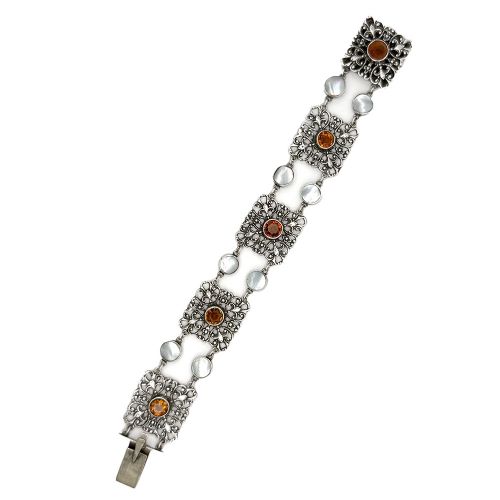
A silver bangle bracelet encompasses rigid hinged cuffs, flexible link chains, and solid bands designed to encircle the wrist securely. When searching for a silver bangle bracelet, collectors encounter diverse forms ranging from ornate Victorian engraved bands to clean-lined mid-century Scandinavian pieces.
The selection spans numerous decades, featuring Victorian aesthetic movement creations alongside Art Deco chromium and enamel designs. Many examples incorporate secure clasps or utilise rigid hinged architecture to sit firmly on the arm.
Origins vary widely across the inventory, including British regional assay offices, Scandinavian workshops, and continental European makers. Each piece reflects the dominant decorative vocabulary of its specific decade, from floral motifs to geometric modernist lines.
Materials and construction methods
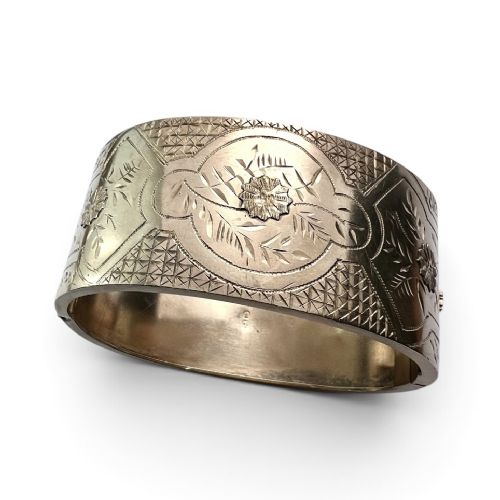
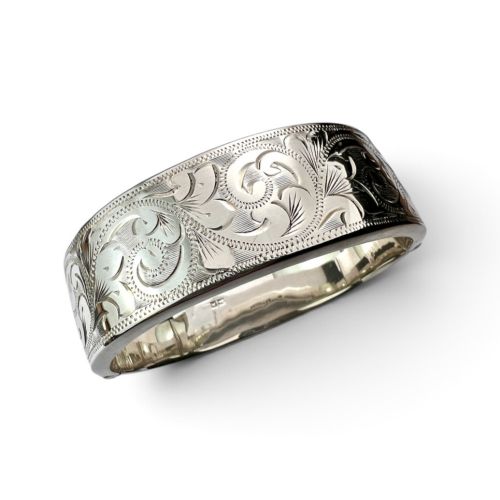
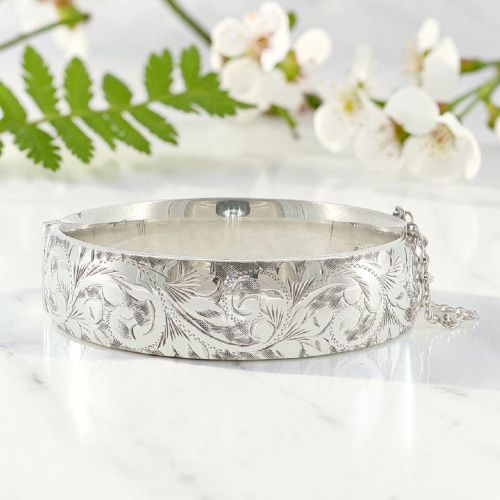
Master metalsmiths forged these items primarily from sterling silver and standard silver, frequently integrating contrasting elements of gold, chrome, and metal. Surface ornamentation relies on meticulous hand engraving, delicate filigree wirework, and structural repoussé or chasing.
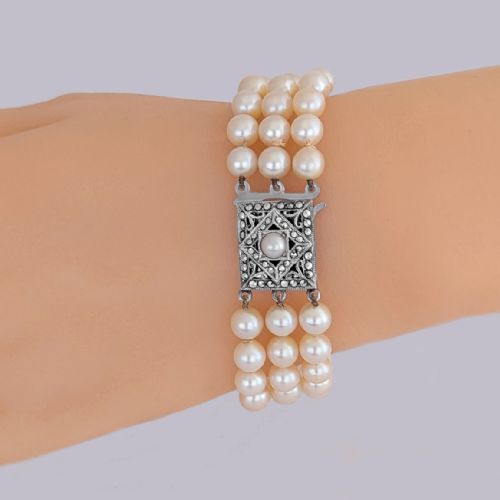
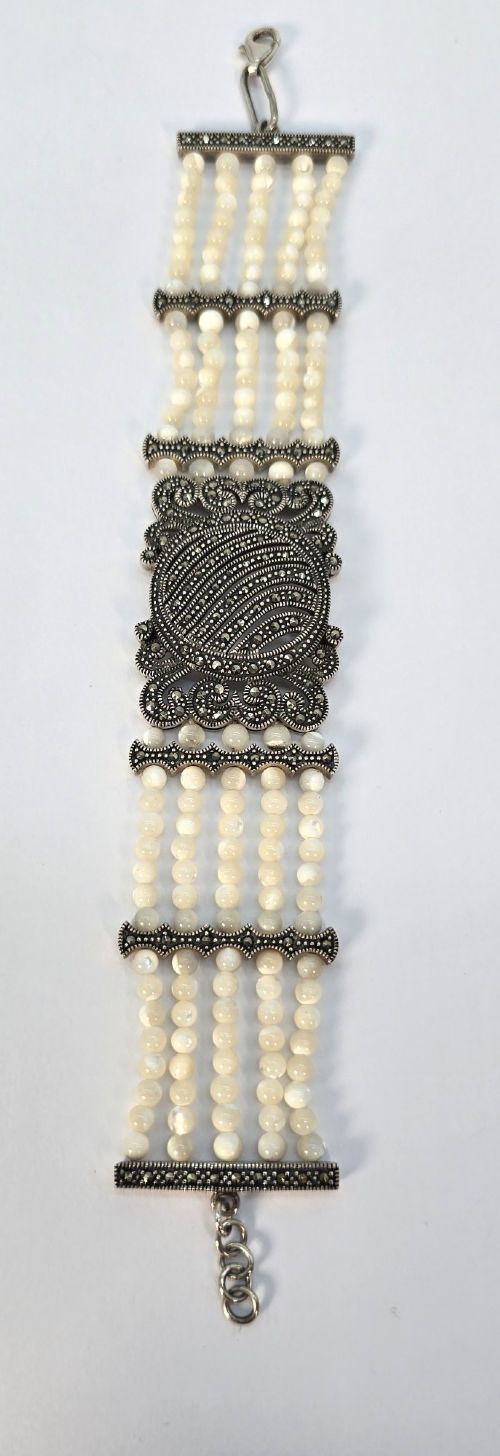
Gems and natural materials frequently accent the metalwork, including diamonds, marcasite, pearls, enamel, amber, onyx, citrine, and blister pearls. Artisans secured these additions within precise bezel or flush settings, or suspended them across multi-strand link configurations.
Silver Bangle Bracelet Retail Price Guide 2026
Typical asking prices for silver bangle bracelet among the pieces listed under this phrase on Sellingantiques today, from the lower quarter to the upper quarter. They describe what is for sale here now, not the wider market.
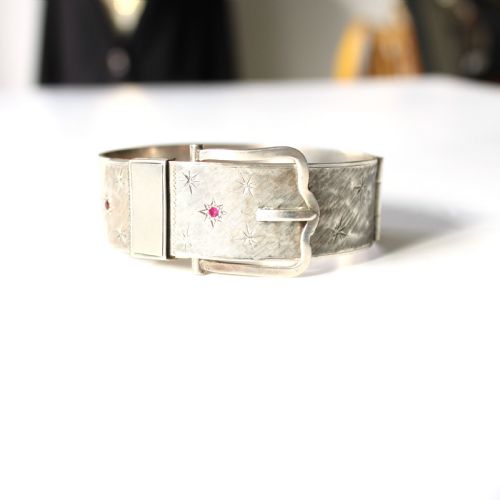
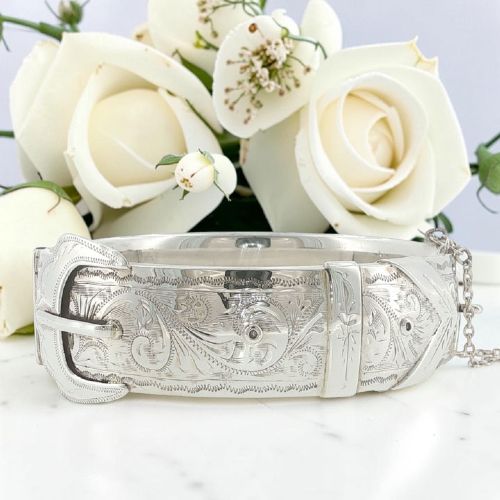
A Victorian corset bangle offers rigid structural discipline for the wrist, echoing nineteenth-century dress reform through solid silver engineering.
Distinctions in craftsmanship
Quality rests upon the crispness of the hand engraving and the structural integrity of hinges and box clasps on rigid cuffs. Superior examples display seamless integration between auxiliary materials like enamel or gemstones and the primary silver chassis.
The presence of clear hallmarks and maker stamps adds verifiable provenance, while heavy gauge silver denotes a more substantial, enduring object. Finer items maintain their original structural components without replacement parts or weak joints.
Amy Sandheim·Georg Jensen·Walker & Hall·Jakob Bengel·Alton·TOPAZIO·Fahrner and Bennett
The Silver Bangle Bracelet Glossary
- Sterling silver
- An alloy containing 92.5 percent silver by mass, with the remainder consisting of other metals like copper for added durability.
- Hinged cuff
- A rigid bracelet design split into sections connected by a functional hinge and secured with a pin or box clasp.
- Marcasite
- Small, faceted pyrite stones cut and polished to resemble diamonds, traditionally set into silver mountings.
- Filigree
- Delicate jewellery art produced from fine pliable threads of gold or silver soldered together in intricate openwork patterns.
- Repoussé
- A metalworking technique where a design is hammered into relief from the reverse side of the object.
Silver Bangle Bracelet: Frequently Asked Questions
How do I secure a hinged bangle?
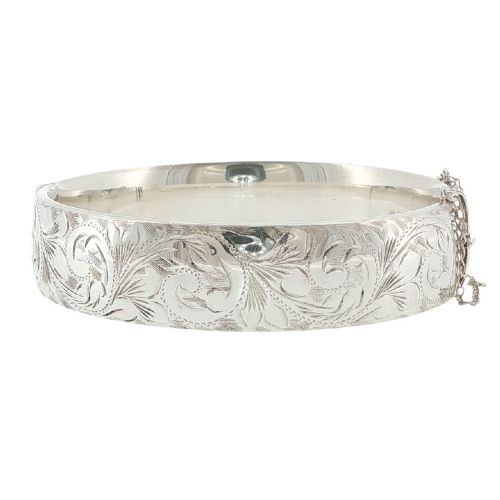
Rigid hinged bracelets typically rely on a side-mounted pin mechanism or an integrated box clasp that clicks firmly shut upon closure. Many antique versions also feature a secondary safety chain to prevent accidental loss.
Checking the tension of the internal spring or tongue within the clasp ensures the bracelet remains securely fastened during daily wear.
What is an aesthetic period bangle?
Aesthetic period pieces stem from a late nineteenth-century movement that prioritized visual beauty over narrative or moral meaning in design. These items often showcase stylized flora, fauna, and asymmetrical motifs drawn from Japanese art.
They represent a distinct departure from heavy high-Victorian ornamentation, favouring flatter surfaces and delicate engraved textures.
Can I wear antique silver daily?
Solid silver items withstand regular daily wear provided the structural hinges and clasps remain strong and secure. Pieces set with soft organic materials like amber, pearls, or delicate enamel require extra care to avoid sharp impacts.
Storing the jewellery in a dry lined box when not on the wrist prevents unnecessary surface scratching and tarnishing.
How do I identify Art Deco bracelets?
Art Deco examples dating from the 1920s and 1930s are instantly recognised by their geometric symmetry, sharp angles, and industrial materials. Makers frequently combined chrome, coloured glass, and vibrant enamel to achieve a sleek modern aesthetic.
This style contrasts sharply with the organic floral curves typical of earlier Victorian or Arts and Crafts creations.