





Silver and Leather Flask
These silver and leather flask pieces are portable containers combining precious metals and hide, built for travelling drinks and scents.
Silver and Leather Flask
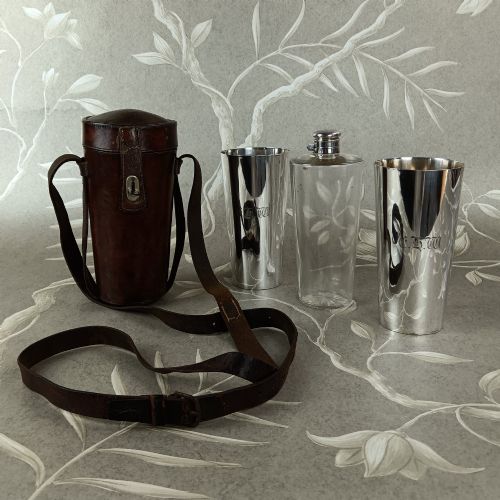
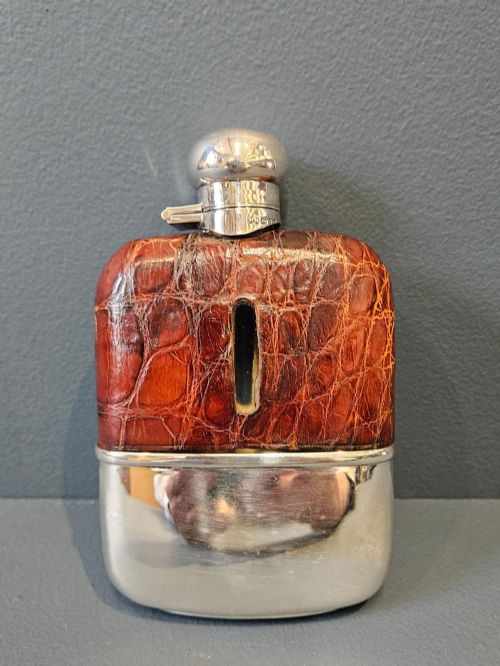
A silver and leather flask is a portable vessel designed for spirits, scents, or communion wine during travel. The most common form on this page is the hip flask, often featuring a captive bayonet cap and a removable bottom cup.
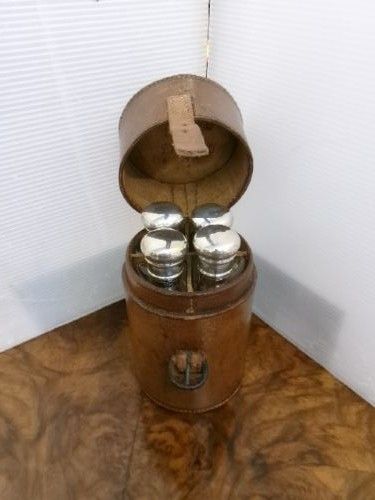
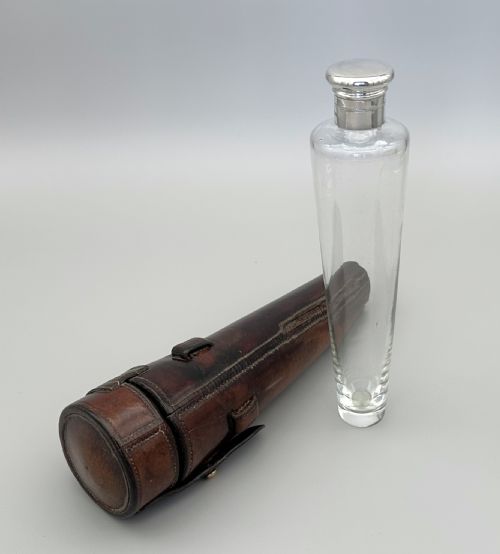
Makers produced these items across the Victorian, Edwardian, and Art Deco periods, spanning the nineteenth and twentieth centuries. Examples range from simple leather-bound glass bodies to fitted campaign sets with internal beakers and silver mountings.
How they were made
Craftsmen shaped sterling silver or silver plate into cups, caps, and mountings, often combining them with moulded glass inner bodies. Hides including standard leather, crocodile leather, and crocodile skin were wrapped tightly around the upper sections to provide a secure grip.
Makers such as James Dixon & Sons and Hukin & Heath stamped hallmarks onto the silver components to denote purity and origin. Stitching secured the leather casings firmly around the glass or metal cores of each vessel.
Silver and Leather Flask Retail Price Guide 2026
Typical asking prices for silver and leather flask among the pieces listed under this phrase on Sellingantiques today, from the lower quarter to the upper quarter. They describe what is for sale here now, not the wider market.
Some Victorian travellers required miniature cups hidden beneath the leather base of their flasks for an impromptu roadside dram.
What varies in quality
Quality depends upon the choice of base material, separating solid sterling silver mountings from standard silver plate. The selection of exotic hides, such as genuine crocodile skin rather than embossed leather, changes the character of the piece.
The inclusion of matched elements, such as collapsable cups, velvet-lined original cases, or complete spirit sets, elevates certain specimens. Hallmarks indicating precise dates and makers add tangible provenance to individual flasks.
James Dixon & Sons·Hukin & Heath
The Silver and Leather Flask Glossary
- Sterling silver
- A silver alloy containing 92.5 percent pure silver by mass, standard in British manufacture. This material appears frequently in hallmarked hip flask mounts and caps.
- Silver plate
- A layer of silver applied to a base metal core such as copper or brass. Many Edwardian and Victorian flasks utilise this technique for durability.
- Campaign set
- A portable collection of drinking vessels or spirit containers arranged for travel. These sets often include fitted leather cases and multiple beakers.
- Captive cap
- A stopper hinged or attached to the neck of a flask so it cannot be misplaced. This mechanism prevents loss during outdoor pursuits.
- Scent bottle
- A small container designed for perfume or volatile oils, often mounted in silver and leather. These pieces date from the Victorian and Georgian eras.
Silver and Leather Flask: Frequently Asked Questions
What is a silver and leather flask?
A silver and leather flask is a portable container used historically for carrying spirits or scents while travelling. The outer leather sleeve provides a comfortable grip around a glass or metal body.
Silver mountings reinforce the neck and base, often incorporating screw caps or hinged stoppers to prevent spills during movement.
How do I date my flask?
Dating relies heavily on hallmarks stamped into the silver components, which indicate the assay office and year of manufacture. Stylistic markers from periods like Victorian, Edwardian, or Art Deco also help narrow the timeline.
Leather texture and case construction provide additional clues regarding the era of production.
Were these flasks used for hunting?
Many examples on this page are described as hunting flasks or field campaign sets, designed specifically for outdoor pursuits and equestrian sports. Their robust construction allowed riders to carry refreshment safely.
Original fitted cases often accompanied these sporting pieces to protect them during transport.
What hides were utilised?
Manufacturers utilised standard leather alongside exotic materials like crocodile leather and crocodile skin. These coverings offered both aesthetic appeal and practical grip for the user.
Embossed leather imitating reptile skin also appears across Edwardian pieces.