



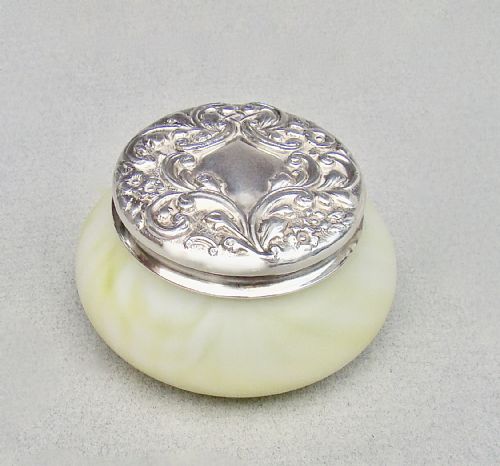

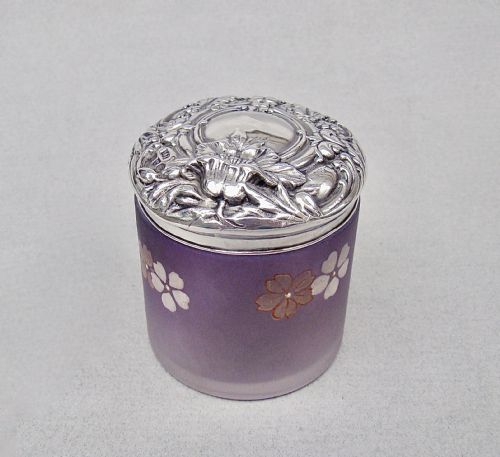


Silver and Glass Trinket Pot
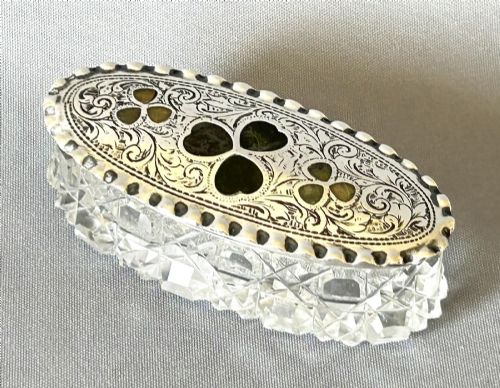
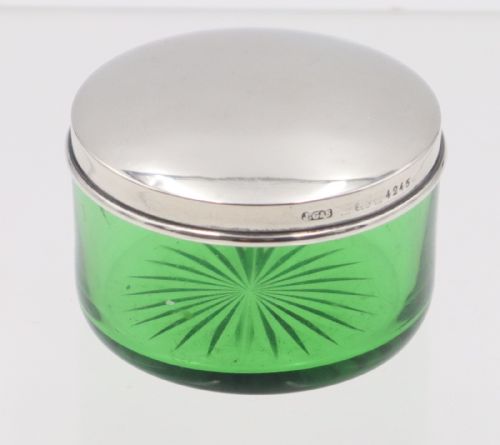
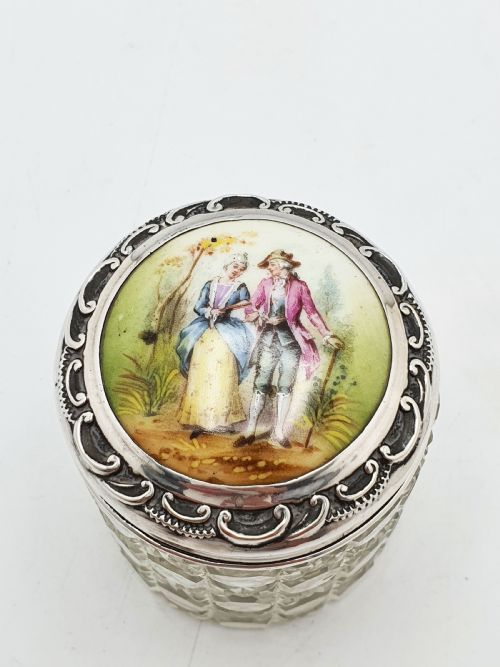
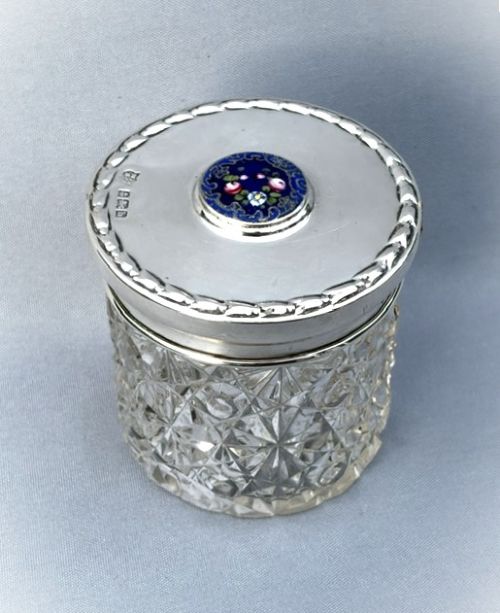
These silver and glass trinket pots combine heavy cut crystal with hallmarked metal lids for dressing table elegance.
Silver and Glass Trinket Pot
When a buyer searches for a silver and glass trinket pot, they encounter dressing table jars, vanity jars, and lidded bowls spanning the Georgian period to the Art Deco era. The selection draws heavily from Edwardian and 1920s workshops, alongside Victorian French examples and early twentieth-century British assay offices.
The most common forms on this page include cut crystal and cut glass containers mounted with sterling silver lids, often housing pins, powder, or cosmetics on period dressing tables. Pieces range from modest circular vanity boxes to heart-shaped crystal containers and large decorative baskets.
Materials and construction methods
The bodies utilise heavy cut glass and cut crystal, occasionally taking the form of coloured glass such as green, cranberry, amethyst, blue, satin, or frosted variants. These glass vessels are paired with sterling silver mounts and lids produced by traditional silversmithing techniques.
Many lids incorporate decorative treatments such as guilloche enamel, hand-painted porcelain plaques, or inlaid tortoiseshell. Hallmarks stamped into the silver provide assay office locations and specific dates of manufacture.
Silver and Glass Trinket Pot Retail Price Guide 2026
Typical asking prices for silver and glass trinket pot among the pieces listed under this phrase on Sellingantiques today, from the lower quarter to the upper quarter. They describe what is for sale here now, not the wider market.
One exceptional Georgian set bears a stag crest, proving that even eighteenth-century gentlemen required a well-ordered dressing table.
Factors separating standard pieces from finer examples
Quality rests in the crispness of the glass cutting and the complexity of the lid ornamentation. Deeply faceted cut crystal and substantial sterling silver mounts elevate a piece above simpler vessels.
The inclusion of undamaged guilloche enamel, hand-painted porcelain panels, or genuine tortoiseshell adds considerable refinement to the dressing table jar.
Henry Clifford Davis·A. Bromet & Co·Jonathan Douglas
The Silver and Glass Trinket Pot Glossary
- Guilloche enamel
- A decorative technique involving precise mechanical patterns engraved beneath translucent enamel layers. This finish frequently appears on Art Deco silver lids.
- Sterling silver
- An alloy consisting of silver and other metals, standardised for strength and purity. British pieces display assay marks confirming this standard.
- Cut crystal
- High-clarity glass containing lead oxide, shaped with deep geometric facets. It provides heavier weight and greater brilliance than standard moulded glass.
- Vanity jar
- A lidded container designed to hold cosmetics, pins, or small jewellery on a dressing table. These pieces form the core of the available selection.
Silver and Glass Trinket Pot: Frequently Asked Questions
What were silver and glass trinket pots used for?
These vessels sat on dressing tables to hold pins, rings, rouge, and small cosmetic items.
Their lidded design kept powders and trinkets protected while adding decorative brilliance to nineteenth and twentieth-century bedrooms.
How do I date an antique glass and silver jar?
Dating relies on the silver hallmarks stamped onto the mount or lid, which indicate the assay office and year of manufacture.
Stylistic elements like geometric guilloche enamel point to the 1920s and 1930s, while heavier cut crystal often indicates the Edwardian era.
What glass colours appear on these pots?
The selection includes clear cut crystal alongside coloured glass variations such as green, cranberry, amethyst, blue, and frosted finishes.
Some examples also utilise satin glass or opaque overlay techniques beneath the silver mount.
Are these pots part of larger dressing table sets?
While many survive as individual items, some pieces originated as components of multi-piece dressing table sets.
Matching sets typically included hairbrushes, trays, and various jars sharing identical silver monograms or maker marks.