



Silver and Enamel Mirror
A silver and enamel mirror combines reflective glass with coloured vitreous work, offering a portable piece of functional art that collectors prize for its decorative metalwork.
Silver and Enamel Mirror
A silver and enamel mirror encompasses compact cases, hand mirrors, purse mirrors, and mirrored lockets produced across several decades. Buyers encounter pocket-sized accessories and dressing table pieces primarily styled in the Art Deco, Art Nouveau, and Mid-Century Italian movements.
The objects span the early twentieth century, with examples dating from nineteen hundred through nineteen fifty. Sterling silver, eight hundred silver, and silver-gilt form the structural mounts, paired with glass mirrors and coloured vitreous coatings.
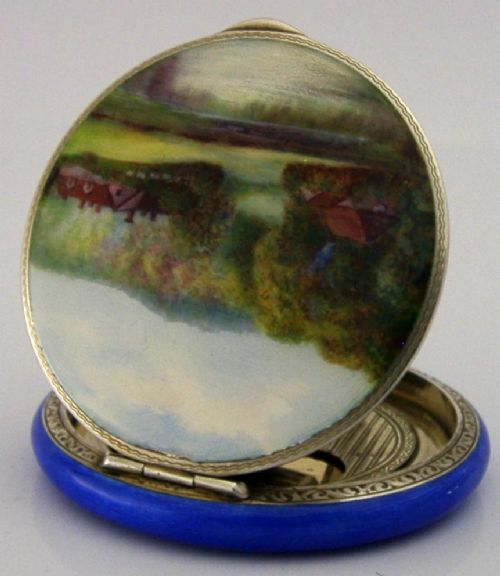
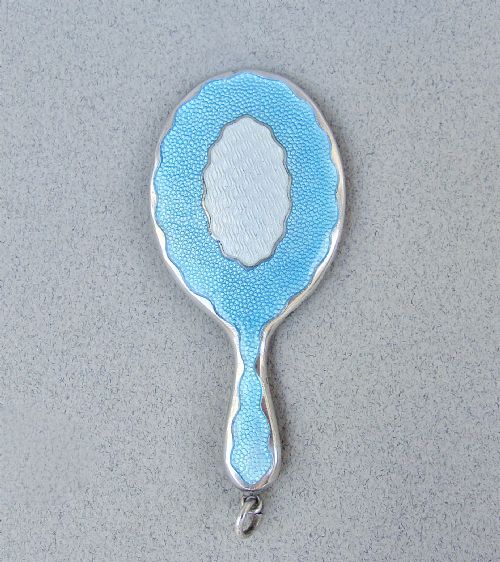
Forms range from simple hand mirrors and miniature purse mirrors to complex combination compacts and pendants with integrated mirrors. Blue enamel and hand-painted details frequently appear alongside specialised mesh designs and suede linings.
Materials and construction techniques
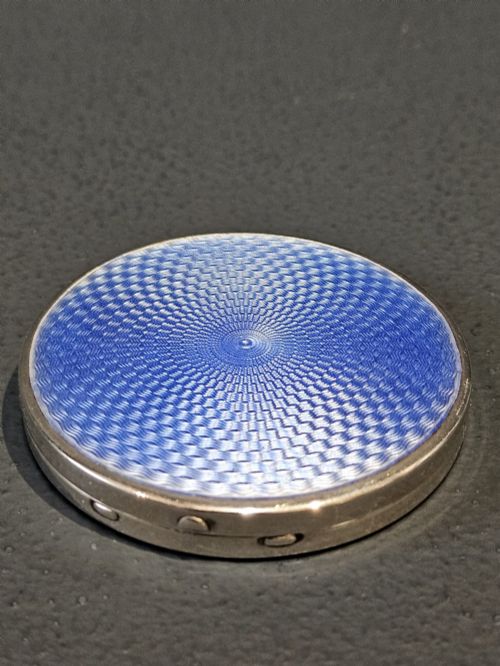
Silversmiths constructed the outer bodies using sterling silver, eight hundred silver, or silver-gilt, shaping the metal to house reflective glass panels. Workshops employed guilloche techniques to engrave geometric patterns beneath translucent layers of coloured enamel.
Makers fused powdered glass to the metal surface through high-temperature firing, creating durable vitreous enamel finishes. Additional elements such as suede linings and metal mesh integrated into the designs during the assembly of functional compact cases.
Silver and Enamel Mirror Retail Price Guide 2026
Typical asking prices for silver and enamel mirror among the pieces listed under this phrase on Sellingantiques today, from the lower quarter to the upper quarter. They describe what is for sale here now, not the wider market.
Some compacts managed to squeeze two distinct faces and a mirror into a pocket-sized case, proving historical dedication to public touch-ups.
Assessing quality in enamelled silver
The sophistication of the guilloche engraving and the clarity of the translucent enamel distinguish superior examples from standard production. Precision in the hand-painted motifs and the crisp execution of maker marks contribute significantly to the standing of a piece.
The integrity of the silver mount and the preservation of the delicate vitreous surface dictate the overall standard. Well-preserved hinges, secure clasps, and unblemished mirrored glass reflect superior original manufacture and careful ownership.
Henry Williamson·Henry Matthews·Evans·Giuliano Spinelli·Richard Hudnut·Meyle And Mayer·Houbigant
The Silver and Enamel Mirror Glossary
- Guilloche
- A decorative engraving technique that etches precise geometric patterns into metal before applying translucent enamel. This method creates a shimmering depth beneath the coloured surface.
- Vitreous enamel
- A material made by fusing powdered glass to a metallic substrate through firing at high temperatures. It provides a hard, glossy, and coloured protective coating.
- Silver-gilt
- Silver that has been coated with a thin layer of gold on its exterior surfaces. This treatment adds a warm metallic tone to the mount.
- Combination compact
- A multi-functional accessory designed to hold powder alongside other items such as mirrors or lipsticks. These pieces represent complex mechanical assembly.
- Pendant locket
- A small hinged container worn on a chain that encloses a tiny mirror or photographic space. They combine jewellery design with functional optics.
Silver and Enamel Mirror: Frequently Asked Questions
How do I clean my silver and enamel mirror?
Use a soft, dry cloth to remove dust from the enamel and silver surfaces without applying harsh abrasives. Avoid submerging antique pieces in water to protect internal linings and glued mirror glass.
Keep silver polish away from the vitreous enamel sections to prevent staining or dulling of the glass coating. Professional care is advisable if tarnishing reaches difficult recesses.
What periods do these mirrors represent?
The available pieces originate primarily from the early twentieth century, spanning Art Nouveau beginnings through Art Deco heights. Mid-century Italian workshops also contributed distinct designs.
Stylistic cues such as fluid floral lines or strict geometric guilloche patterns help distinguish the specific decade of manufacture.
How can I identify the silver purity?
Makers stamped hallmarks or fineness marks directly onto the metal mounts, indicating the standard of the silver used. Sterling marks, eight hundred designations, and maker initials offer clues to origin.
Examining these stamps requires a loupe due to the miniature scale of many purse mirrors and compact cases.