



Silver Amethyst Jewellery
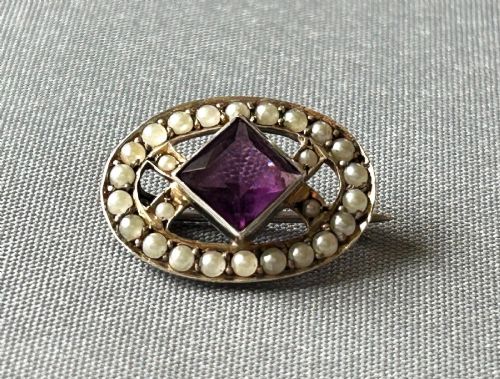
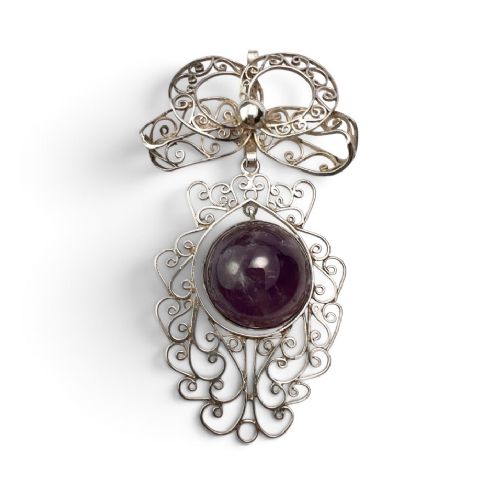
Silver amethyst jewellery brings together cool sterling silver and purple quartz across periods from Georgian designs to mid-century modern works.
Silver Amethyst Jewellery
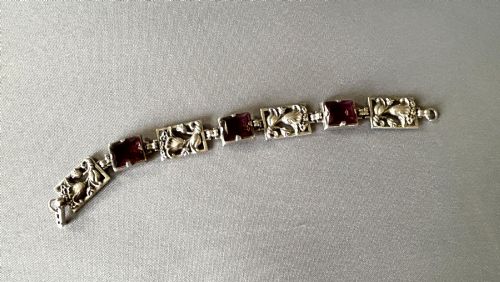
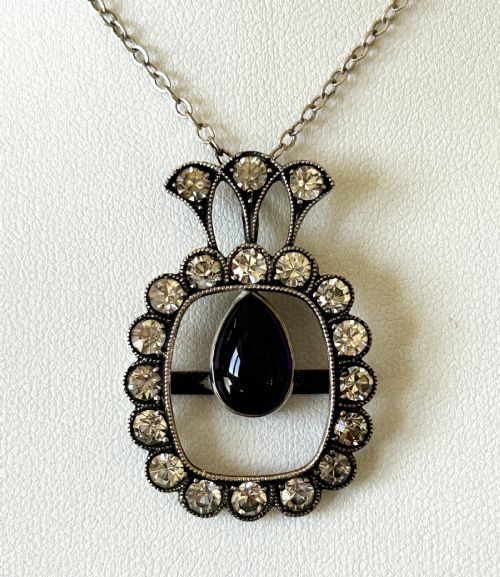
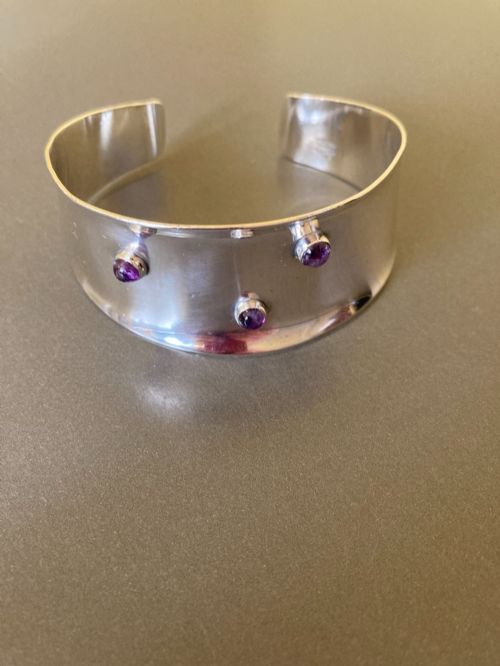
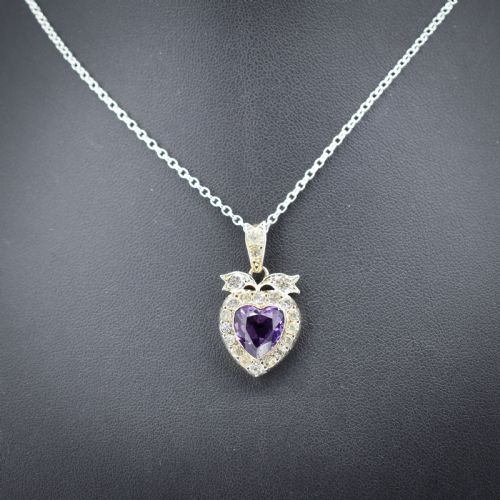
Silver amethyst jewellery spans rings, brooches, necklaces, pendants, earrings, bracelets and bangles created across multiple centuries. Buyers looking at this selection will find everything from early Georgian foiled paste crosses to ornate Art Nouveau pendants and clean-lined mid-century Scandinavian silver bangles.
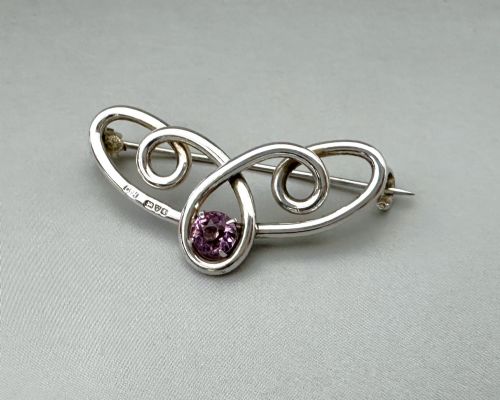
The most common versions met on this page include brooches and necklaces set in sterling silver, often drawing on Art Nouveau, Victorian, Edwardian and Arts and Crafts styles. Makers and designers from different decades utilise the purple stone alongside materials like pearl, enamel and marcasite.
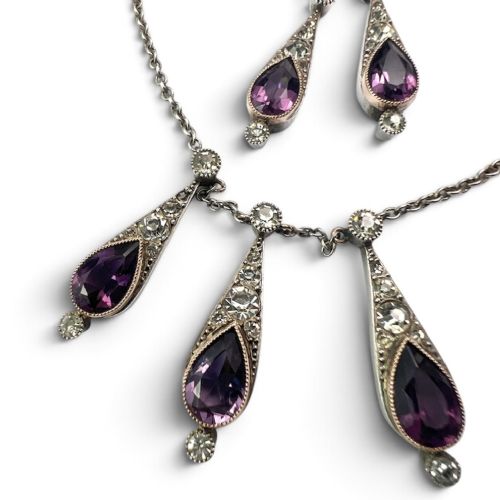
Pieces range from simple cabochon rings to elaborate festoon necklaces featuring coral and moonstone alongside the central amethysts. These items reflect the shifting aesthetic tastes of the 1860s, the 1900s, the 1920s and the 1960s.
Materials and construction
Metals span standard silver, sterling silver and silver gilt, providing a bright or gilt-washed mount for the stones. Amethysts appear as natural stones or as paste glass, sometimes backed with foil in Georgian items to intensify the colour.
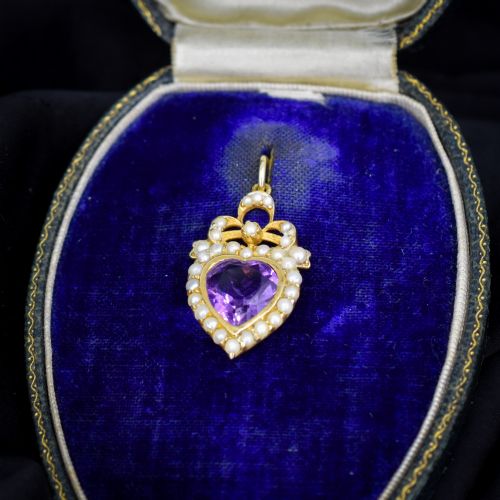
Workshops incorporate decorative elements such as plique-à-jour enamel, marcasite, pearls, coral, moonstone, chalcedony and glass. Construction methods range from hand-worked Arts and Crafts settings to structured Art Deco geometry and Scandinavian modernist cabochon mountings.
Silver Amethyst Jewellery Retail Price Guide 2026
Typical asking prices for silver amethyst jewellery among the pieces listed under this phrase on Sellingantiques today, from the lower quarter to the upper quarter. They describe what is for sale here now, not the wider market.
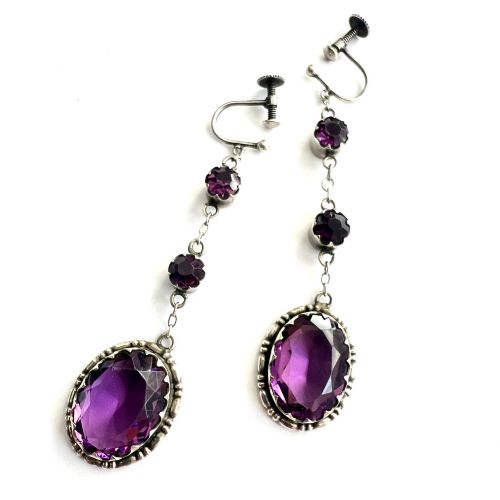
Even screwback earrings make an appearance, letting non-pierced ears join the amethyst party.
Evaluating craftsmanship
Named makers and identifiable workshop marks introduce distinct design authority to a piece, separating unsigned items from documented modernist or period works. The quality of the stones themselves, whether deep natural quartz or skilled paste replicas in older Georgian settings, dictates the visual impact.
Charles Horner·N E From·Vivianna Torun Bulow Hube·Beto·Eduard Loss·Georg Jensen
The Silver Amethyst Jewellery Glossary
- Cabochon
- A gemstone shaped and polished with a smooth, convex top rather than faceted edges. This style highlights the natural tone of the amethyst.
- Paste
- Hand-cut glass used historically as a gemstone substitute. Georgian and Art Deco pieces frequently employ amethyst paste.
- Plique-à-jour
- An enamel technique resembling miniature stained glass where enamel is fired without a backing, allowing light to shine through. It frequently appears in Art Nouveau silver and amethyst designs.
- Festoon
- A necklace style featuring a draped chain or chains suspended across the neckline, often hung with drops or pendants. Arts and Crafts makers utilised this format with stones like amethyst, coral and moonstone.
- Silver gilt
- Silver that has been coated with a thin layer of gold. This finish provides a warm contrast to the purple amethyst stones.
Silver Amethyst Jewellery: Frequently Asked Questions
How do I care for silver amethyst jewellery?
Store pieces individually in soft pouches to prevent the silver from scratching or tarnishing against other items. Avoid exposing older items containing paste or enamel to harsh chemical dips.
Clean the silver gently with a specialist polishing cloth while avoiding abrasive cleaners on softer stones and foil-backed pastes. Regular gentle maintenance preserves the original metal finish.
How can I tell a Georgian piece from a later reproduction?
Examine the construction methods and the back of the settings, as Georgian pieces often feature closed backs with foil behind paste amethysts. The hand-cut nature of early stones differs significantly from standardised modern cuts.
Look for signs of hand-fabrication in the metalwork and check for period-appropriate wear patterns. Comparing the style to documented examples from the eighteenth and early nineteenth centuries helps confirm authenticity.
What is the difference between natural amethyst and paste?
Natural amethyst is a purple variety of quartz mined from the earth, showing natural inclusions and varying crystal growth. Paste is a dense glass composition moulded and cut by hand to imitate genuine gemstones.
Historical paste, particularly in Georgian and Art Deco items, holds high collectible value in its own right due to the skill involved in its creation. Magnification often reveals tiny bubbles in paste, whereas natural quartz displays crystalline structures.
How should I wear antique silver jewellery daily?
Select sturdy forms like solid silver bangles, cocktail rings or heavy brooches for regular wear, as they withstand daily movement well. Ensure delicate items like festoon necklaces or enamel pendants are worn with care to avoid snagging.
Consider the security of clasps, screwback earrings or pin stems before wearing older pieces out. Removing jewellery before swimming, sleeping or exercising protects fragile settings.