




Silk Work Embroidery
Silk work embroidery pieces bring historical textiles and needlework into interiors, offering collectors framed panels, samplers, and utilitarian sewing tables.
Silk Work Embroidery
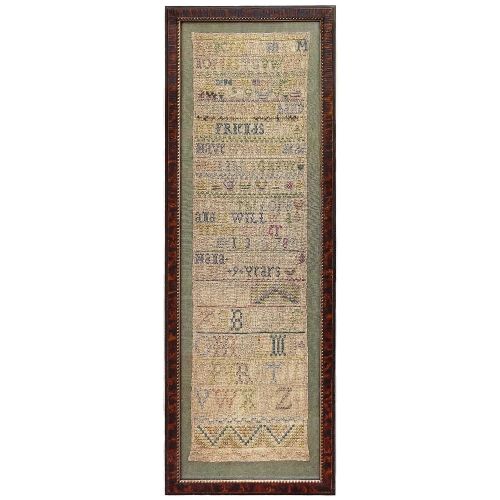
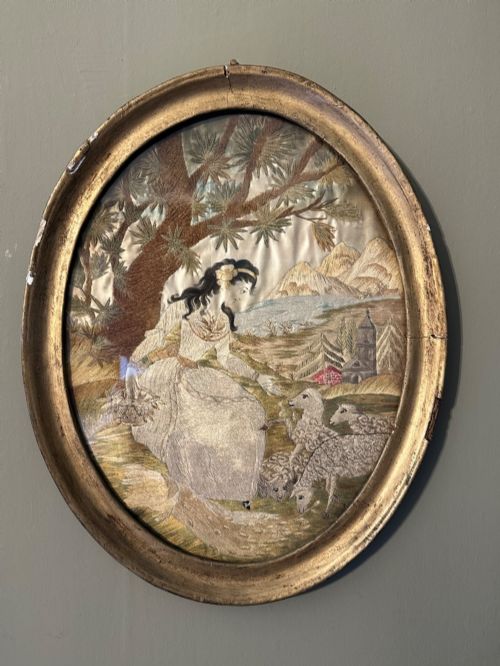
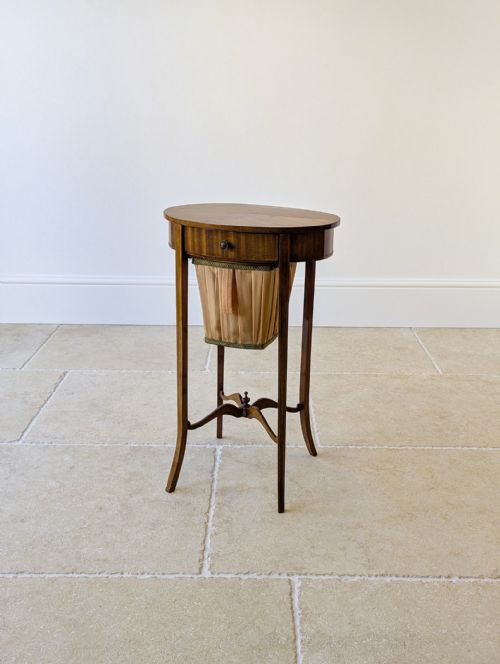
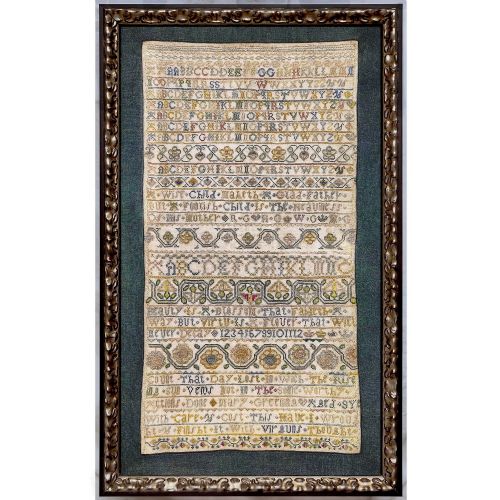
When you search for silk work embroidery, you encounter a diverse range of textiles, wall art, and furniture spanning from the seventeenth century through to the twentieth century. These pieces encompass framed needlework pictures, band samplers, and mahogany or rosewood sewing and work tables equipped with silk baskets.
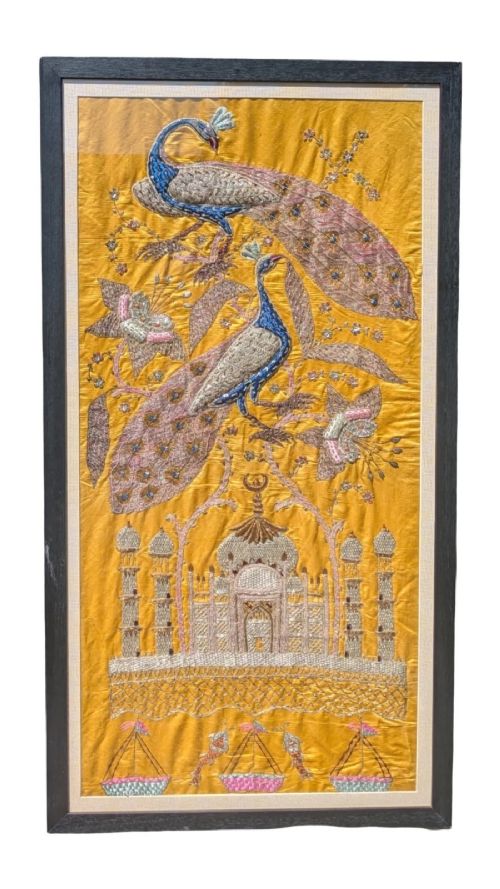
The objects originate from various traditions, including English band samplers, Stuart stumpwork panels, Persian Rasht embroideries, and Uzbek suzanis. You are most likely to meet framed eighteenth and nineteenth-century English examples alongside Edwardian and Regency furniture designed for needlework.
Materials and construction
The makers utilised silk threads, cotton, and metallic thread applied to grounds of silk, felt, and velvet, often framed behind glass within giltwood or wood surrounds. Furniture forms incorporate mahogany, rosewood, satinwood, and brass inlay to house interior silk work storage compartments.
Techniques range from counted thread samplers and crewel work to raised stumpwork relief and intricate felt appliqué work seen in Persian and Central Asian textiles.
Silk Work Embroidery Retail Price Guide 2026
Typical asking prices for silk work embroidery among the pieces listed under this phrase on Sellingantiques today, from the lower quarter to the upper quarter. They describe what is for sale here now, not the wider market.
King Charles I and Queen Henrietta Maria occasionally find themselves immortalized in raised seventeenth-century thread, steadfastly guarding your modern hallway.
Assessing quality and condition
Quality rests upon the preservation of the delicate fibres, the tightness of the stitch work, and the original integrity of the mounting or framing. Finer examples retain vibrant colour in the silks and metals without excessive fraying to the ground fabrics.
In furniture pieces, the quality depends on the cabinetwork of the mahogany or rosewood structure alongside the survival of the original silk work containers and internal fittings.
The Silk Work Embroidery Glossary
- Band sampler
- A long, narrow linen or cloth strip worked with various embroidery stitches and patterns by a scholar. These pieces record the needlework proficiency of the maker.
- Stumpwork
- A raised embroidery style popular in the seventeenth century using padding and wire to create three-dimensional figures and motifs. Human figures like royalty frequently feature in these panels.
- Suzani
- A large embroidered textile from Central Asia, such as Uzbekistan, typically worked in silk on a cotton or linen foundation. They display bold floral medallions and vines.
- Rasht embroidery
- A traditional Persian textile craft utilising inlaid felt and chain-stitch embroidery to form intricate geometric and floral designs. Silk thread is applied directly to a wool felt backing.
- Work table
- A small nineteenth-century occasional table containing a fabric bag or basket underneath for sewing materials. Mahogany, rosewood, and satinwood serve as the primary timbers.
Silk Work Embroidery: Frequently Asked Questions
What is silk work embroidery?
Silk work embroidery encompasses decorative needlework pictures, samplers, and textile art created using fine silk threads. These pieces often feature historical scenes, figures, or botanical motifs.
They also include utilitarian objects like sewing tables that incorporate silk storage components for needlecraft supplies.
How are antique samplers dated?
Antique samplers are dated by examining the specific stitching styles, materials, and the types of linen or canvas used by the maker. Many pieces include worked dates or maker names that anchor them to a specific century.
Stylistic conventions of the lettering and motifs further help narrow down the period of execution.
Where were suzanis made?
Suzanis originate from Central Asian regions, notably Uzbekistan cities such as Tashkent and Bukhara. Local artisans created these large decorative hangings using vibrant silk embroidery on cotton grounds.
They served traditionally as part of a bride's dowry and functioned as wall hangings or bed covers.
How do I care for antique textiles?
Antique textiles require protection from direct sunlight to prevent the fading of delicate silk threads and felt backgrounds. Keeping them behind glass or in stable environmental conditions preserves the fragile fibres.
Avoid high humidity and temperature fluctuations to maintain the structural integrity of older needlework.