
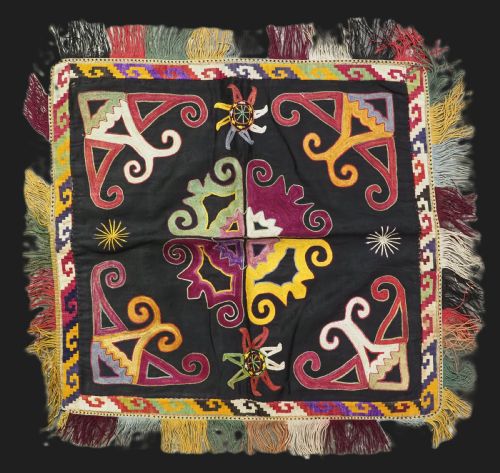


Silk Embroidered Wool Textile
These silk embroidered wool textile works bring rich tribal motifs and historic pastoral scenes into modern interiors.
Silk Embroidered Wool Textile
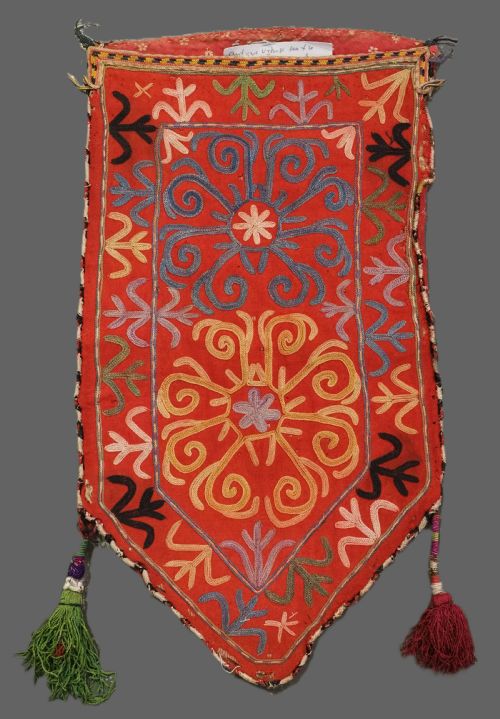
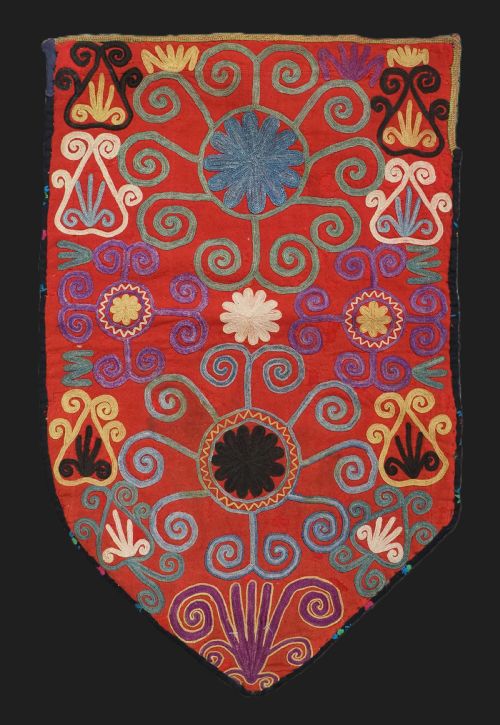
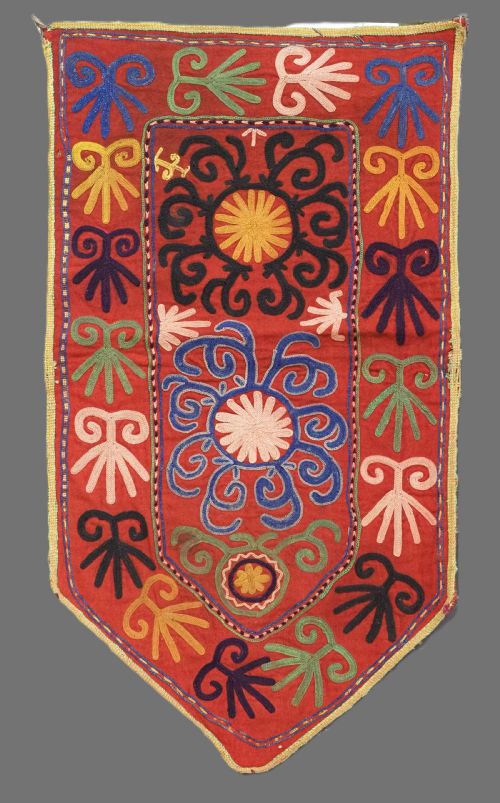
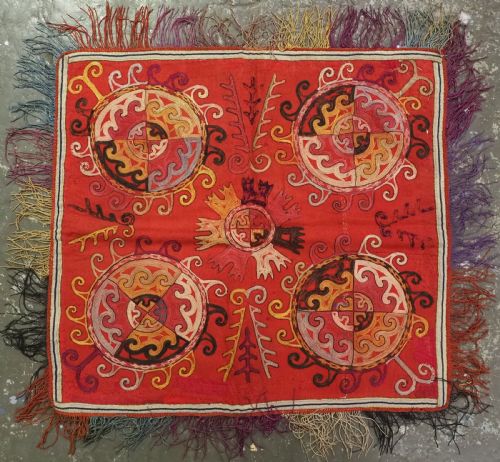
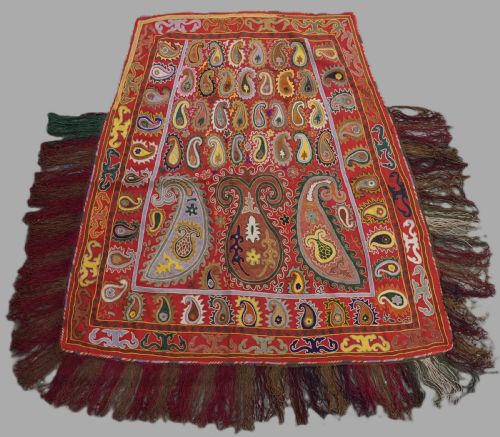
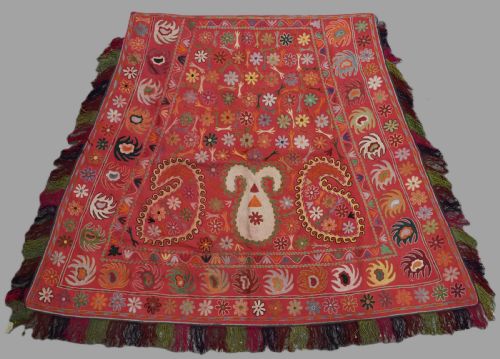
A silk embroidered wool textile functions primarily as a wall hanging, dowry piece, or ceremonial cover originating from Central Asian tribal traditions, Persian workshops, or English country houses. The most frequently encountered version on this page is the nineteenth-century or early twentieth-century Uzbek Lakai tribal ilgich or uut kap, worked in silk on a wool ground.
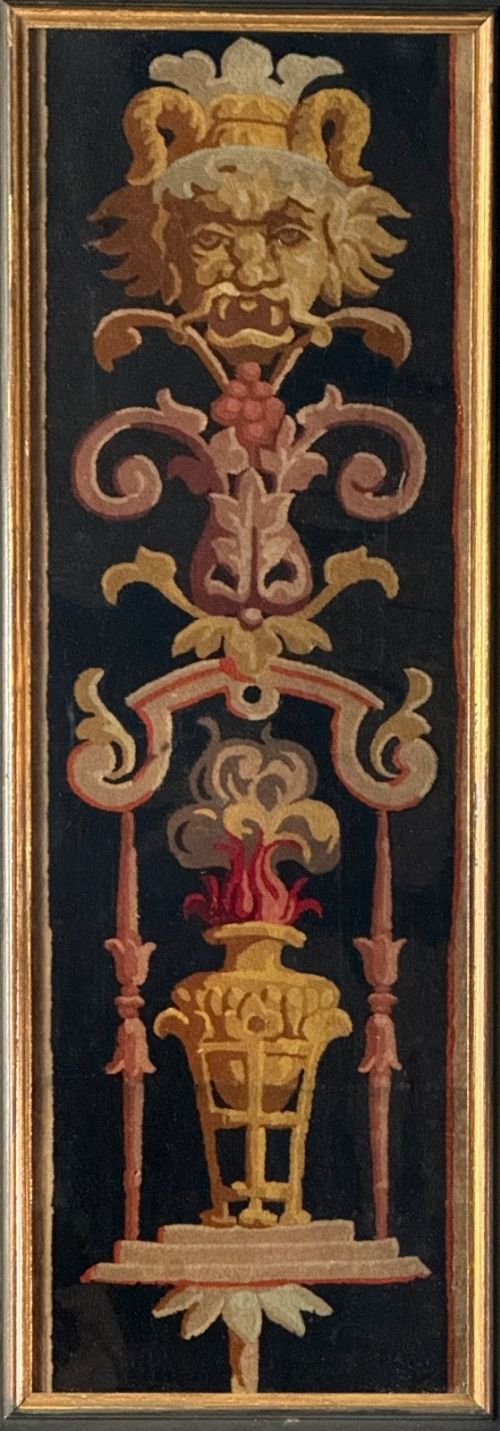
Beyond Central Asian tribal pieces, the selection includes eighteenth-century George III pastoral farming pictures, nineteenth-century woolwork pictures set in verre églomisé frames, and Persian Rasht embroidery on felt grounds. These diverse forms share a common foundation of wool fabric embellished with silk thread work.
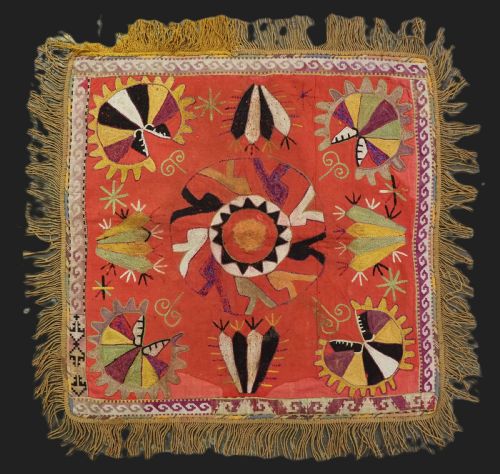
Origins span Central Asia, Persia, and England, encompassing nomadic traditions alongside European needlework pictures and garments. Collectors encounter wall hangings, saddle covers, torbas, and bell pulls spanning from the eighteenth century to the twentieth century.
What varies in quality
Quality rests upon the intricacy of the needlework, the density of the silk embroidery, and the preservation of the underlying wool or felt ground. Pieces displaying sharp geometric precision, complex pictorial composition, and intact silk highlights sit at the upper end of the range.
The choice of ground material and supporting elements also dictates standard, with Mogul red wool grounds, well-preserved felt, and specialised framing enhancing the physical presence of the textile. Condition of the silk threadwork relative to the wool foundation determines the overall visual impact.
Listings feature materials such as wool, silk, cotton, wood, glass, wool felt, linen, and giltwood.
The Silk Embroidered Wool Textile Glossary
- Ilgich
- A Central Asian hanging embroidery, traditionally worked by Uzbek tribes as part of a bride's dowry. These pieces were suspended on yurt walls.
- Uut Kap
- A small storage bag or hanging from Central Asia, often embroidered by the Lakai tribe in silk upon a wool ground. They formed part of traditional nomadic interior decoration.
- Verre Églomisé
- A process of applying a design and gold or silver leaf onto the rear face of glass to create a mirrored, decorative border. This technique often frames nineteenth-century woolwork pictures.
- Torba
- A small storage bag produced by Turkmen and related tribal groups, featuring embroidered faces with silk highlights. They were hung inside nomadic tents.
- Rasht Embroidery
- A traditional Persian form of inlaid needlework originating from the city of Rasht, utilising silk pieces applied to a felt ground. Designs typically incorporate small floral medallions.
- Qajar Dynasty
- An Iranian royal dynasty spanning the late eighteenth to the early twentieth century, known for distinct artistic output including embroidered garments and textiles.
Silk Embroidered Wool Textile: Frequently Asked Questions
How were silk embroidered wool textiles used originally?
Nomadic tribes utilised these textiles as wall hangings, ceremonial horse covers, saddle rugs, and dowry bags inside traditional yurts. European examples served as decorative framed pictures, bell pulls, or garments.
Over time, these functional objects became valued for their artistic needlework and tribal symbolism, transitioning from domestic utility to decorative display.
Where do most Central Asian pieces come from?
The Central Asian pieces on this page originate primarily from Uzbekistan, specifically regions associated with the Lakai and Ersari tribes such as Shakrisabz. Artisans in these areas produced distinctive tribal embroideries.
Nomadic groups created these works using local materials, passing techniques through generations of women within the tribe.
How should I care for a textile wall hanging?
Protect antique textiles from direct sunlight to prevent the silk threads and wool grounds from fading. Display pieces away from excessive moisture and heat sources.
Mounting should be handled with care, ensuring the weight of the wool and silk is supported evenly across the entire textile rather than pulled at specific points.
How do I distinguish regional styles in these embroideries?
Central Asian tribal pieces like Lakai ilgiches feature dynamic geometric motifs and vibrant silk on red wool grounds. Persian Rasht work displays dense floral ornamentation on felt.
European needlework pictures focus on pastoral scenes, figures in gardens, or domestic objects executed in wool and silk on canvas or linen.