



Silk Carpet Rug
A silk carpet rug brings extraordinary sheen and intricate detail to a floor, offering dense pile and luminous texture.
Silk Carpet Rug
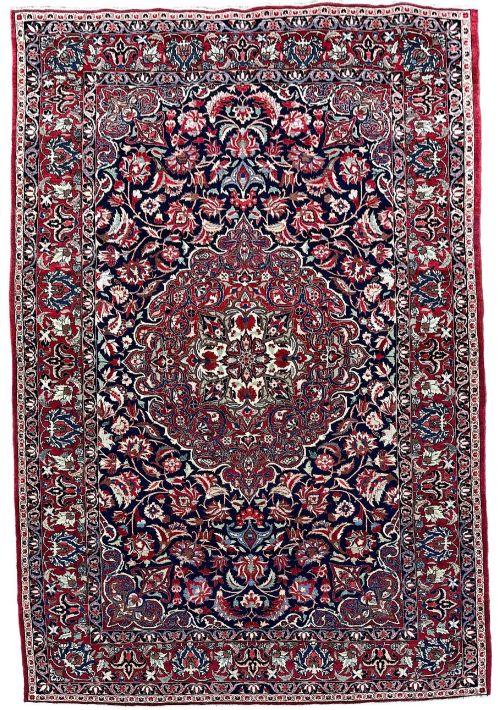
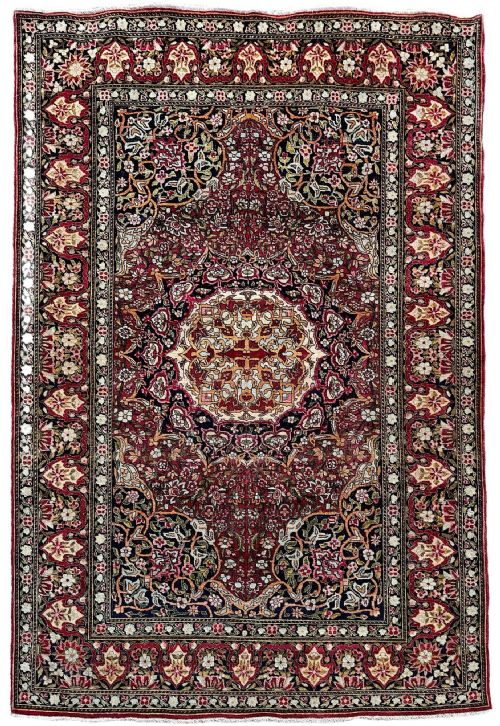
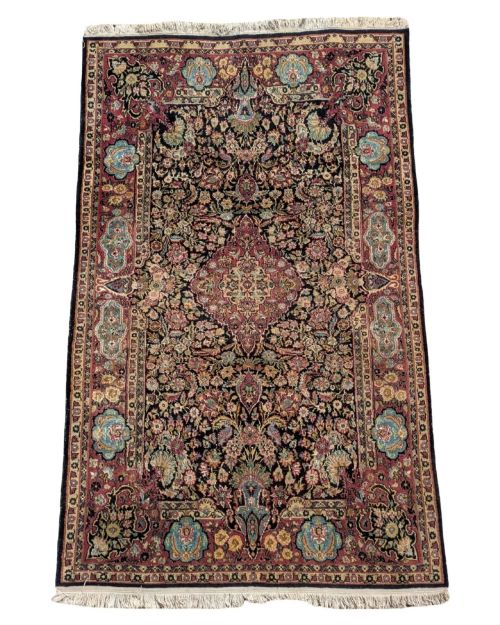
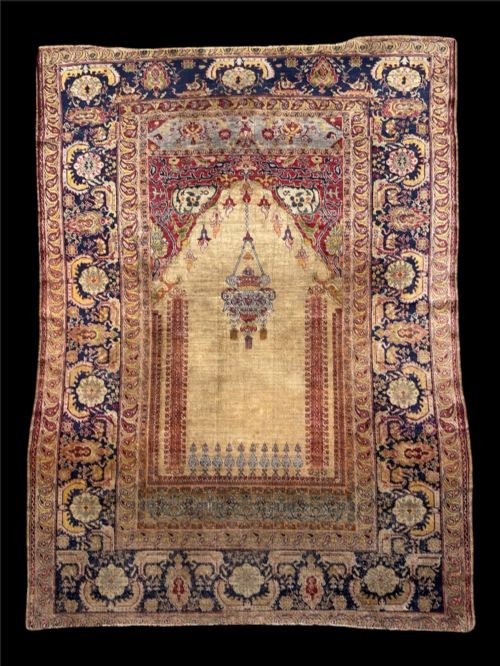
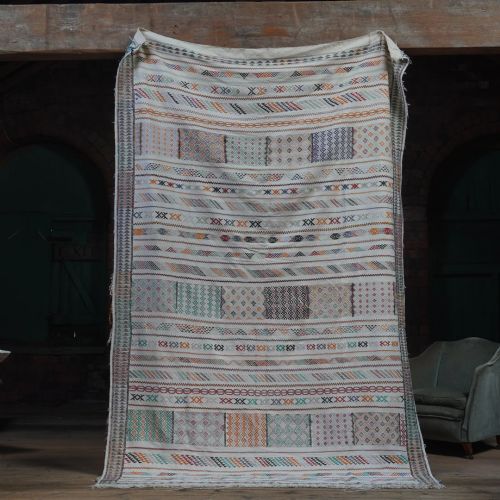
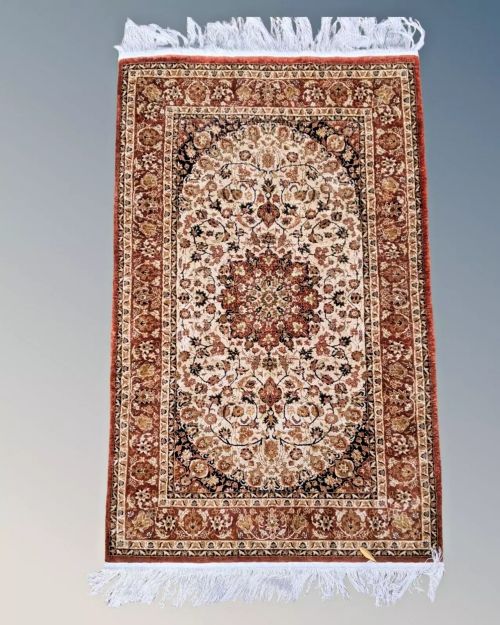
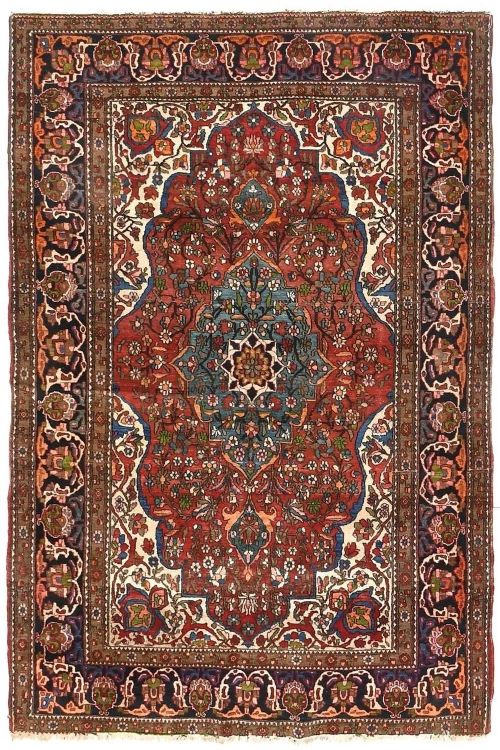
A silk carpet rug encompasses finely knotted floor coverings and wall pieces originating from Persian, Turkish, Central Asian, and Chinese weaving traditions. When searching for a silk carpet rug, buyers encounter antique and vintage examples ranging from grand Isfahan and Kashan city carpets to nomadic tribal dowry pieces and Turkish prayer rugs.
The selection on this page spans several centuries, featuring nineteenth-century fragments and twentieth-century workshop productions. Pieces frequently combine pure silk with cotton, wool, art silk, or mercerised cotton foundations to achieve varied tactile qualities.
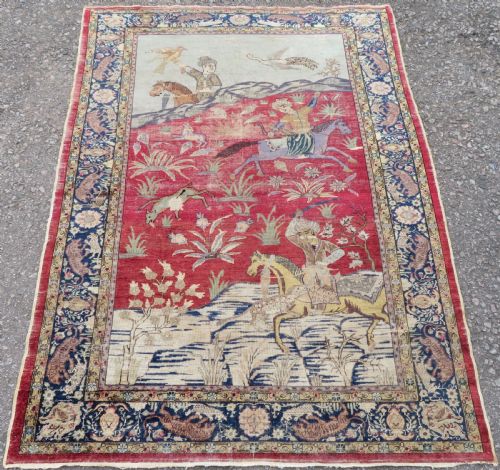
Forms include standard area rugs, wall hangings, pictorial hunting scenes, and framed miniature works. Regional styles such as Qum, Kayseri, and Khotan dominate the selection, offering distinct medallion, tile, and repeat floral patterns.
Materials and Construction
Weavers construct these textiles using fine silk threads, occasionally incorporating floss silk, sabra cactus fibre, or wool and cotton foundations to support the pile. Some examples utilise art silk or mercerised cotton to replicate the sheen of natural filaments.
Makers knot the fibres densely by hand onto warps, creating intricate pictorial representations, prayer mihrabs, and geometric guls. Certain Isfahan and Nain pieces employ lambswool pile on silk foundations, while Turkish Kayseri and Hereke pieces rely entirely on silk.
Silk Carpet Rug Retail Price Guide 2026
Typical asking prices for silk carpet rug among the pieces listed under this phrase on Sellingantiques today, from the lower quarter to the upper quarter. They describe what is for sale here now, not the wider market.
Listings feature pieces dated from the early nineteenth century through the mid-twentieth century, originating from Persian, Turkish, and Chinese workshops.
Evaluating Quality
Knot density and structural integrity dictate the distinction between standard and exceptional pieces, visible in the precision of curved floral motifs and medallions. The fineness of the weave determines how sharply pictorial hunting scenes and intricate borders resolve.
The choice of materials influences both durability and light reflection, as pure silk foundations and pile yield superior luminosity compared to art silk substitutes. Colour saturation and the harmonious balance of pastel or crimson tones separate workshop masterpieces from simpler regional productions.
The Silk Carpet Rug Glossary
- Silk
- A natural protein fibre spun from the cocoons of silkworms, prized for tensile strength and lustrous sheen.
- Prayer Rug
- A small rug featuring a mihrab design, traditionally used by Muslims for daily prayers.
- Foundation
- The structural base of a rug consisting of warp and weft threads that support the knotted pile.
- Gul
- A medallion-like primary motif repeated across Turkmen and Central Asian carpets.
- Pictorial Rug
- A textile woven to depict figures, animals, or narrative hunting scenes rather than abstract geometry.
- Art Silk
- A synthetic substitute or chemically treated cellulose fibre utilised to imitate the appearance of real silk.
Silk Carpet Rug: Frequently Asked Questions
How do I clean a silk carpet rug?
Professional specialist cleaning is essential for delicate protein fibres to prevent dye migration and shrinkage.
Avoid household detergents and excess moisture, which damage the fine pile and foundation threads.
Can I place these under heavy furniture?
Heavy furniture legs can crush the delicate pile and strain the foundation threads over time.
Use protective cups or place the textile in low-traffic areas to preserve the integrity of the weave.
How do I identify a Qum rug?
Qum rugs originate from central Iran and typically feature refined floral motifs, intricate medallions, and high knot counts.
Many examples utilise pure silk throughout the pile and foundation, producing a distinctly luminous surface.
What is a prayer rug?
A prayer rug incorporates an arch-like mihrab design that indicates the direction of prayer during ritual use.
These pieces were historically hung on walls or used as portable prayer mats in Islamic traditions.