





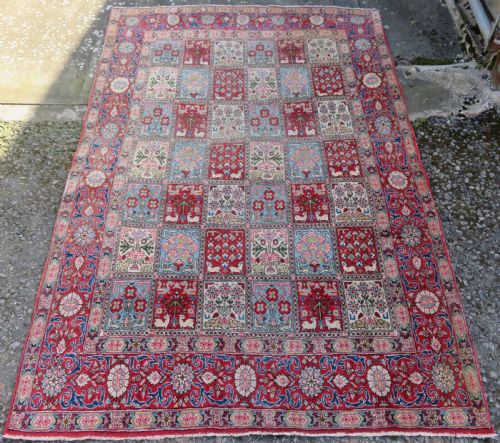
Silk and Wool Carpet
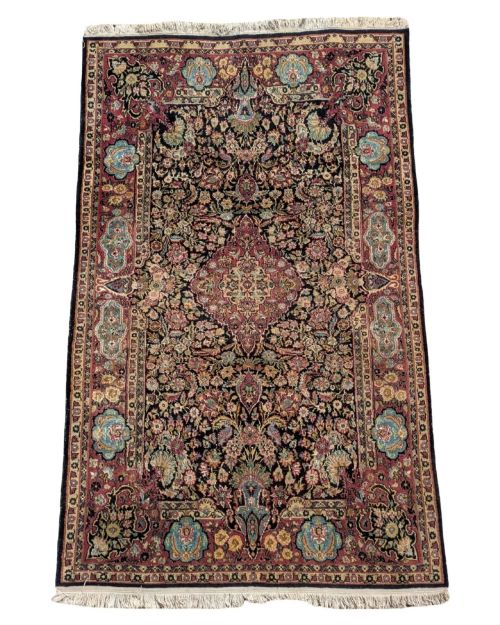
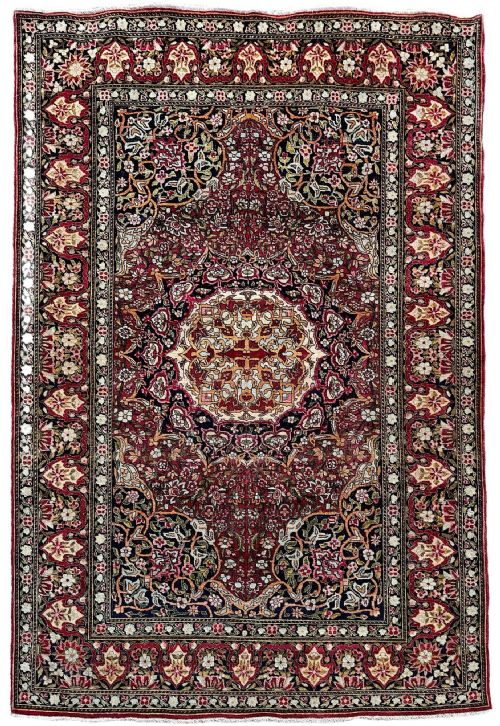
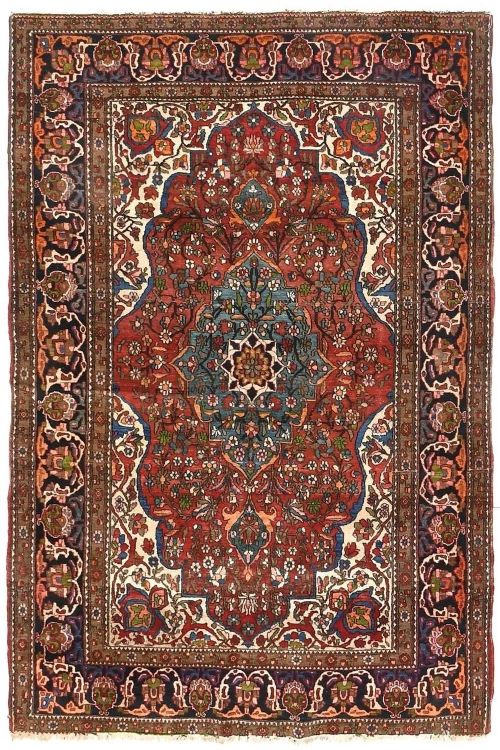
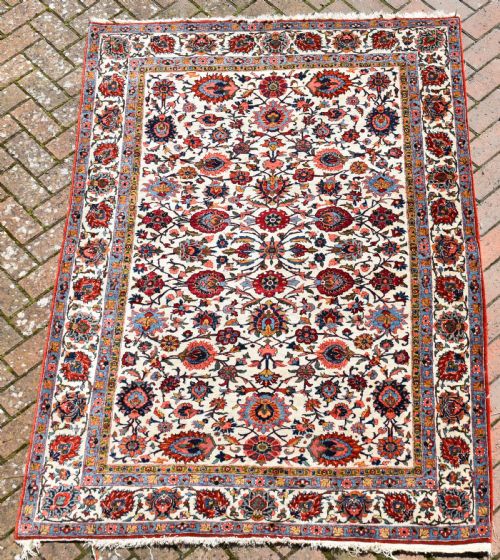
These silk and wool carpet examples combine rich pile textures with intricate patterned highlights.
Silk and Wool Carpet
When searching for a silk and wool carpet, buyers encounter woven floor coverings and wall hangings originating from Persia, Turkey, Central Asia and East Turkestan. The selections span from the early nineteenth century through the 1930s, encompassing traditional regional designs and tribal formats.
The most common variations on this page include Persian rugs from Qum, Isfahan, Kashan and Nain alongside Turkoman tribal pieces, Khotan rugs and Kayseri weaves. These range from intimate area rugs to substantial room-sized carpets and pictorial wall hangings.
Makers and weavers utilised diverse formats such as tile patterns, medallion designs and dowry rugs. Materials include lambswool, cotton foundations and distinctive silk highlights that catch the light across the pile.
What varies in quality
Knot density and structural fineness dictate the distinction between standard weaves and very fine examples, particularly in regional pieces like Isfahan and Qum carpets. The choice of foundation material, such as a silk base supporting lambswool, elevates the complexity of the construction.
The precision of the medallion or tile pattern design and the skillful incorporation of silk highlights determine the visual depth of the piece. Preservation of the original pile and edges across nineteenth-century and early twentieth-century examples defines the integrity of the work.
Silk and Wool Carpet Retail Price Guide 2026
Typical asking prices for silk and wool carpet among the pieces listed under this phrase on Sellingantiques today, from the lower quarter to the upper quarter. They describe what is for sale here now, not the wider market.
Listings feature pieces spanning the nineteenth century through the 1930s, originating from Persia, Turkey, and Central Asia.
Mohtasham Kashan
The Silk and Wool Carpet Glossary
- Foundation
- The structural framework of warp and weft threads that supports the pile of the carpet. Cotton and silk are common foundation materials.
- Medallion
- A large central ornamental design motif placed in the middle of the carpet field. Traditional Persian styles frequently utilise this geometric or floral centrepiece.
- Gul
- A medallion-like primary motif found in Turkmen and Central Asian tribal rugs. These repeating octagonal forms identify specific tribal groups.
- Pile
- The upright yarn surface of the carpet formed by knotted wool, lambswool or silk. This forms the tactile surface walked upon or displayed.
- Kelleh
- A long, narrow format rug traditionally used in Persian interior layouts. These elongated proportions suit specific hallway or gallery spaces.
Silk and Wool Carpet: Frequently Asked Questions
What is a silk and wool carpet?
A silk and wool carpet is a woven textile combining wool, lambswool or cotton with silk highlights or silk foundations. These pieces originate from regions including Persia, Turkey and Central Asia.
They function as decorative floor coverings, area rugs and wall hangings, displaying traditional regional patterns from the nineteenth and early twentieth centuries.
How do I identify a Qum rug?
Qum rugs originate from the city of Qum in central Iran and typically feature fine knots and intricate floral or tile patterns. They often incorporate silk highlights or are woven entirely with fine materials.
Examples on this page date from the early twentieth century and range in size from compact area rugs to large carpets.
What is a Turkoman dowry rug?
A Turkoman dowry rug is a tribal weaving created by nomadic groups such as the Tekke or Saryk tribes in Central Asia. These nineteenth-century pieces often incorporate characteristic guls and crimson silk details.
Such textiles held cultural significance within tribal traditions and were produced as part of a bride's dowry.
How should I care for an antique rug?
Antique silk and wool carpets require gentle maintenance, including regular low-suction vacuuming without a rotating brush bar. Professional textile cleaning is recommended for deep maintenance to protect the delicate silk highlights.
Keeping them out of direct sunlight prevents fading of the natural dyes used in traditional Persian and Central Asian weaves.