


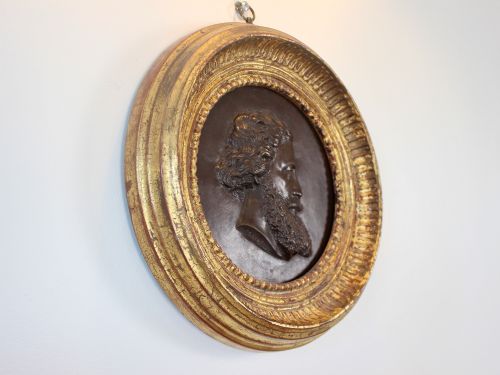


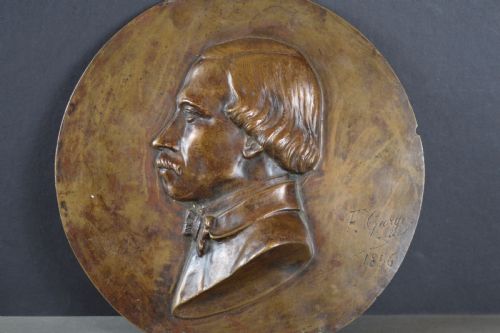

Signed Portrait Bust
A signed portrait bust captures a specific likeness in bronze, marble, or wood, bearing the mark of its maker.
Signed Portrait Bust
A signed portrait bust is a sculptural likeness of an individual, ranging from classical figures to historical subjects and literary icons. When you search for a signed portrait bust, you find works executed in durable media designed to preserve personal identity.
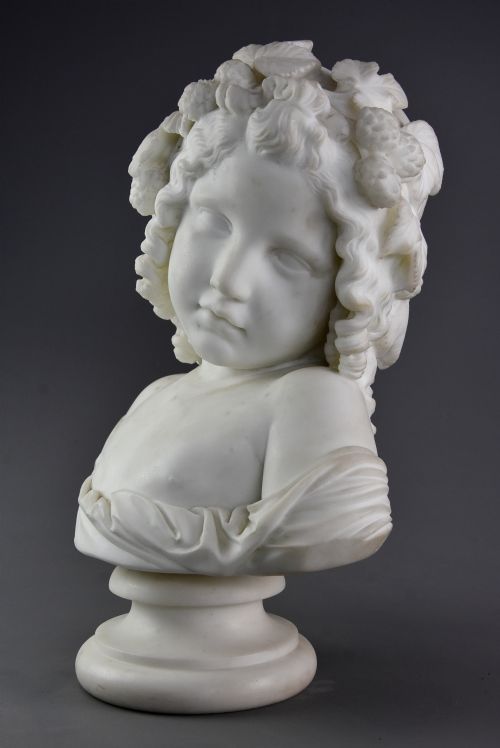
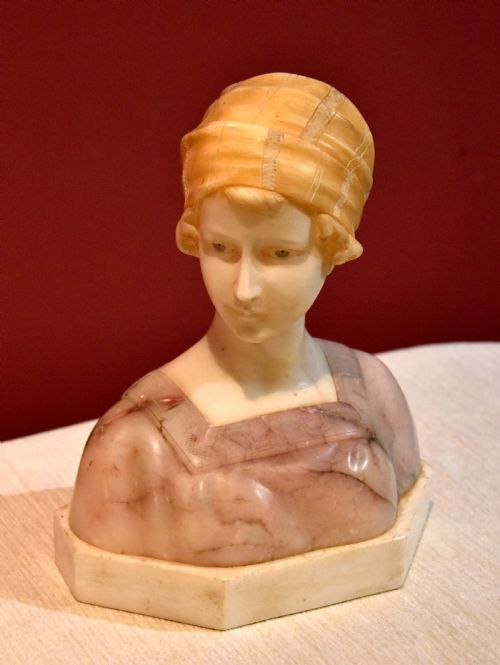
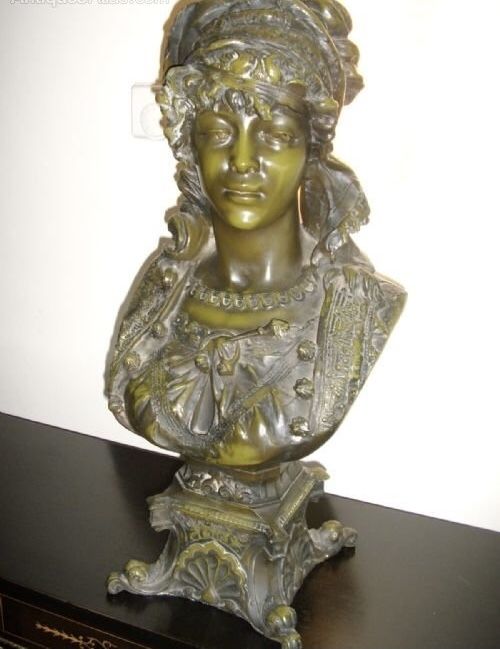
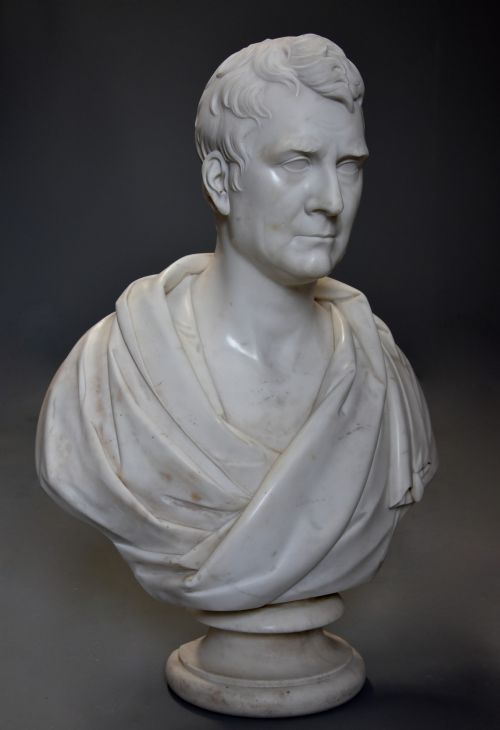
The pieces on this page span the nineteenth and twentieth centuries, encompassing styles from Neoclassical and Victorian to Art Nouveau and Art Deco. Marble and bronze dominate the selection, alongside carved wood and alabaster works.
Beyond free-standing sculptures, the offerings include wall plaques and bookends incorporating portrait relief. Subjects vary from politicians and writers to anonymous youths and female allegories.
Materials and Methods
Sculptors utilised traditional casting and carving techniques, working with patinated bronze, Carrara marble, alabaster, pearwood, and hardwood. Bronze pieces were cast using the lost-wax or sand-casting methods before receiving hand-finished patination.
Marble and alabaster busts required direct hand-carving from quarried blocks, utilising chisels and rasps to render hair, fabric folds, and facial expressions. Wooden sculptures involved meticulous carving of dense timbers such as pearwood to achieve fine detail.
Signed Portrait Bust Retail Price Guide 2026
Typical asking prices for signed portrait bust among the pieces listed under this phrase on Sellingantiques today, from the lower quarter to the upper quarter. They describe what is for sale here now, not the wider market.
The listings span the nineteenth and twentieth centuries, incorporating Neoclassical, Art Nouveau, and Art Deco styles.
Judging Quality
Quality in these sculptures rests upon the precision of the carving or the crispness of the bronze cast. Superior pieces capture nuance in expression and anatomical accuracy without losing naturalism in the hair or drapery.
The integration of mixed materials, such as combining white marble with portoro marble bases or patinated bronze, demonstrates higher ambition in design. Signatures and foundry marks provide tangible evidence of attribution and workshop standard.
Houdon·J Francis·Henry Wissen Senior·Auguste Henri Carli·E.Villanis·MAINFROY·Hermann Steiner·V . Ramirez·Boudewijn Tuerlinckx·Alajos Strobl·J Lavergne·Ernest-Eugène Hiolle·E. Laurent·Bulio·Murphy·GREUZE·GORY
The Signed Portrait Bust Glossary
- Patinated bronze
- Bronze treated with chemical solutions to produce a coloured surface finish. This technique protects the metal and enhances visual depth.
- Carrara marble
- A white or blue-grey marble quarried in the city of Carrara in Tuscany. It is prized by sculptors for its fine, uniform grain.
- Alabaster
- A fine-grained mineral used for carving sculptures. It possesses a soft translucence when polished.
- Relief plaque
- A wall-mounted sculptural panel where the figures project from a flat background. This format is often found in portraiture.
- Portoro marble
- A deep black Italian limestone with dramatic gold veins. It frequently forms the contrasting base for mixed-media sculptures.
Signed Portrait Bust: Frequently Asked Questions
What materials are used for these busts?
The selections here are created primarily from bronze, white Carrara marble, and alabaster. Several examples also utilise pearwood and hardwood.
Certain pieces combine multiple materials, mounting marble figures upon contrasting portoro marble bases.
How do I identify the maker?
Makers typically inscribed their signatures directly into the bronze surface, the stone base, or the wooden reverse during the creation process. Foundry stamps may also appear alongside the artist's signature.
Signatures can range from clear, incised lettering to subtle monograms integrated into the composition.
Where were these sculptures displayed?
Portrait busts were traditionally commissioned or purchased to adorn libraries, studies, and formal drawing rooms of private homes. Wall plaques and bookends served decorative and functional roles in similar domestic interiors.
Public buildings and institutions also acquired portrait sculptures of notable historical figures and politicians.
How should I care for marble and bronze?
Marble and alabaster require gentle dusting with a dry, soft cloth to prevent the accumulation of dirt within carved details. Avoid using water or chemical cleaners on porous stone surfaces.
Bronze benefits from occasional light dusting and maintaining stable indoor humidity to preserve the patinated finish.