



Signed Ink Drawing
A signed ink drawing delivers direct hand and line from the past, prized by collectors for intimate immediacy.
Signed Ink Drawing
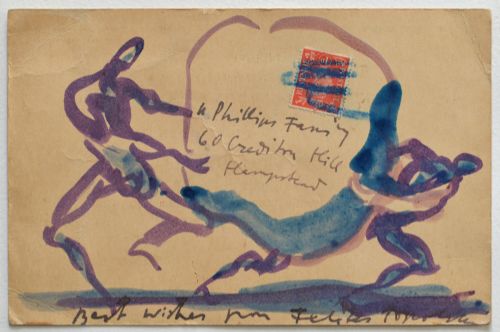
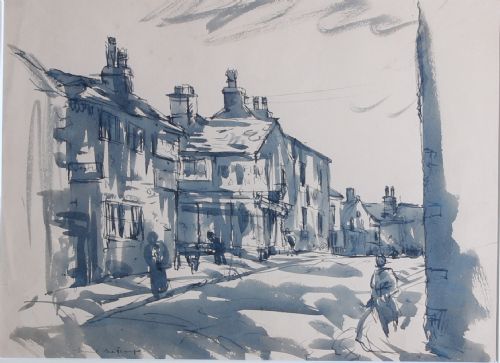
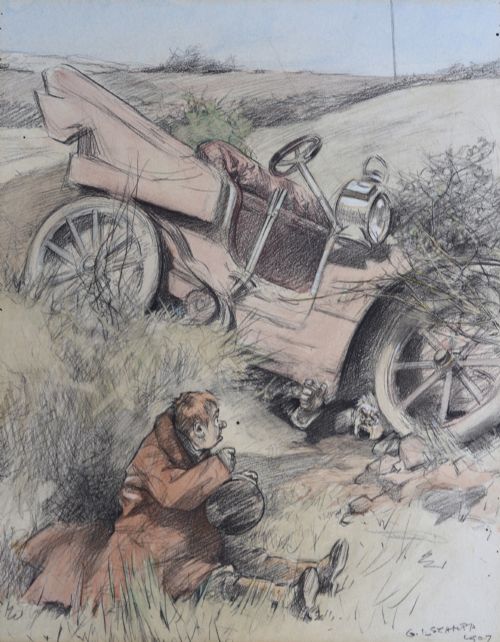
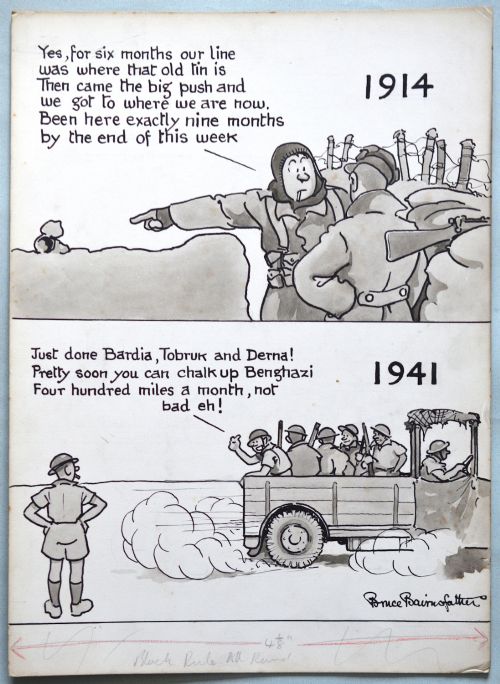
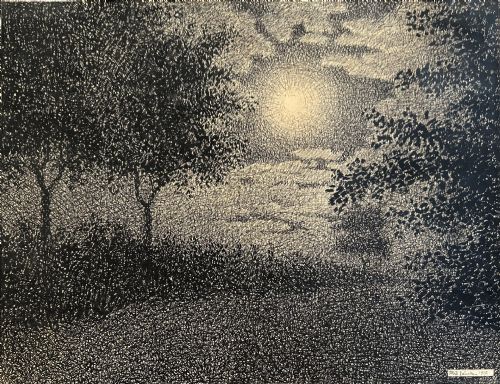
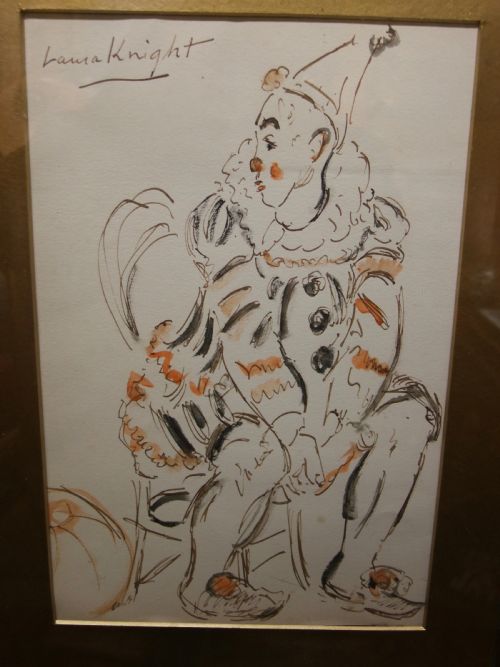
A signed ink drawing captures a direct graphic moment on paper, ranging from rapid compositional studies to finished illustrative works. These pieces span the nineteenth century, Edwardian era, and the mid-twentieth century, including works associated with twentieth-century British art and illustration. The versions met most often on this page combine pen and ink with wash, watercolour, or pencil.
Subjects vary widely across these sheets, taking in landscape views, architectural interiors, illustrative character studies, and portraiture. Artists working across the 1900s to 1960 often employed monochrome ink alongside sepia or two-coloured lines to capture fleeting observations. Framed artwork forms the primary format encountered, preserving delicate paper supports behind glass.
The material evidence points to works originating from named British artists and continental scenes, spanning specific dates from the late Victorian period through to the post-war decades. These original drawings demonstrate the direct application of ink by hand, often bearing the artist signature, monogram, or contemporary inscriptions.
Assessing quality and execution
The distinction between standard examples and exceptional pieces rests in the confidence and economy of the artist line. A superior drawing reveals deliberate, sure strokes that define form and mood without hesitation, whereas lesser works rely on hesitant corrections or overworking.
Provenance and documentation elevate specific pieces, particularly when accompanied by artist signatures, dated inscriptions, or related correspondence. The preservation of the paper ground, minimal fading, and appropriate period framing further separate notable works from ordinary examples.
Signed Ink Drawing Retail Price Guide 2026
Typical asking prices for signed ink drawing among the pieces listed under this phrase on Sellingantiques today, from the lower quarter to the upper quarter. They describe what is for sale here now, not the wider market.
Listings span from the 19th Century through Edwardian, 1910, 1920, 1930, 1940, 1950, to 1960 periods.
George Lorain Stampa·Bruce Bairnsfather·Stanley Orchart·Lucien Freud·Lawrence Stephen Lowry·Dame Laura Knight·Fred Lawson·Owen Bowen·Theobald Chartran
The Signed Ink Drawing Glossary
- Pen and ink
- A drawing technique utilising fluid media applied with a nib or quill to paper. This method produces crisp, permanent lines that define the primary subject.
- Wash
- A diluted application of ink or watercolour used by artists to create tonal depth and shadow behind linear work. It provides atmospheric breadth on paper.
- Sepia ink
- A brown drawing medium derived originally from the cuttlefish, widely utilised during the nineteenth and early twentieth centuries for warm monochrome studies.
- Work on paper
- A broad classification for artistic creations executed on paper supports, encompassing drawings, watercolours, and prints.
- Monogram
- A motif made by overlapping or combining two or more letters to form a recognisable cipher used by an artist in place of a full signature.
Signed Ink Drawing: Frequently Asked Questions
How should I display a signed ink drawing?
Keep these framed works on paper away from direct sunlight to prevent the ink and paper support from fading over time. Maintaining stable indoor humidity prevents warping and protects the delicate media behind glass.
Ensure the framing uses acid-free mounts so the paper does not discolour where it touches the border. Professional framing safeguards the physical integrity of the original sheet.
What is the difference between an ink drawing and a watercolour?
An ink drawing relies primarily on linear marks made with pen and fluid pigment to define form and subject. Watercolour uses washes of coloured pigment suspended in water to build up colour and light.
Many pieces on this page combine both techniques, using ink for sharp outlines and watercolour for atmospheric tinting.
How can I tell the period of a drawing?
Dating relies on stylistic markers, artist active years, paper characteristics, and any accompanying handwritten signatures or dates on the sheet. Edwardian and early twentieth-century works often reflect illustrative or traditional landscape traditions.
Mid-century modernist pieces show a shift towards abstracted forms, sparser lines, and alternative compositional structures.
Are these drawings always unique?
Original drawings represent one-off manual creations executed directly by the artist hand upon the paper support. Unlike prints or multiples, no identical impression exists.
Inscribed titles and signatures often confirm the unique, preparatory, or finished nature of the specific sheet.