


Signed French Impressionist Art
Signed French impressionist art brings the vibrant light and brushwork of continental studios into domestic interiors.
Signed French Impressionist Art
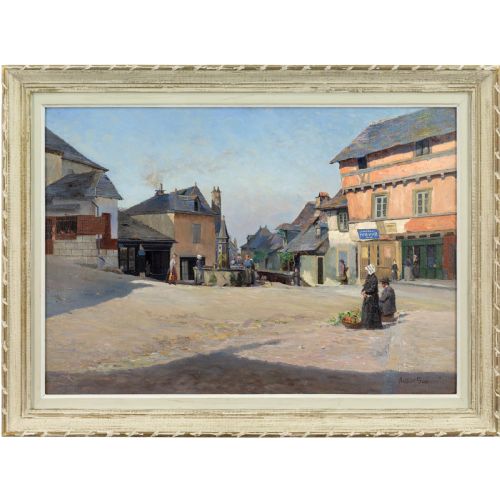
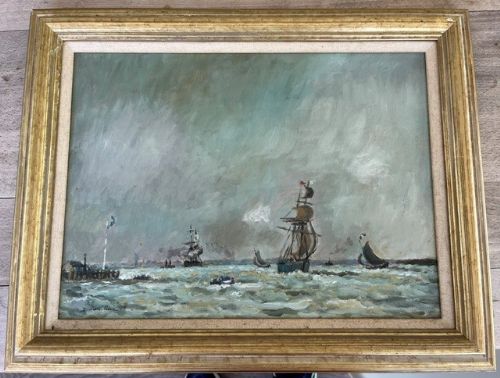
Signed French impressionist art comprises oil paintings, watercolours, and boards capturing landscapes, figures, and townscapes from the nineteenth and twentieth centuries. These works span movements from the Barbizon School and post-impressionism to provincial landscapes and mid-century scenes.
Buyers frequently encounter canvas and board works dated across the decades from the late nineteenth century to the mid-twentieth century. Subjects range from Provencal courtyards and woodland paths to coastal views and floral still lifes bearing artist signatures.
Materials and techniques
Artists painted primarily in oil on canvas or board, utilising fluid brushstrokes to capture fleeting effects of light and atmosphere. Some works employ oil on metal or watercolour on paper to achieve distinct surface textures.
Framing often involves carved wood and gilt surrounds that complement the canvas, preserving the integrity of the period presentation.
Several canvases record quiet moments of secrets shared and picnics under summer trees.
Distinctions in quality
Quality rests upon the confidence of the brushwork and the clarity of the composition, distinguishing masterly en plein air studies from more routine workshop productions. The handling of light and tonal harmony reveals the artist's true proficiency.
The relationship between the signature and the execution matters, alongside the preservation of the original paint surface and its supporting wood or canvas.
Arthur Gué·Henri Vincent-Anglade·Caroline Burnett·Majorie Hoare·Henri Joseph Harpinies·Antoine Bouvard·William Lee-Hankey
The Signed French Impressionist Art Glossary
- Impressionism
- A nineteenth-century art movement characterised by relatively small, thin, yet visible brush strokes and an emphasis on accurate depiction of light. It emerged in France and transformed painting methods.
- Post-Impressionism
- A predominantly French art movement that developed from about the late nineteenth century, extending impressionism while rejecting its limitations. Artists sought greater emotional expression and structural form.
- Barbizon School
- A group of French painters associated with a movement towards realism in art, making landscapes their central subject. They worked directly from nature in the Forest of Fontainebleau.
- En Plein Air
- The act of painting outdoors, allowing artists to observe and capture landscape effects directly in natural light. This technique is central to impressionist practice.
- Gilt
- A thin layer of gold applied to wood or other surfaces to create decorative frames. It enhances the visual weight of the artwork.
Signed French Impressionist Art: Frequently Asked Questions
How do I identify a genuine period piece?
Examine the materials, stretcher frames, and canvas preparation methods consistent with nineteenth and twentieth-century French production. Signatures should integrate naturally with the surrounding pigment layer rather than appearing superimposed.
Contextual clues such as artist records, exhibition labels, and period framing styles help confirm the era of execution.
Where should I hang these paintings?
Select walls with indirect natural light to protect oil and watercolour pigments from fading over time. Rooms with stable humidity levels preserve the integrity of both canvas and wood supports.
Pairing the works with complementary period or mid-century interiors enhances their visual impact without competing for attention.
What subjects are most common?
Landscapes from Provence, coastal seascapes, and park scenes dominate the selection, reflecting the impressionist fascination with outdoor light. Floral still lifes and figurative studies also appear frequently.
Regional views often document specific locations across France, adding historical interest to the artistic merit.
How do oil and watercolour differ here?
Oil paintings on canvas or board offer robust texture and layered depth through heavier pigment application. Watercolours on paper provide a delicate transparency and immediacy.
Both mediums employ distinct handling to capture the transient atmospheric effects characteristic of French schools.