
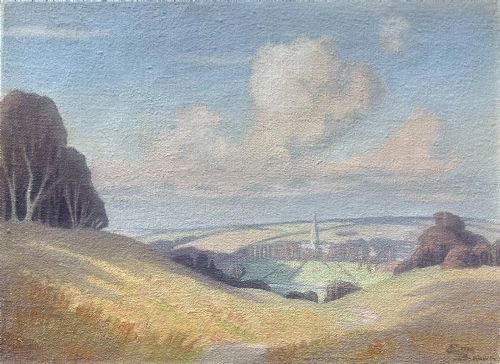


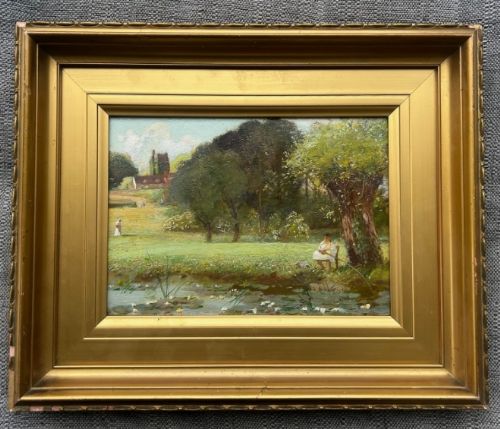


Signed English Oil Painting
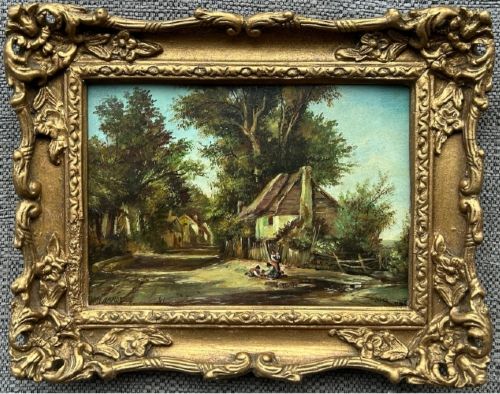
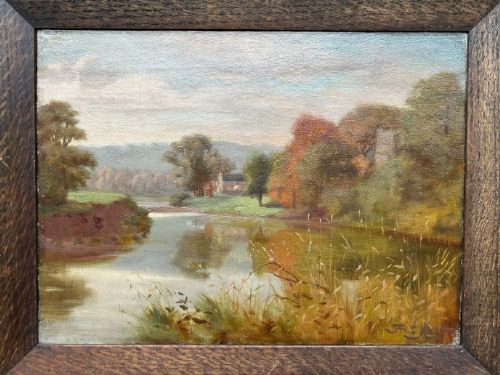
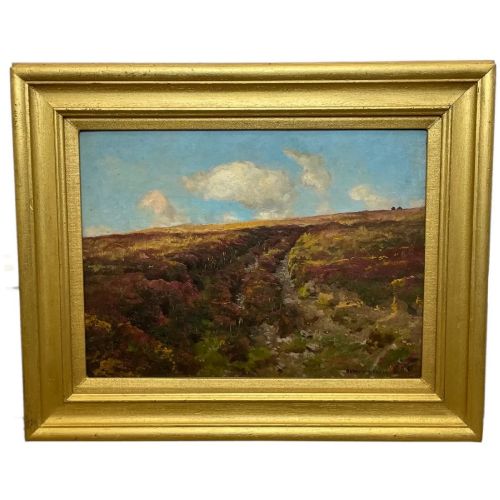
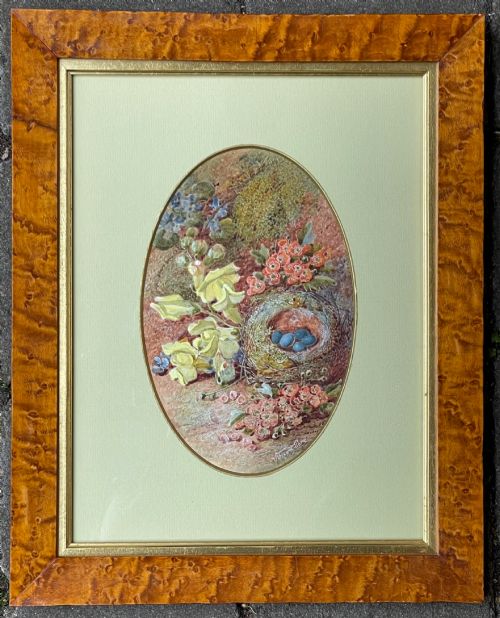
A signed english oil painting brings hand-rendered brushwork and historical depth directly to a wall, connecting rooms to centuries of domestic and rural heritage.
Signed English Oil Painting
The pieces range from tightly rendered nineteenth-century academic studies to looser twentieth-century interpretations. Creators frequently signed their work directly on the surface, leaving a clear attribution for collectors to trace.
Most examples found here date from the Victorian era through the mid-twentieth century, capturing changing attitudes towards nature and daily life. Canvas and wooden panel are the primary supports carrying these historic compositions.
Materials and construction
Artists applied rich oil paint to woven canvas stretched over wooden frames, or directly onto prepared wood panels, cardboard, and copper plates. The slow-drying nature of oil allowed painters to blend pigments smoothly and build thick, textured impasto layers.
Many works retain their original gilt or wooden frames, which protect the outer edges and complement the palette of the composition. Makers utilised traditional grounds and priming techniques to seal the support before applying colour.
Several sheep, a prize greyhound, and a rather imposing shorthorn bull share wall space with the human portrait sitters.
Judging the standard of execution
Quality rests on the confidence of the brushwork and the artist's ability to capture light, atmosphere, and perspective within the scene. Superior works display a deliberate handling of paint that brings depth to foliage, water, and skin tones.
The integrity of the underlying support and the clarity of the signature also influence how successfully a piece holds its visual impact. Strong compositions demonstrate balance and proportion, whereas weaker examples can feel static or muddy in execution.
William Howard Hardy·Frederick Marriott·Arthur Wardle·Vincent Clare·Eric Brown·Trajan Hughes·Sir David Murray·Herbert Royle·Reginald Grange Brundrit·J. Phipps·Robert John Hammond·Fred Stead·William Manners·John Frederic Greenwood·John Gilbey Bowles·Thomas Hooper·William Greaves·Peter Jackson·Donald Wood·Benjamin Callow·Arthur W Newsholme·William Burns·Singleton Jowett·Percy Hipkiss·T Galt
The Signed English Oil Painting Glossary
- Impasto
- Paint applied thickly to a canvas or panel, leaving visible brush or palette knife marks that stand proud of the surface. This technique adds tactile dimension and catches light dynamically.
- Provenance
- The documented history of ownership surrounding an artwork. A clear chain of custody helps confirm authenticity and establishes historical context.
- Panel
- A rigid wooden board, often mahogany or oak, used as a stable alternative to stretched canvas. Painters historically favoured panels for smaller, highly detailed compositions.
- Gilt frame
- A decorative wooden surround coated in gold leaf or metallic paint. These frames enhance the artwork and reflect period tastes in interior presentation.
- School
- A group of artists working in a similar style, region, or time period under shared influences. Many historical pieces are attributed to a regional school when an individual hand remains unidentified.
Signed English Oil Painting: Frequently Asked Questions
How do I identify a Victorian oil painting?
Victorian works often feature romanticised landscapes, moral narratives, or formal portraits rendered with careful academic precision. Look at the framing, the style of dress in figurative pieces, and the preparation of the canvas backing for period clues.
Signatures or inscriptions on the reverse can also point directly to nineteenth-century studios. Comparing the subject matter to known historical exhibitions helps narrow down the exact decade of creation.
Are oil paintings on panel older than canvas?
Wooden panels were utilised heavily from earlier centuries up through the Victorian era, offering a rigid and durable surface for fine brushwork. However, artists continued using panels well into the twentieth century for smaller studies.
Canvas became widespread because it was lightweight and easier to transport for outdoor painting. Both supports coexisted across different periods depending on the artist's preference.
What does an indistinct signature mean?
An indistinct signature simply means the artist's handwritten mark has worn down, faded, or been partially obscured by old varnish and cleaning attempts. Dealers often attribute these pieces to a specific regional school based on technique and subject matter.
Unclear signatures do not diminish the artistic merit of a well-executed landscape or portrait. Many fine works remain anonymous yet showcase exceptional technical skill.
How should I display an antique oil painting?
Keep oil paintings away from direct sunlight and damp environments to protect the fragile canvas and prevent the paint layers from cracking. Stable indoor temperatures preserve both the wooden stretcher and the integrity of the paint surface.
Allow adequate wall space so the piece breathes without crowding from adjacent frames. Proper lighting from an art lamp brings out the subtle tones of the pigment.