

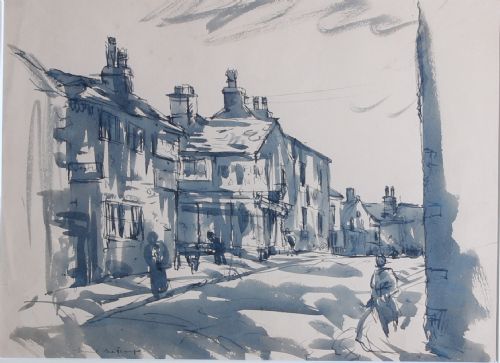
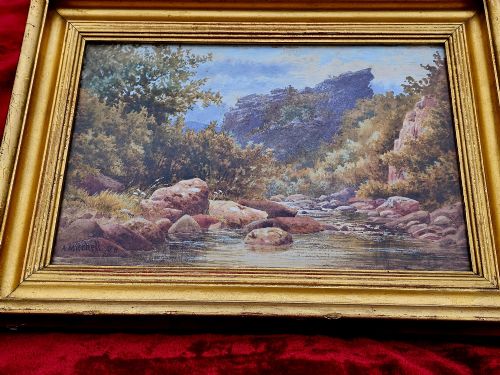



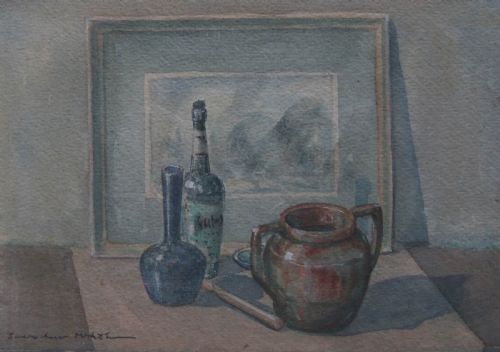

Signed Artist Watercolour
These signed artist watercolour works bring authentic brushwork and personal hand from named painters straight onto paper.
Signed Artist Watercolour
A signed artist watercolour represents a direct, hand-painted work on paper bearing the personal signature or seal of its creator. When searching for signed artist watercolour examples, buyers encounter original landscape scenes, maritime views, and still life compositions.
The pieces listed on this page span from the nineteenth century into the mid twentieth century. Works range from Victorian natural history studies and British landscapes to mid-century Chinese album paintings.
Framed presentation is common among these works, utilising timber frames, glass, and giltwood surrounds. Each painting captures a specific place and moment through the individual hand of a named painter.
How they were made
These works are executed in watercolour pigment and ink applied directly onto paper supports. Artists built up their compositions using fluid washes and fine line work, often capturing natural light and tonal depth.
Many of the watercolours are preserved beneath glass within wooden or giltwood frames. Some mid-century examples are bound together in artist albums accompanied by distinct personal seals.
Signed Artist Watercolour Retail Price Guide 2026
Typical asking prices for signed artist watercolour among the pieces listed under this phrase on Sellingantiques today, from the lower quarter to the upper quarter. They describe what is for sale here now, not the wider market.
Listings feature paper, watercolour, ink, glass, wood, giltwood, and timber frames across nineteenth-century and mid-twentieth-century periods.
What varies in quality
The strength of a signed artist watercolour rests in the surety of the brushwork and the clarity of the composition. Accomplished handling of light and atmospheric perspective distinguishes the most compelling works.
The prominence of the maker and the documentary interest of the subject matter elevate individual pieces. Works that capture specific topographical scenes with direct observation hold particular visual weight.
A. Mitchell·R. Hurst·F J Aldridge·Henry Bailey·YA MING·Margaret Laing·ROWLAND HENRY HILL·Fred Lawson·James Kerr McArthur·George J Tribe
The Signed Artist Watercolour Glossary
- Watercolour
- A painting method where fine pigment is suspended in a water-based solution and applied to paper. This medium allows for luminous washes and delicate colour blending.
- Giltwood
- Wood that has been coated with a thin layer of gold leaf or gilt finish. Frames of this material often complement nineteenth-century paintings.
- Artist Seal
- A carved stamp used in East Asian painting to mark the creator's identity or approval. These red ink impressions appear alongside signatures in album works.
- Timber Frame
- A protective outer structure made from wood that encloses and supports the paper artwork. These frames often include glass to shield the painting from environmental damage.
- Natural History
- A genre of visual art focused on the detailed depiction of animals, plants, and natural specimens. Victorian examples combine scientific observation with artistic skill.
Signed Artist Watercolour: Frequently Asked Questions
What is a signed artist watercolour?
A signed artist watercolour is an original painted work on paper bearing the authentic signature, monogram, or seal of the individual creator. These pieces range from detailed landscape views to still life compositions.
They reflect the direct hand and distinct vision of named painters from various periods across the nineteenth and twentieth centuries.
How should I frame these watercolours?
Watercolours on paper require protection beneath glass to shield the pigment from dust and atmospheric moisture. Traditional timber frames and giltwood surrounds complement the historical character of the works.
Ensure that framing materials are acid-free to prevent any long-term discolouration of the paper support.
Where were these paintings created?
The works originate from diverse locations, capturing British countryside scenes, Venetian canals, American landscapes, and Chinese album studies. Each piece reflects the specific surroundings that engaged the artist's attention.
Topographical subjects often record towns, rivers, and coastal views as they appeared during the nineteenth and mid-twentieth centuries.
How do I identify the artist?
Attributions rely upon legible signatures, inscriptions written on the work, or accompanying artist seals. Researching the listed names reveals historical context regarding the painter's working period and style.
Period labels and framing details often provide additional clues to the origin of the painting.