

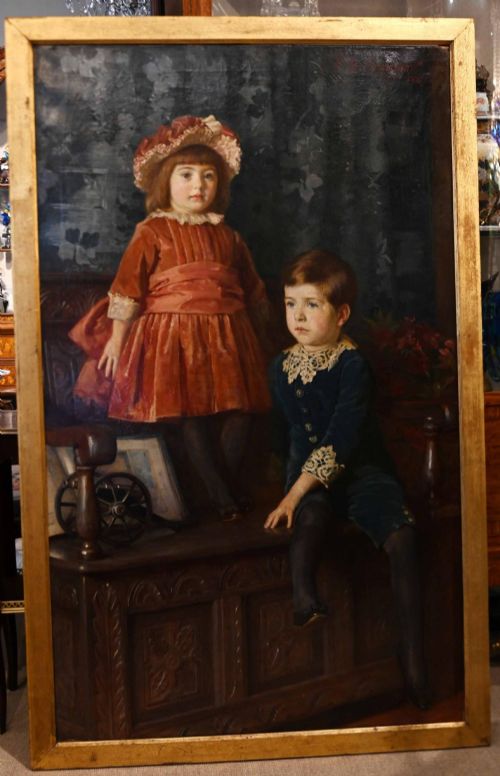
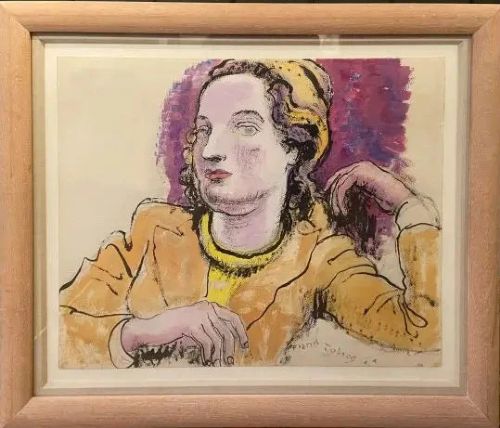
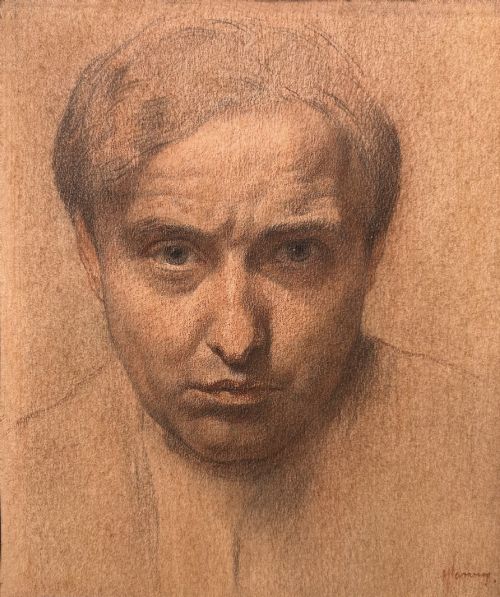
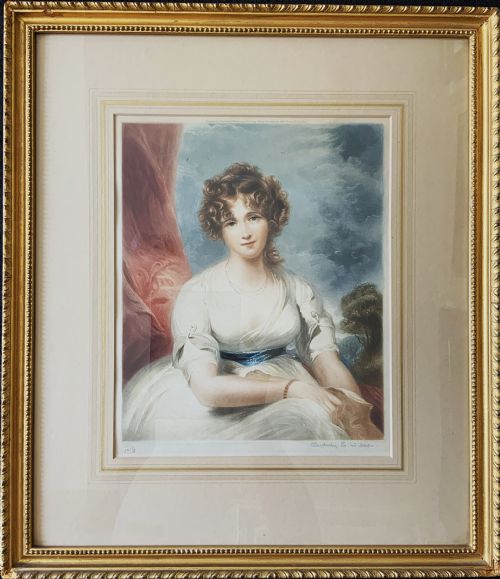


Signed Artist Portrait
A signed artist portrait captures a specific sitter and carries the distinct mark of its creator's hand across canvas, paper, or bronze.
Signed Artist Portrait
A signed artist portrait bridges fine art and personal history, offering a direct encounter with a named individual rendered by a known hand. When searching for a signed artist portrait, buyers encounter works spanning from the eighteenth century through the mid-twentieth century, encompassing both oil paintings and graphic works.
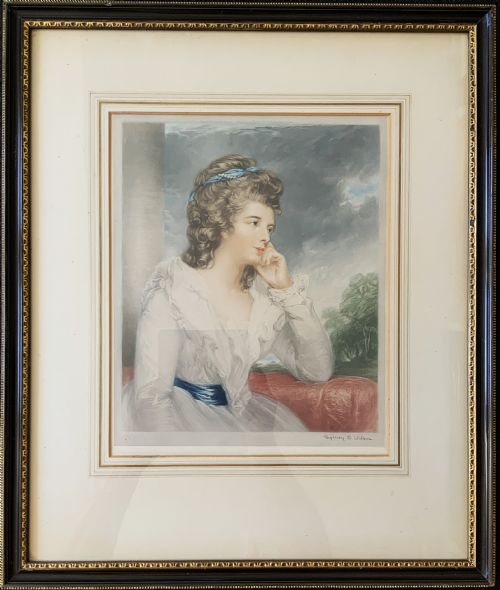
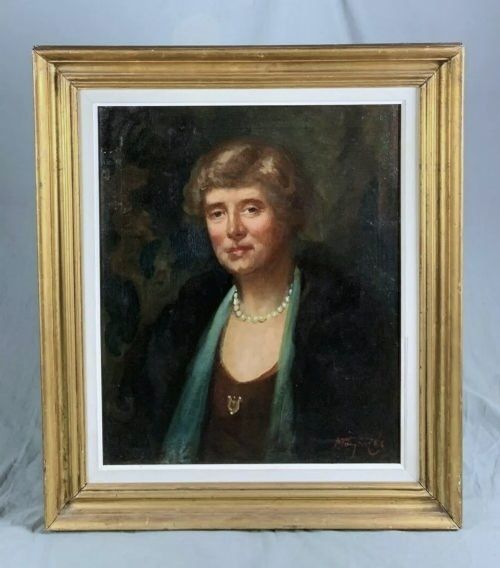
The selection ranges from Victorian oils and Edwardian mezzotints to mid-century British school pieces and bronzes. Portrait subjects vary widely, including literary figures, artists' assistants, animals, and notable public figures captured by established practitioners.
Materials and techniques
Makers of these works employed traditional fine art materials such as oil on canvas, charcoal, and graphite on paper. Supporting structures often include wood frames and giltwood surrounds that complement the primary artwork.
Printmakers utilised techniques like the artist proof mezzotint engraving, while sculptors worked in bronze. Every piece relies on the physical interaction between pigment, ink, or metal and its chosen substrate.
Signed Artist Portrait Retail Price Guide 2026
Typical asking prices for signed artist portrait among the pieces listed under this phrase on Sellingantiques today, from the lower quarter to the upper quarter. They describe what is for sale here now, not the wider market.
Among the sitters recorded by these artists are a war correspondent, an artist's assistant, and a very dignified Pekingese dog.
Judging quality and execution
Quality rests upon the surety of the draughtsmanship and the psychological depth captured by the artist. A skilled hand conveys character and volume efficiently through oil paint, pencil, or bronze.
The prominence of the maker and the preservation of the physical medium determine the standing of the piece. Intact framing, original signatures, and stable surfaces elevate the stature of an artwork within its period.
FS Beaumont·Frank Dobson·Herbert Johnson Harvey·Charles James McCall·Sydney Wilson·Florence Mabel Hollams·Theobald Chartran·Feridah Francis Forbes Taylor·Francis Dodd·Juliet Pannett
The Signed Artist Portrait Glossary
- Artist proof
- An impression of a print taken before the final edition is produced, typically retained by the artist for personal review.
- Mezzotint
- A printmaking process of the intaglio family where the plate is roughened to achieve rich tones and subtle gradations of light and shade.
- Giltwood
- Wood that has been coated with gold leaf or a gold-coloured metallic finish, frequently seen on traditional picture frames.
- Draughtsmanship
- The quality of line and skill in drawing exhibited by an artist in preparatory studies or finished works on paper.
Signed Artist Portrait: Frequently Asked Questions
What defines a signed artist portrait?
A signed artist portrait is a visual depiction of a person, animal, or character bearing the authentic signature or monogram of its creator. These pieces range from intimate pencil sketches to large oil paintings and bronze sculptures.
Such signatures authenticate the authorship and connect the viewer directly to the working practice of the artist during periods like the Victorian era or the mid-twentieth century.
How should I display a paper portrait?
Works on paper, including charcoal drawings and pencil sketches, require careful placement away from direct sunlight to prevent fading of the delicate pigments. Framing behind conservation-grade glass protects the medium from atmospheric moisture and dust.
Maintaining stable indoor temperatures helps preserve both the paper substrate and any accompanying wooden or gilt frames over time.
How can I date an oil portrait?
Dating often relies on a combination of visible stylistic cues, costume details of the sitter, and documentary evidence such as inscribed dates or artist signatures. The stretcher bars, canvas weave, and framing style provide further physical clues to the period of creation.
Comparing the handling of paint with known works by the same maker helps narrow the timeframe of execution.
Were these portraits meant for homes?
Portraits served both public commemoration and private domestic display depending on the status of the sitter and the intentions of the patron. Smaller drawings and artist proofs often remained within private collections or artist studios.
Larger oil paintings and framed engravings typically occupied prominent reception rooms in period houses.