





Signed Pottery
Signed antique pottery brings together the hand of the maker and centuries of ceramic tradition, offering collectors distinct artisan marks from British, European, and Japanese workshops.
Signed Pottery
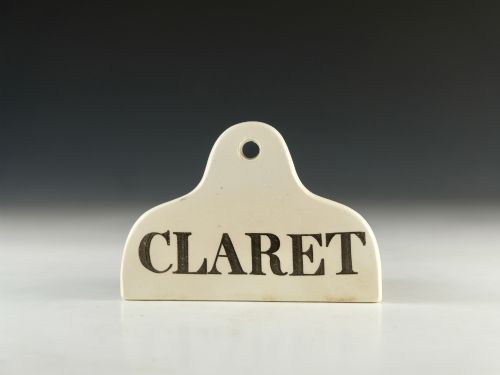
When you search for signed antique pottery, you encounter a diverse gathering of vessels, plaques, and decorative objects bearing artist signatures, workshop stamps, or factory marks. The selection spans the nineteenth century through the early twentieth century, taking in Victorian and Edwardian British works alongside Japanese Meiji and Taisho items.
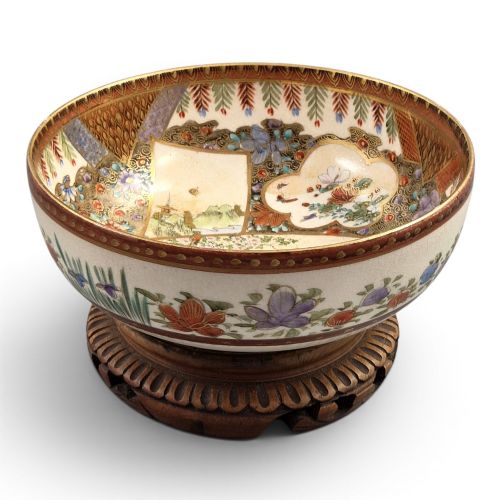
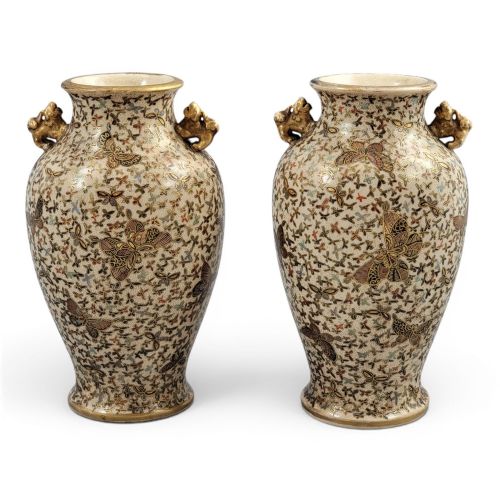
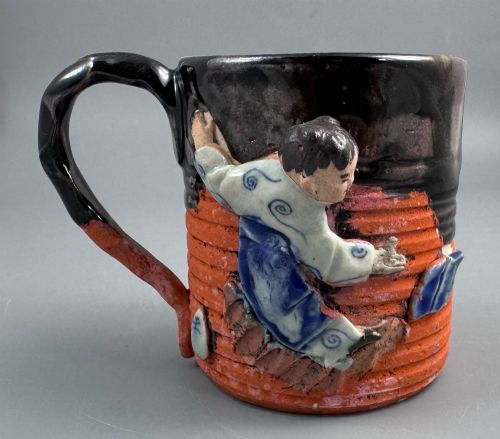
Vases, decorative bowls, and incense burners dominate the forms, accompanied by specialised pieces such as brush washers, mugs, and wall plaques. Japanese Satsuma earthenware and Sumida Gawa wares form a major part of the selection, sitting alongside European pieces from English, Italian, and German makers.
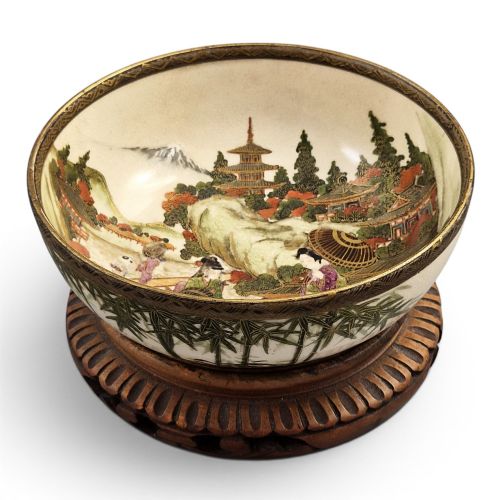
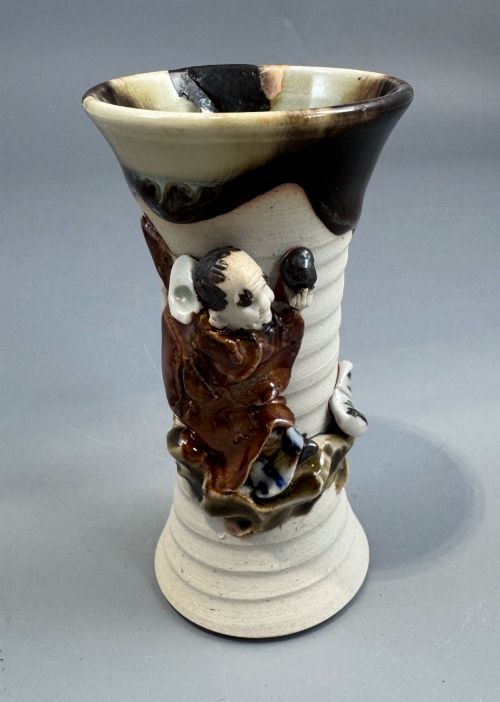
The objects reflect distinct regional aesthetics, from the finely painted botanical and figural scenes of Kyoto studios to the textured, dripping glazes and applied figures of Japanese earthenware. British and continental pieces bring painted landscapes, hand-painted portraits, and rich earthenware bodies to the range.
Materials and methods
Makers shaped these pieces from earthenware, stoneware, and porcelain, often applying specialised glazes such as lavender flambé, oxblood, or cobalt blue. Surface decoration frequently incorporates detailed hand-painting, enamel work, and raised gold leaf accents.
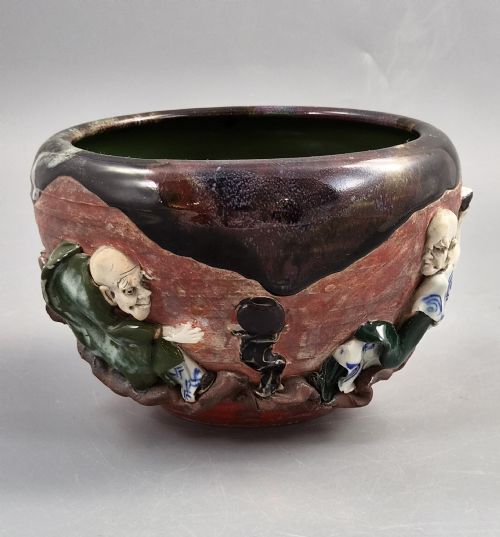
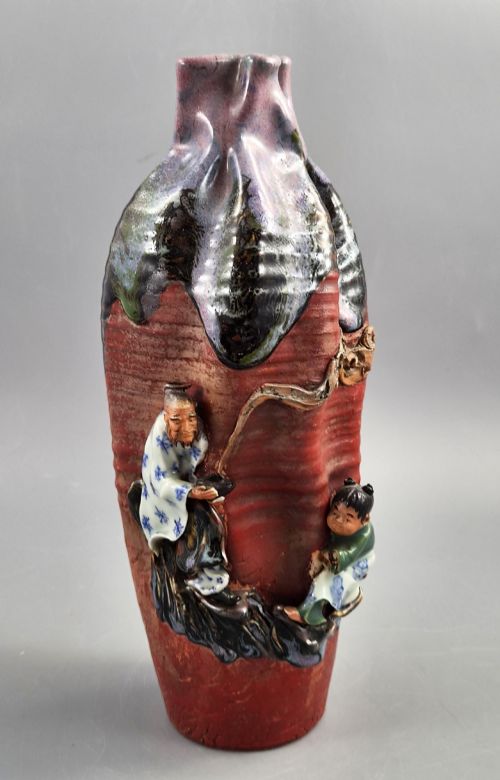
Many Japanese pieces utilise distinct relief techniques, attaching modelled clay figures of sages, children, and mythical figures directly to the bodies of vases and mugs. European pieces rely on hand-painted overglaze decoration, capturing landscape views and floral studies on earthenware bodies and porcelain surfaces.
Listings feature works from the Meiji period, Edwardian era, and the Republic Period, spanning earthenware, porcelain, and terracotta.
Distinctions in quality
Quality rests in the precision of the hand-painted detail and the control evident in the glaze work, separating standard production from master-level output. Pieces bearing signatures from recognised studio artists or established workshops demonstrate superior skill in composition and brushwork.
The crispness of applied figures and the depth of enamelling and gold leaf application reveal the artisan's expertise. Finer examples maintain harmony between the ceramic body, the decorative scheme, and the clarity of the maker's signature or crest.
Inoue Ryōsai·Ban-ni·Gyokkō·Kozan·Kinzan·Kōko·Ryōsai·John H Plant·Chosei·Shuzan·Kinkozan·Seiko-en Chokei·Nikko·Kizan·Tagawa·Shozan·Ippo·Gao Hengsheng·Hiroshi·William Moorcroft·C Ravier·Royal Bonn·William Yale
The Signed Pottery Glossary
- Satsuma
- A type of Japanese earthenware featuring a crackle glaze, typically decorated with intricate enamel patterns and gold leaf. It originated in Satsuma Province and became widely produced in Kyoto for export.
- Sumida Gawa
- A distinctive Japanese pottery style characterised by heavy, dripping glazes and figures modelled in high relief scrambling across the surface. These pieces often carry artist signatures incised into the clay or applied on tablets.
- Koro
- A traditional Japanese incense burner, usually fitted with a pierced cover to allow fragrance to escape. They appear frequently in Satsuma ware with tripod feet and decorative animal handles.
- Earthenware
- Porous pottery fired at lower temperatures, requiring a glaze to render it waterproof. It serves as the primary body for much nineteenth-century decorative ceramic work.
- Flambé glaze
- A streaked or mottled glaze achieved through complex chemical reactions during high-temperature firing, creating dramatic variations in colour across the vessel.
Signed Pottery: Frequently Asked Questions
What is signed antique pottery?
Signed antique pottery comprises ceramic vessels and decorative items bearing the personal signature, seal, or workshop mark of the maker or artist. These markings help identify the studio, region, and period of production.
Items range from Japanese earthenware bowls to European painted plaques, spanning the nineteenth and early twentieth centuries.
How do I read a Japanese pottery signature?
Signatures on Japanese pieces often appear as painted characters, incised marks, or impressed seals naming the artist and sometimes the Kyoto studio or workshop. Many include family crests such as the Shimazu mon.
Matching these marks to known makers helps date the vessel within the Meiji or Taisho periods.
Where were Satsuma vases made?
While originating in Satsuma Province, the majority of highly decorated Satsuma ware found today was produced in Kyoto workshops for export during the Meiji period. Master artists working in these urban studios signed their intricate floral and figural pieces.
These pieces combined traditional Japanese motifs with decorative styles that appealed to Western collectors.
How should I display signed ceramics?
Display these pieces in stable positions away from direct sunlight to protect delicate enamel colours and gold leaf details. Placing them on secure surfaces ensures that delicate applied figures and handles remain safe.
Keeping them in well-lit cabinets allows the fine brushwork and glaze textures to be appreciated from all angles.