



Signed 1950s Painting
A signed 1950s painting brings mid-century character to a wall through genuine period handwork.
Signed 1950s Painting
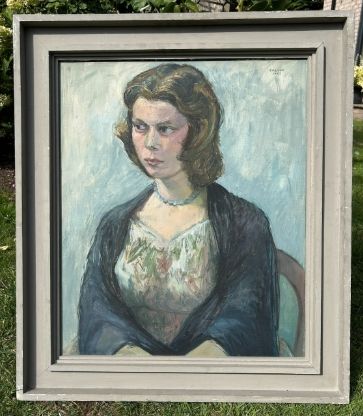
A signed 1950s painting encompasses original works executed in oil paint, watercolour, pastel, and acrylic on canvas, board, and paper. These pieces capture mid-century visual culture through landscapes, portraits, and abstract compositions.
The selection on this page leans heavily into mid-century modern, post-war British, and post-impressionist styles. Buyers will frequently encounter works dated directly to the nineteen fifties alongside related pieces from the nineteen thirties and sixties.
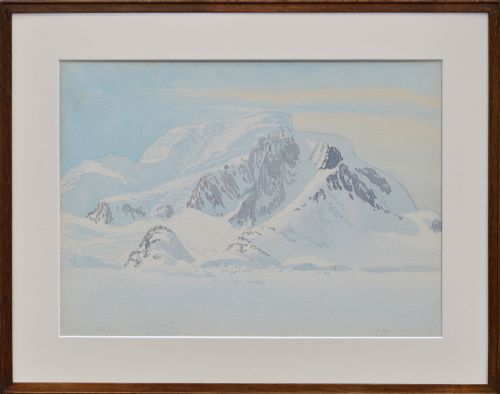
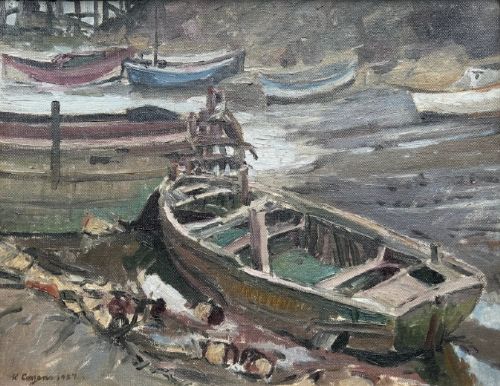
Makers and subjects range from industrial constructivist factory scenes and maritime views to rural Yorkshire dales and Antarctic landscapes. Each work bears the signature of its creator, distinguishing it from unsigned commercial prints.
How they were made
Artists of this era applied oil paint, watercolour, pastel, and acrylic onto prepared supports of wood, canvas, board, paper, and glass. The physical construction often reflects the material constraints and material choices of the mid-century period.
Techniques vary from loose post-impressionist pastel strokes and fluid watercolours to structured constructivist compositions and thick oil applications on board. Supports are frequently framed under glass where paper or delicate watercolours require protection.
Signed 1950s Painting Retail Price Guide 2026
Typical asking prices for signed 1950s painting among the pieces listed under this phrase on Sellingantiques today, from the lower quarter to the upper quarter. They describe what is for sale here now, not the wider market.
Listings feature oil paint, watercolour, pastel, and acrylic across wood, glass, canvas, board, and paper.
What varies in quality
The distinction between ordinary and exceptional works rests on the handling of the medium and the strength of the composition. Masterful brushwork in an oil painting or precise control in a watercolour elevates the visual impact.
Subject matter and stylistic execution also drive distinction, as seen in complex abstract arrangements versus standard portraits. The clarity of the signature and the preservation of the original canvas, board, or paper surface shape the overall character.
Roger Banks·Kenneth Cozens·Adrian Heath·John Frederic Greenwood·Margaret Laing
The Signed 1950s Painting Glossary
- Oil paint
- A slow-drying paint made by mixing pigments with a drying oil, commonly used on canvas or board during the period.
- Constructivism
- An artistic style focused on abstract geometric forms and industrial structures, prominent in mid-century works.
- Post-Impressionism
- A style extending impressionism while rejecting its limitations, characterised by vivid colours and distinct brushstrokes.
- Board
- A rigid flat material, such as wood or heavy pulp board, utilised as a sturdy painting support instead of woven canvas.
Signed 1950s Painting: Frequently Asked Questions
What periods do these paintings cover?
The works primarily date from the nineteen fifties, with occasional examples originating from the nineteen thirties and nineteen sixties. This span captures the evolution of mid-century modern and post-war British artistic expression.
Buyers will find that stylistic approaches shifted across these decades from traditional landscapes to constructivist abstraction.
What materials were used by the artists?
Painters utilised oil paint, watercolour, pastel, and acrylic applied to surfaces such as canvas, wood, board, and paper. Glass is also present for framing and protecting delicate works on paper.
The choice of support often dictates how the piece should be displayed and handled in a modern interior.
How do I identify a signed work?
A signed painting bears the handwritten signature or initials of the artist directly on the front or reverse of the canvas, board, or paper. These inscriptions often include dates that help place the creation within the mid-century period.
Signatures provide a direct link to the individual creator, whether an established figure or a lesser-known regional painter.
How do I live with mid-century art?
Integrating these paintings into a home involves pairing their distinct mid-century or post-impressionist aesthetics with complementary wall spaces and appropriate lighting. Protecting works on paper and pastel from direct sunlight preserves the pigments.
Framing choices should respect the period character of the canvas, board, or watercolour being displayed.