





Shop Fitting Unit
These shop fitting unit examples combine utilitarian purpose with period craftsmanship, offering robust storage for the modern home.
Shop Fitting Unit
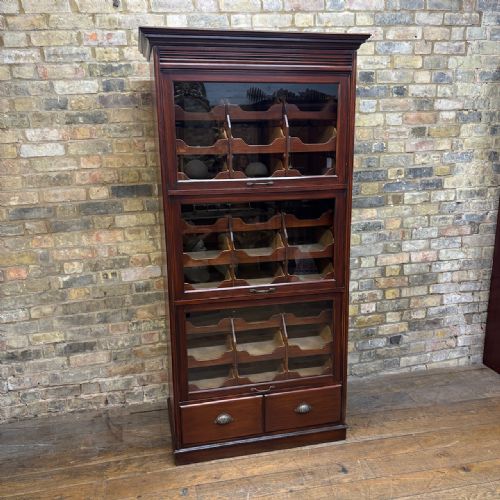
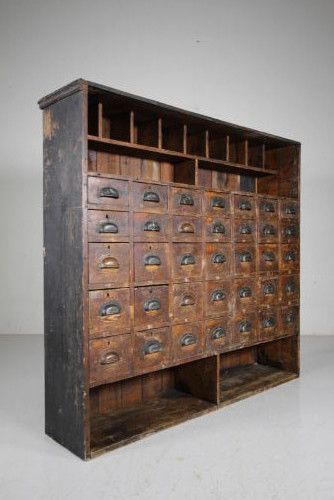
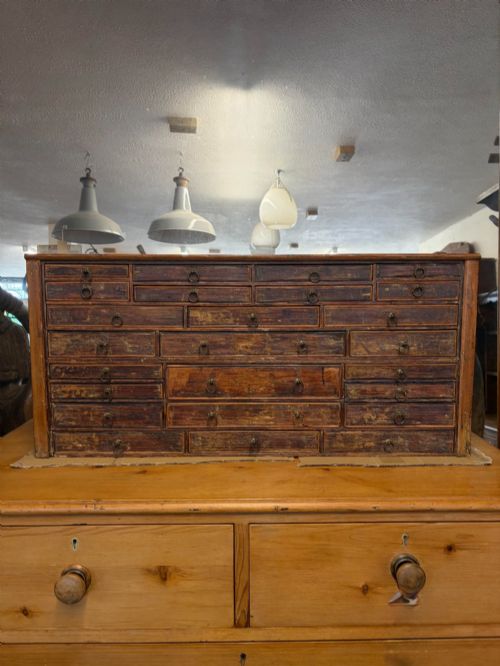
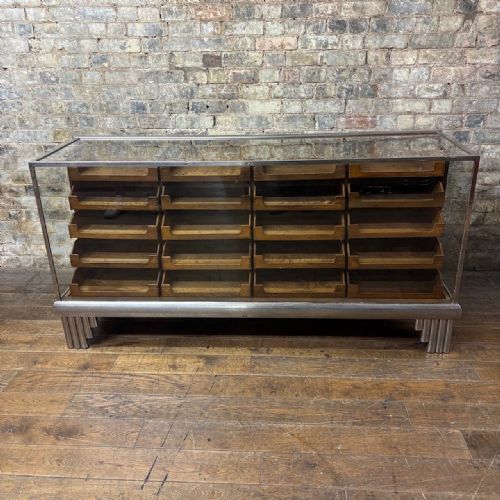
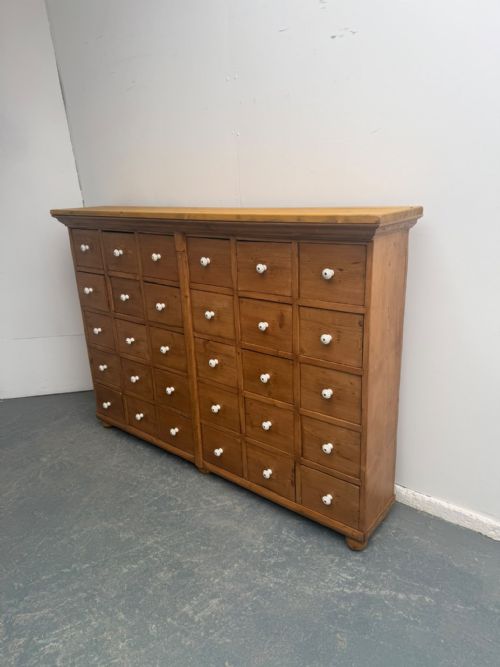
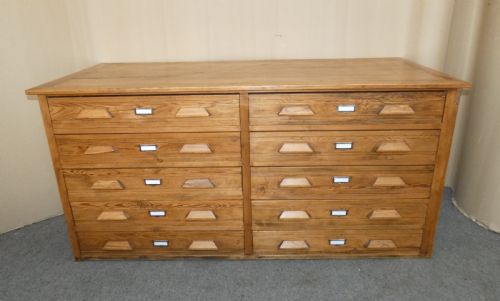
A shop fitting unit serves as a functional storage piece originating from commercial environments, designed to organise goods efficiently. Buyers searching for a shop fitting unit will encounter large banks of drawers, display cabinets, and counters intended for retail display.
The pieces span several decades, featuring Victorian, Edwardian, and 1930s examples constructed from pine, oak, and mahogany. Multi-drawer configurations and glazed display counters dominate the selection available here.
Origins vary from English workshops to Hungarian pine pieces and French drapers furniture. These items transition easily into contemporary domestic spaces for practical storage solutions.
Materials and Construction
Carpenters built these units using durable timbers such as pine, oak, mahogany, fruitwood, and walnut to withstand heavy daily use in commercial settings. Joinery techniques prioritised strength, evident in large banks of drawers and sturdy counters.
Metal components like brass, iron, chrome, and bronze frequently appear as framing, handles, or display stands. Glass panels are integrated into cabinets and counters designed to showcase merchandise.
Surface finishes include original paint treatments in white or cream, alongside polished or waxed wood surfaces. Structural elements often incorporate cast iron and timber working together to support heavy loads.
Shop Fitting Unit Retail Price Guide 2026
Typical asking prices for shop fitting unit among the pieces listed under this phrase on Sellingantiques today, from the lower quarter to the upper quarter. They describe what is for sale here now, not the wider market.
Some solid walnut shop cabinets carry later sign-writing repurposed specifically for local fishing supplies shops.
Assessing Quality
Quality in a shop fitting unit rests on the scale of the timber construction and the complexity of the drawer arrangements. Pieces with substantial numbers of matching drawers and intact original hardware command greater attention.
The integrity of the structural joinery and the survival of original painted finishes or polished wood patination distinguish superior examples. Retaining original glass panels and maker details further elevates the standing of an individual piece.
Dudley & Co·Saml. Elliott & Sons
The Shop Fitting Unit Glossary
- Bank of Drawers
- A large cabinet containing numerous individual drawers stacked in rows, commonly utilised in drapery and haberdashery shops for stock organisation.
- Haberdashery Counter
- A shop counter incorporating glass display sections or banks of shallow drawers specifically designed for small sewing goods and accessories.
- Display Cabinet
- A glazed storage unit built to showcase merchandise while protecting items from dust and handling.
- Shop Fitting
- Any permanent or semi-permanent fixture installed in a retail premises to facilitate the display and storage of goods.
- Pigeon Hole Cabinet
- A partitioned storage unit divided into numerous small open compartments for sorting documents, papers, or small items.
Shop Fitting Unit: Frequently Asked Questions
What is a shop fitting unit?
A shop fitting unit is a heavy-duty commercial furnishing, such as a bank of drawers or a display counter, built for retail environments.
These pieces were constructed to organise and showcase stock efficiently before finding a second life in domestic interiors.
How do I use one at home?
These units provide exceptional storage for clothing, kitchenware, or collections using their numerous drawers and shelving configurations.
Large banks of drawers fit well in bedrooms or studies, while glazed display cabinets suit living spaces for showcasing objects.
Which woods were used?
Cabinet makers utilised dense and durable timbers including oak, mahogany, pine, walnut, and fruitwood to ensure longevity.
Secondary materials like brass, iron, and glass were frequently incorporated into the framing and display sections.
How do I date these units?
Dating relies on identifying period styles such as Victorian ornate details, Edwardian proportions, or 1930s chrome and Art Deco influences.
Construction methods, hardware types, and timber choices also help place a piece within its manufacturing era.